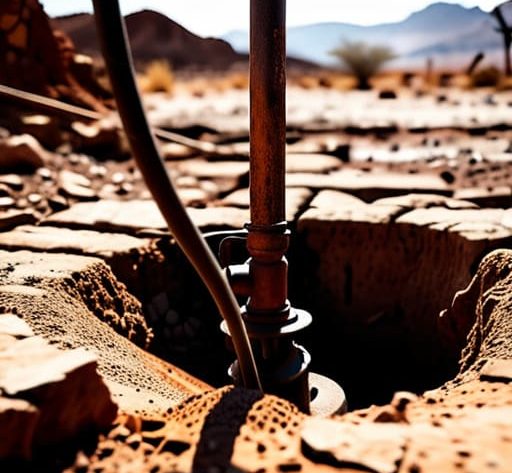
I spent three years in South Sudan watching shiny, solar-powered pump installations gather dust and rust because nobody had a spare gasket or a wrench that fit the bolts. Everyone in the NGO world loves to talk about “community engagement” and “capacity building” as if those abstract concepts can fix a broken valve. But the truth about how water projects are sustained isn’t found in a glossy annual report or a high-level workshop; it’s found in the greasy hands of a local mechanic who actually has the parts on hand. If the supply chain for a simple O-ring fails, the entire multi-million dollar project is just an expensive piece of scrap metal in the middle of a dry field.
I’m not here to give you a lecture on development theory or the virtues of stakeholder mapping. I’ve spent too many years staring at cargo manifests to care about sentiment. Instead, I’m going to show you the hard reality of logistics and local maintenance. I will tell you exactly what needs to be in the shipping container and what needs to be in the village toolkit if you want a pump to actually work three years after the engineers leave. We are going to focus on the mechanics of survival, not the politics of aid.
Table of Contents
Beyond the Ribbon Cutting Long Term Water Infrastructure Viability

I’ve seen too many NGOs fly in, dig a hole, hold a ceremony with a local dignitary, and fly out before the dust settles. That ceremony is a lie. In my experience, the moment the ribbon is cut is actually when the real risk begins. If you haven’t accounted for borehole repair and maintenance costs in the initial budget, you haven’t built a project; you’ve just built a future piece of scrap metal. I don’t care how much donor money was raised for the drilling if there isn’t a ledger in the village showing exactly how much a new pump seal costs and who is holding the cash to buy it.
The failure point is almost always the same: a lack of functional water committee governance models. It isn’t enough to tell a village they “own” the well. Ownership is an abstract concept; a spare part is a concrete reality. Without a system to collect small, consistent user fees, the first mechanical failure becomes a permanent shutdown. To me, long-term water infrastructure viability isn’t a theoretical metric found in an annual report. It’s the simple, brutal reality of whether a village has the actual liquid capital to fix a broken valve without waiting for a helicopter that isn’t coming.
The Myth of the Finished Well

In my experience, the most dangerous moment in a project’s lifecycle is the day the drill rig leaves the site. There is a specific kind of celebratory atmosphere that settles in when the first bucket of water is drawn, but to a logistician, that moment is just the beginning of a massive liability. We treat a completed borehole like a finished delivery, but in reality, it is just a piece of hardware that is actively decaying from the second it hits the ground. A well isn’t a static asset; it is a continuous logistical requirement.
The failure point usually isn’t the technology itself, but the lack of a realistic plan for borehole repair and maintenance costs. I have seen countless sites where the pump fails six months in because the village didn’t have a cash reserve for a simple seal replacement. You can build the most sophisticated solar-powered system in the world, but if the financial models for rural water supply aren’t integrated into the local economy from day one, that system is just future scrap metal. If the money isn’t already sitting in a box somewhere to pay for the next mechanic, the well is already dead.
The Real Cost of a Dry Pump
I don’t care how many millions were raised for a borehole or how many photos were taken of the inaugural pump. If there isn’t a local supply chain for the specific grade of rubber gaskets used in that model, that well is just a concrete tombstone for wasted capital. Sustainability isn’t a concept; it’s a spare parts inventory.
Yusuf Lindqvist
The Final Manifest

At the end of the day, we have to stop measuring success by the number of boreholes drilled or the millions of dollars pledged in annual reports. Those are just numbers on a spreadsheet, and they don’t mean a thing if the pump handle snaps six months later and no one has the spare parts or the training to fix it. Sustainability isn’t some abstract concept found in a development textbook; it is the unseen logistics of spare parts, local technician training, and reliable supply chains. If the community cannot maintain the system once the NGO leaves, then the project wasn’t an achievement—it was just a temporary reprieve that ultimately wasted resources.
I have spent too many years watching well-intentioned projects turn into rusted monuments to good intentions because someone forgot to plan for the day after the ribbon-cutting. We need to shift our focus from the spectacle of the launch to the grit of the long-term operation. Real impact isn’t found in the grand gesture, but in the quiet reliability of a system that works ten years down the line. My metric remains unchanged: don’t tell me how much you spent. Tell me that the water is still flowing, and that the logistics of survival are firmly in the hands of the people who need it most.