
I spent a decade watching high-level officials in Geneva and Nairobi argue over allocation formulas and equity metrics, but none of those spreadsheets ever helped me clear a washed-out road in South Sudan. Everyone wants to talk about the grand design of how vaccine access policy worked in a pandemic, treating it like a mathematical puzzle to be solved by the smartest people in the room. They focus on the total number of doses promised to a nation, as if a number on a screen translates to a human life. But I’ve seen millions of doses sit in sun-baked warehouses because nobody accounted for the broken refrigeration unit or the fact that the local bridge had collapsed under the rainy season.
I’m not here to give you a lecture on global health diplomacy or the nuances of international law. I’m going to tell you how things actually move when the theory hits the dirt. I will show you why a policy is only as good as the last mile of the supply chain, and why the real story of how vaccine access policy worked in a pandemic isn’t found in a press release, but in the cold chain integrity and the driver’s ability to navigate a checkpoint.
Table of Contents
The Myth of Multilateralism vs Vaccine Nationalism

The debate over vaccine nationalism vs multilateralism usually plays out in high-ceilinged rooms in Geneva or New York, full of diplomats talking about “equity” and “solidarity.” From where I sat, managing cold-chain requirements and fuel shortages, those words felt hollow. While the media focused on the tension between wealthy nations hoarding doses and the theoretical promise of global vaccine distribution mechanisms, the reality on the ground was much simpler. It wasn’t about the politics of the COVAX facility; it was about the fact that the high-income countries had already secured the manufacturing slots, leaving the rest of us fighting for the scraps of a broken schedule.
Even if we had solved the political standoff, we were still staring down the barrel of a massive bottleneck: pharmaceutical manufacturing capacity. You can sign every treaty in the book, but a treaty doesn’t manufacture a vial. We spent months discussing intellectual property waivers for vaccines as if a legal change would instantly sprout new factories in sub-Saharan Africa. It doesn’t work like that. In my experience, a policy is only as good as the physical ability to produce the cargo and the infrastructure to move it. Until the production capacity is decentralized, “multilateralism” is just a polite word for a waiting list.
Why Global Vaccine Distribution Mechanisms Often Fail the Test of Reality
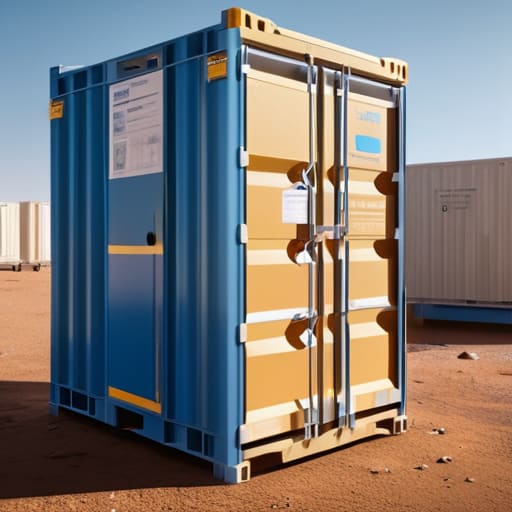
I’ve spent enough time in warehouses in Goma and Juba to know that a policy paper written in Geneva is a different species than a pallet of vials sitting on a tarmac in heat. The problem with most global vaccine distribution mechanisms is that they are designed for a world of smooth surfaces and predictable timelines. In the boardroom, they talk about equitable allocation; in the field, we talk about cold chain integrity. You can have all the signed agreements in the world, but if the local grid fails and the solar-powered fridges aren’t maintained, those doses are just expensive, useless liquid.
The failure often stems from a fundamental disconnect regarding pharmaceutical manufacturing capacity. The high-level debates over intellectual property waivers for vaccines are technically sound, but they don’t solve the immediate bottleneck of last-mile delivery. Even if we decentralized production tomorrow, we are still facing the same brutal reality of supply chain logistics in health emergencies: you can’t vaccinate a population if you can’t move the product through a broken infrastructure. We focus too much on the “how much” and not enough on the “how exactly”—the actual physical movement of goods from a factory to a person who needs them.
The Gap Between Policy and Pavement
I’ve spent years watching bureaucrats debate allocation percentages in air-conditioned rooms in Geneva, but a policy isn’t a lifeline—it’s just ink on a page until you have a cold chain that actually works and a driver brave enough to cross a washed-out bridge. You can’t vaccinate a population with a spreadsheet.
Yusuf Lindqvist
The Last Mile is the Only Mile
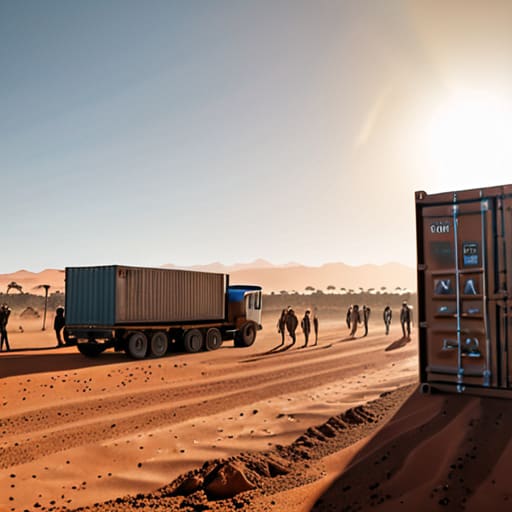
At the end of the day, we can debate the ethics of COVAX or the nuances of patent waivers until the sun goes down, but those debates don’t move crates. We saw a massive gap between the high-level policy agreements signed in Geneva and the actual capacity to keep a cold chain intact in a humid, unpowered warehouse in South Sudan. The pandemic proved that a policy is only as good as its weakest link in the supply chain. We spent billions on procurement, yet we ignored the fundamental reality that vaccines are useless if they sit in a shipping container at a port because of a lack of local refrigeration or a broken customs protocol.
If we want to do better next time, we need to stop looking at humanitarian aid as a series of grand gestures and start seeing it as a series of successful deliveries. The real victory isn’t in the amount of funding pledged during a press conference; it is in the quiet, unglamorous work of ensuring the last mile is actually covered. We must build systems that prioritize resilient, physical infrastructure over theoretical equity. Because in a crisis, the only metric that truly matters is whether the cargo reached the person who needed it.