Forget the glossy brochures from the Hague or the high-level briefings about “systemic procedural frameworks.” When people ask me how war crimes are investigated, they expect a lecture on international law and legal precedents, but that’s just noise. In my nine years moving medical supplies through the bush, I learned that the truth isn’t found in a polished courtroom; it’s found in the physical reality left behind. If you want to know how war crimes are investigated, stop looking at the legal paperwork and start looking at the broken axles, the burnt-out fuel depots, and the empty grain stores.
I am not here to give you a lecture on jurisprudence or the lofty ideals of global justice. I’m going to tell you how this actually works on the ground, where the logistics of evidence meet the reality of a landscape that wants to hide everything. I’ll show you why a single, signed cargo manifest or a specific tire track in the mud often carries more weight than a thousand-page report. This isn’t about sentiment; it’s about the hard evidence that survives when the politics fail.
Table of Contents
Forensic Evidence in Conflict Zones Tells the Real Story
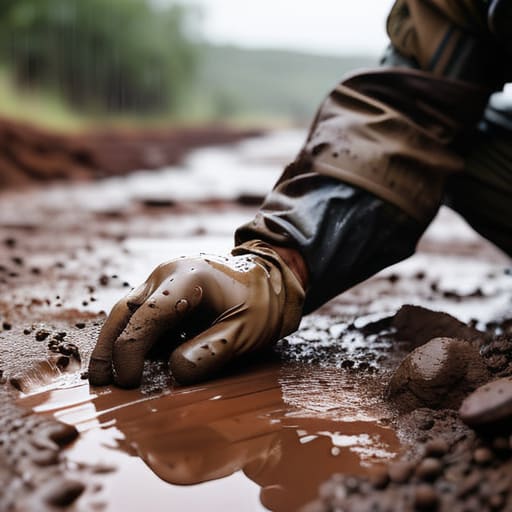
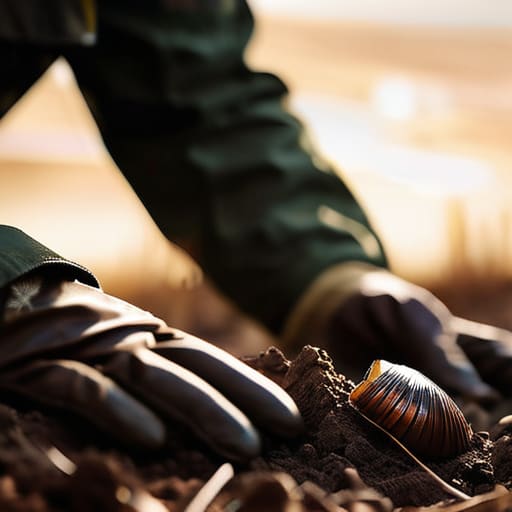
I’ve spent enough time in transit hubs to know that a signed affidavit is only as good as the person who can actually reach the site to verify it. In the field, lawyers talk about the Rome Statute legal framework like it’s a map, but a map doesn’t account for a washed-out bridge or a checkpoint that disappears overnight. When we talk about forensic evidence in conflict zones, we aren’t talking about clean laboratory settings; we are talking about digging through red clay in a downpour to find a shell casing that matches a specific caliber used by a particular militia.
The reality is that the chain of custody is a logistical nightmare. You can have the most rigorous human rights violations documentation protocols in the world, but if the local driver can’t get the samples past a militia roadblock, the evidence is dead on arrival. I’ve seen crates of medical supplies seized because of a paperwork error; I’ve seen much more vital evidence vanish because no one planned for the seasonal rains. The truth isn’t found in a high-level briefing in The Hague; it is found in the physical debris left behind when the trucks finally stop moving.
The Paper Trail of Human Rights Violations Documentation

In my experience, the most reliable evidence isn’t found in a polished report from a capital city; it’s found in the requisition forms and the fuel logs that don’t add up. When we talk about human rights violations documentation, people tend to think of grand statements or televised testimonies. But if you want to prove a systematic pattern, you look for the logistics. I’ve seen how a sudden surge in localized transport orders or the unexplained redirection of medical supplies can tell you more about a massacre than any high-level briefing ever could. The paper trail is often a series of mundane administrative errors that, when mapped together, reveal a deliberate intent.
The challenge is that these records are the first things to go missing when a conflict turns ugly. You can cite the Rome Statute legal framework until you’re blue in the face, but a legal framework doesn’t help you if the local commander burned the ledger. The real work is in the recovery of the “boring” stuff—the supply manifests, the radio logs, and the payrolls. If the paperwork shows that a specific unit was moved into a village three hours before the shelling started, you have something more concrete than a dozen conflicting eyewitness accounts. You have a sequence of events that cannot be explained away as coincidence.
## The reality of the field
Investigators spend months chasing digital footprints and high-level testimonies, but if you want to know what actually happened, you don’t look at the UN briefing; you look at the empty shell casings in the dirt and the broken axle of the truck that never made it to the clinic.
Yusuf Lindqvist
The Bottom Line
At the end of the day, investigating war crimes isn’t about the polished reports that land on a desk in Geneva. It is about the intersection of forensic reality and the physical paper trail. We have seen how the dirt under a fingernail or a single, misplaced fuel requisition form can speak louder than a thousand-page indictment. You can have all the high-level legal frameworks in the world, but if you cannot reconstruct the physical movement of the perpetrators or secure the chain of custody for the evidence, the case is just noise. The truth lives in the logistical fingerprints left behind in the chaos.
People often ask if these massive international investigations actually change anything. I don’t look at the headlines or the diplomatic statements; I look at whether the accountability holds up when the dust settles. It is slow, it is grinding, and it is often frustratingly technical, but that is where the substance lies. We don’t need more sentiment; we need more unshakeable evidence. If we can prove exactly how the trucks moved and where the supplies went, we build a foundation that no amount of political spin can ever wash away. That is how we ensure the truth actually arrives.