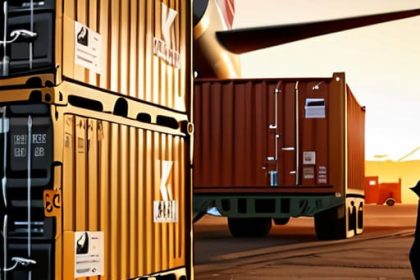
I once spent three days in a humid warehouse outside Goma, staring at a stack of high-level strategy papers that detailed exactly how the triple nexus is meant to work. The documents were beautiful, filled with diagrams showing how humanitarian aid, long-term development, and peacebuilding should weave together into a seamless tapestry of resilience. But while the theorists were busy debating the synergistic integration of these pillars, I was looking at a broken axle on a Toyota Land Cruiser and a pile of medical supplies that were stuck behind a checkpoint because nobody had coordinated the local security protocols. The theory is a luxury; the reality is a series of broken links in a chain.
I’m not here to sell you on the glossy brochures or the jargon-heavy workshops that cost more than a fleet of delivery trucks. I want to talk about what happens when the high-level concepts actually hit the dirt. I am going to show you the operational friction that occurs when these three sectors collide, and more importantly, how to bridge the gaps so that the aid doesn’t just exist on a spreadsheet, but actually reaches the destination.
Table of Contents
Bridging Humanitarian and Development Aid Without Breaking the Chain

The theory of bridging humanitarian and development aid sounds seamless in a boardroom in Geneva. You talk about “long-term resilience” and “transitioning from emergency relief to sustainable systems.” But in the field, these two worlds operate on different clocks and different currencies. Humanitarian aid is a sprint; it’s about getting high-calorie biscuits and cholera kits into a zone before the mortality rate spikes. Development is a marathon; it’s about building the irrigation system or the clinic that stays standing after the NGOs leave. The friction occurs when you try to force them into a single nexus programming implementation without accounting for the fact that the people running the emergency response aren’t looking at five-year plans—they are looking at the next 24 hours.
The real danger in trying to force this integration is that you risk breaking the supply chain that keeps people alive. If you pivot too early toward development goals, you might strip away the flexible, rapid-response funding that is required when a sudden conflict breaks out. I’ve seen projects stall because the funding was tied to sustainable development goals and conflict prevention metrics, yet the local reality required immediate, unconditioned life-saving supplies. To make this work, the link can’t just be a shared document; it has to be a shared logistical reality where the emergency supplies don’t get stuck in the same bureaucratic bottleneck as the long-term infrastructure projects.
Why the Nexus Programming Implementation Fails the Ground Test

The problem with the humanitarian-development-peace nexus framework is that it lives in a boardroom, not in a warehouse. On paper, the logic is sound: you link immediate relief with long-term stability. But in practice, the funding cycles are fundamentally incompatible. I’ve seen it a dozen times—humanitarian grants are designed for speed and “life-saving” metrics, while development funds are tied to multi-year, rigid benchmarks. When you try to force these two different gears to mesh, the teeth usually strip. You end up with a situation where the emergency team is trying to distribute grain today, while the development team is still waiting on a three-year feasibility study for a grain silo that might not even be built before the next crisis hits.
The failure often comes down to a lack of shared operational reality. We talk about an integrated approach to crisis management, but the logistics on the ground are rarely integrated. If the peacebuilding component of a project requires local mediation to secure a supply route, but the humanitarian mandate forbids any engagement with local power structures to maintain “neutrality,” the entire chain snaps. The theory ignores the friction of the actual terrain. You can have the most sophisticated nexus programming implementation in your donor report, but if the security protocols for the peacebuilders prevent the medical supplies from moving through the same corridor, the nexus is just a collection of expensive, disconnected silos.
## The Gap Between Policy and Payload
“The Triple Nexus is a beautiful concept in a Geneva boardroom, designed to weave peace, development, and relief into a single tapestry. But on the ground, the tapestry is useless if the thread is broken. You can talk about long-term resilience all you want, but if the emergency funding dries up before the heavy trucks can clear the mud season, the ‘nexus’ is just a fancy word for a broken supply chain.”
Yusuf Lindqvist
The Reality on the Ground

At the end of the day, the Triple Nexus is a theoretical framework that promises to fix the silos between emergency relief and long-term stability. We talk about integrated programming and multi-year funding as if they are magic bullets, but the reality is much more granular. If the humanitarian sector provides the bandages while the development sector builds the clinic, the nexus only works if the supply chain remains unbroken between them. You can have the most sophisticated peacebuilding strategy in Geneva, but if the procurement delays prevent the delivery of basic medical supplies to a conflict zone, the entire nexus collapses into a series of expensive, uncoordinated failures. The theory is a map, but the map is not the terrain.
I don’t care about the high-level synergy metrics presented in annual reports. I care about the integrity of the movement from point A to point B. If we want the nexus to actually function, we have to stop treating it like a buzzword and start treating it like a logistical challenge. We need to move past the sentiment of “integration” and focus on the mechanical reality of delivery. If we can ensure that the resources actually reach the hands of the people they were intended for, then—and only then—will the theory become a reality. The goal isn’t a perfect strategy; the goal is the arrival.