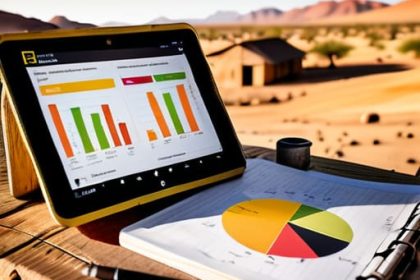
I spent a decade watching people in air-conditioned offices in Geneva and Nairobi argue over “strategic frameworks” and “multi-stakeholder engagement models.” They treat the process like a high-stakes chess game, but they forget that the board is made of mud and the pieces are heavy crates of oxytocin. Most people think the decision-making process is about data-driven insights or community surveys, but in reality, how development priorities get set is usually just a messy tug-of-war between donor whims and what is actually physically possible to move across a border. If the funding is earmarked for solar panels but the local airstrip can’t support the weight of the batteries, your priority is a fantasy.
I’m not here to give you a lecture on theory or a polished roadmap from a consulting firm. I’m going to tell you how it actually works when the paperwork hits the dirt. I’ll show you why the most important decisions aren’t made in a boardroom, but in the gap between the budget line and the actual supply chain. Expect no fluff—just the hard truth about how resources actually move when the world is watching.
Table of Contents
The Myth of Perfect Strategic Planning Frameworks

I’ve sat through enough three-day workshops in Geneva and Nairobi to know that most strategic planning frameworks are essentially expensive fiction. They are beautiful, color-coded spreadsheets designed to convince donors that we have a grip on chaos. In those air-conditioned rooms, people talk about resource allocation models as if they are moving pieces on a chessboard, rather than trying to figure out how to get a shipment of temperature-sensitive vaccines across a border that just closed due to a local skirmish.
The reality is that a “perfect” plan is usually obsolete before the ink is dry on the MOU. You can have the most sophisticated organizational roadmap development in the world, but it doesn’t account for a washed-out bridge in South Sudan or a sudden change in customs regulations. We spend months refining these theoretical structures, yet the actual priority is almost always dictated by the immediate, messy friction of the field. We pretend we are following a master design, but we are really just reacting to the breakdown of the system in real-time. The framework is the map, but the map is never the terrain.
When Stakeholder Influence on Development Breaks the Compass

In my experience, the real direction of a project rarely follows the official organizational roadmap development. Instead, it follows the loudest voice in the room. I’ve sat in enough coordination meetings to know that while we talk about need-based assessments, the actual flow of goods is often dictated by donor whims or political pressure. You can have the most robust data-driven decision making process in the world, but if a major bilateral donor decides they only want to fund maternal health this quarter, the cholera kits stay in the warehouse. The compass doesn’t point to the crisis; it points to the checkbook.
This is where stakeholder influence on development becomes a physical bottleneck. I remember a deployment in South Sudan where the technical experts insisted on a specific nutritional supplement, but the local authorities demanded a different shipment to satisfy a specific regional constituency. We spent three weeks arguing over policy making processes while the actual supply chain stalled. At the end of the day, the “priority” wasn’t what the malnourished children needed; it was what would keep the diplomatic channels open. When the stakeholders start driving, the logistics team is just left trying to figure out how to move a cargo that nobody actually asked for.
## The Gap Between Paper and Pavement
“Don’t show me a five-year strategic framework or a color-coded priority matrix; show me the delivery note for the last shipment of oxytocin. If the priority is real, it’s sitting in a warehouse or on a truck, not in a glossy PDF sitting on a director’s desk in Geneva.”
Yusuf Lindqvist
The Bottom Line

At the end of the day, the high-level frameworks and the boardroom debates over stakeholder alignment are just noise if they don’t translate to the ground. We spend months arguing over strategic pillars and resource allocation models, but those discussions mean nothing if the actual priority is dictated by whoever has the loudest voice or the largest budget rather than the actual need on the ground. If the planning process ignores the reality of the supply chain—the broken roads, the customs delays, and the sheer difficulty of moving goods—then the strategy is nothing more than a paper exercise. A priority that cannot be executed is not a priority; it is a fantasy.
If you want to know what really matters in this industry, stop looking at the glossy annual reports and start looking at the manifests. The real work of development isn’t found in a mission statement; it is found in the successful delivery of the essential. We need to move past the sentiment and focus on the mechanics of getting things done. My advice is simple: stop chasing the perfect roadmap and start ensuring that the lorry actually arrives. That is where the real impact lives, and that is the only metric that truly counts when the dust settles.