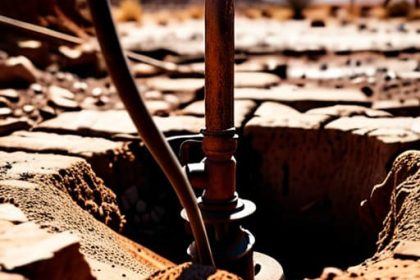
I spent three weeks in South Sudan waiting for a shipment of solar pumps that looked perfect on a spreadsheet in Geneva, only to realize the “design” hadn’t accounted for the fact that the local maintenance crews couldn’t source the specific proprietary gaskets needed to keep them running. Most people think the complexity of climate resilience lies in the high-level modeling, but they get it wrong. When we talk about how adaptation projects are designed, the industry spends far too much time on glossy stakeholder workshops and not nearly enough time on the mechanical reality of the equipment. A project isn’t a success because the theory is sound; it’s a success if the hardware actually functions six months after the NGO leaves.
I’m not here to give you a lecture on theoretical frameworks or sustainability jargon. I want to talk about the friction between a well-intentioned blueprint and the actual dirt, heat, and broken supply chains that define the field. I am going to show you how to look past the polished proposals to see if a project is actually built to survive the real world. We are going to strip away the sentiment and focus on the only metric that matters: operational durability.
Table of Contents
The Climate Change Vulnerability Assessment Is Not a Trophy
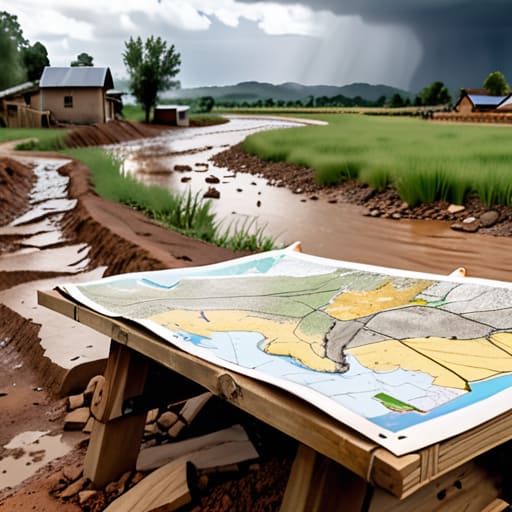
I’ve seen too many consultants fly into a capital city, spend three weeks conducting a climate change vulnerability assessment, and then fly out with a glossy binder full of colorful maps. In the headquarters, that binder is a victory; it’s a milestone checked off a donor’s spreadsheet. But in the field, a binder doesn’t stop a flash flood from washing out a grain store. A vulnerability assessment is just a collection of assumptions until it is translated into something that actually functions on the ground.
If the assessment doesn’t lead directly to actionable logistics, it is nothing more than expensive paper. You can have the most sophisticated climate risk management strategies in your project proposal, but if those strategies don’t account for the fact that the local supplier’s warehouse is in a flood zone, the plan is dead on arrival. We need to stop treating these studies as end products. They aren’t trophies to be displayed at annual general meetings; they are supposed to be the blueprints for survival. If the data doesn’t tell you exactly where to reinforce a road or where to stockpile medicine before the rains hit, then you haven’t actually assessed anything at all.
Mapping the Real Cracks in the Foundation
Mapping the real cracks in the foundation
The problem with most planning cycles is that they happen in air-conditioned offices in Geneva or Nairobi, far away from the actual mud and dust. When people talk about a climate change vulnerability assessment, they treat it like a checkbox for a donor report. They look at satellite data and precipitation models, which are fine, but they miss the human reality. A model might show a region is drying up, but it won’t tell you that the only road to the nearest well is washed out every October, or that the local grain stores are being managed by a group that no longer has any political leverage.
If you want to know if a project will actually work, you have to look at the physical and social friction that data ignores. I’ve seen plenty of beautifully drafted community-based adaptation frameworks fail because they assumed a village could maintain a new irrigation system without accounting for the fact that the local mechanic moved to the city three years ago. You don’t need more spreadsheets; you need to know where the supply chain breaks. If the design doesn’t account for the broken axle or the corrupt checkpoint, the plan is just expensive paper.
The gap between paper and pavement
I have seen hundreds of pages of high-level climate modeling that look perfect in a boardroom in Geneva, but a model won’t help a driver navigate a washed-out track in South Sudan. If your design doesn’t account for the actual weight of the truck and the reality of the mud, you aren’t designing an adaptation project; you’re just writing a very expensive piece of fiction.
Yusuf Lindqvist
The Bottom Line
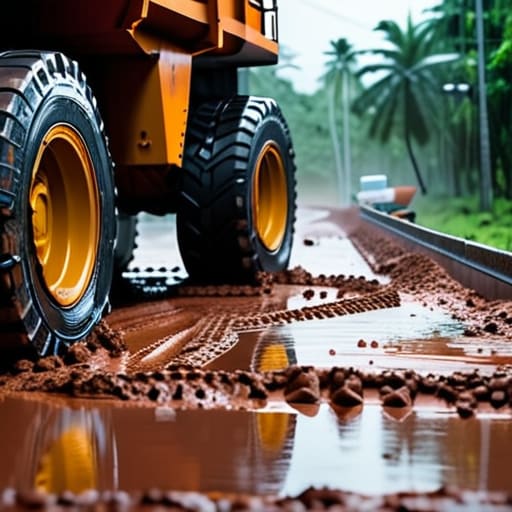
At the end of the day, a well-designed adaptation project isn’t measured by the thickness of the report or the sophistication of the vulnerability maps we produced in a climate-controlled office. It is measured by the integrity of the supply chain and the physical resilience of the infrastructure once the monsoon hits. We can spend months debating theoretical risk models, but if the procurement process fails or the local road network can’t support the weight of the construction materials, the entire design is just expensive paper. You have to bridge the gap between high-level planning and ground-level reality, or you aren’t doing development; you’re just performing paperwork.
I still keep my old manifests because they remind me that every line item represents a real-world requirement. If we want these adaptation projects to actually work, we have to stop obsessing over the elegance of the design and start focusing on the reliability of the delivery. We need to design for the moment when things go wrong, when the trucks get stuck, and when the weather defies our best predictions. Forget the polished presentations and the glossy metrics. If the logistics hold up when the crisis arrives, then—and only then—can we say the project was actually designed to succeed.