I remember sitting in a humid warehouse outside Goma in 2012, staring at a stack of pristine, glossy brochures sent from a HQ in Geneva. They were full of high-definition photos of smiling children, but they didn’t mention that the bridge three kilometers ahead had washed out, making the entire shipment of antibiotics completely useless. People love to debate the theory of how embedded reporting affects coverage, treating it like some abstract academic puzzle for journalists to solve in air-conditioned studios. But in the field, the “coverage” isn’t a narrative arc; it’s the difference between a reporter seeing a sanitized version of a camp or seeing the actual, broken supply chain that determines if people live or die.
I’m not here to give you a lecture on media ethics or help you boost your engagement metrics. I’m going to tell you how the presence of a journalist—and the specific way they are integrated into an operation—actually distorts the reality of the ground truth. We’re going to look past the sentiment and focus on the mechanics of the truth, stripping away the polished press releases to see what actually gets documented when the cameras are finally allowed to roll.
Table of Contents
Media Bias in Embedded Journalism the Scripted Reality
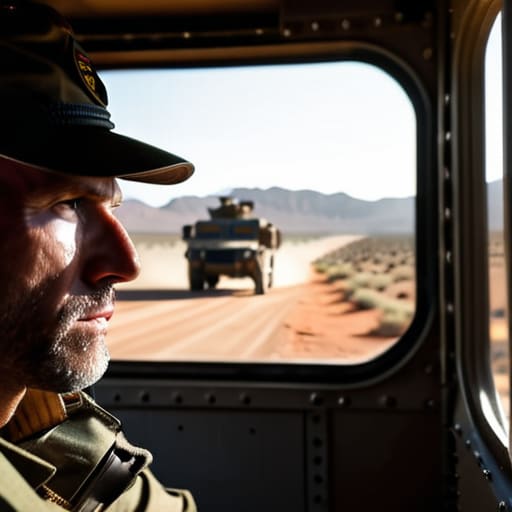
When you’re embedded, you aren’t just a guest; you’re part of the inventory. I’ve seen it in logistics—if a shipment is under military escort, the route is pre-determined and the manifest is sanitized before the truck even leaves the depot. Journalism works the same way. When reporters rely on military press pools, they aren’t just getting a front-row seat; they are operating within a closed loop. You see what the convoy allows you to see. The result is a version of events that feels complete but is actually just a curated subset of the reality on the ground.
The real danger lies in the shift from first-hand reporting vs controlled narratives. It’s easy to mistake proximity for truth. Just because a correspondent is standing in the dust next to a Humvee doesn’t mean they are seeing the whole picture. They are seeing the picture that fits the operational security requirements of the unit. This creates a polished, linear story that ignores the messy, unscripted chaos of the periphery. In my experience, the truth isn’t found in the official briefing; it’s found in the gaps between what is reported and what actually happens in the bush.
First Hand Reporting vs Controlled Narratives Which One Lands
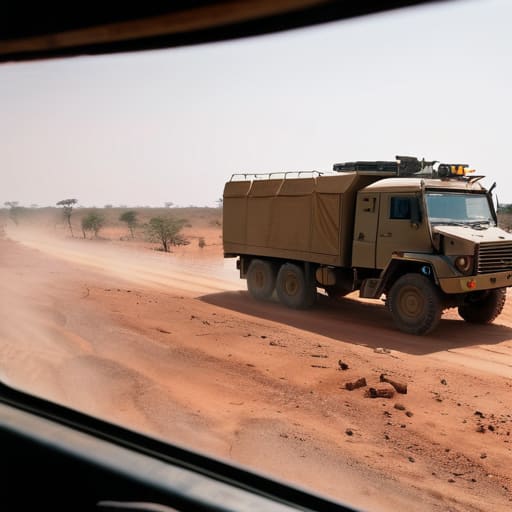
When I was coordinating supply lines in South Sudan, I saw the difference between what people said was happening and what was actually happening on the ground. In the media, you see a similar gap. There is a massive distinction between first-hand reporting vs controlled narratives, and it usually comes down to who owns the transport. When a journalist is part of a military press pool, they aren’t just observing; they are passengers on a vehicle that has a specific destination and a specific schedule. You don’t get to pull over and check the cargo if the driver tells you the road is closed.
This creates a sanitized version of reality. A correspondent might give you a high-definition look at a village, but if they are restricted by war correspondent access limitations, they are only seeing the parts of the landscape that have been cleared for them. They report on the sentiment, the tears, and the speeches, but they rarely get to see the broken axle or the empty warehouse that actually dictates whether a mission succeeds or fails. The real story isn’t found in the polished footage; it’s found in the gaps where the cameras weren’t allowed to go.
The logistics of truth
When you embed a journalist with a unit, you aren’t just providing a seat in a vehicle; you’re providing the route, the schedule, and the security clearance. You can’t expect them to report on the road that isn’t there, or the cargo that never cleared the checkpoint, because they’re too busy following the convoy’s pre-approved itinerary.
Yusuf Lindqvist
The Bottom Line
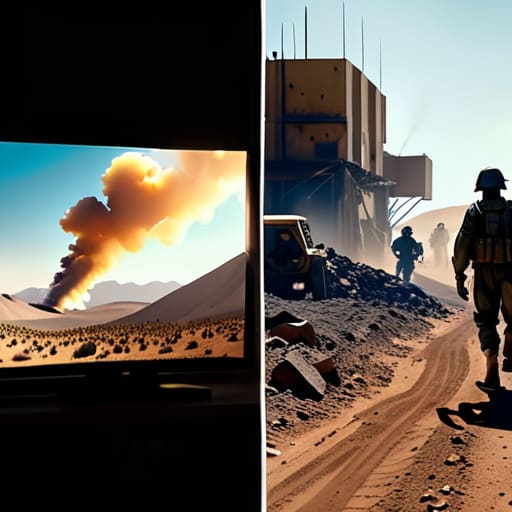
At the end of the day, embedded reporting creates a filtered version of reality that prioritizes access over accuracy. We have seen how controlled narratives can turn a complex crisis into a series of polished, scripted scenes that look great on a news feed but fail to capture the friction of the actual ground operation. When journalists are tethered to the very structures they are supposed to be scrutinizing, the result is a sanitized version of events where the logistical failures and systemic gaps are smoothed over. We cannot mistake a well-produced broadcast for a complete picture; if the reporting doesn’t account for the gaps between the official statement and the reality on the ground, it isn’t doing its job.
If we want to understand the true state of humanitarian work, we have to look past the polished lens and demand the raw data of human experience. Stop looking for the most moving anecdote and start looking for the unfiltered truth of whether the systems are actually functioning. My time in the field taught me that the most important details are rarely the ones found in a press release; they are the ones found in the dust, the delays, and the unscripted moments. We must strive for a brand of journalism that values the integrity of the arrival over the elegance of the narrative.