
I spent nine years in the dust of East Africa, and if there is one thing I learned, it is that nobody actually cares about the glossy brochures or the multi-million dollar funding announcements. Donors love to talk about “strategic resource allocation,” but that is just a polite way of ignoring the reality of how procurement works in aid. You can have the most sophisticated software in the world and a budget that looks like a small country’s GDP, but if you haven’t accounted for the local supplier who suddenly loses their only truck or the bribe required at a provincial checkpoint, your entire supply chain is a fantasy.
I am not here to teach you the theoretical frameworks you find in a textbook. I am going to tell you how this actually functions when the rain turns the roads to soup and the paper trail goes missing. I will strip away the jargon and show you the mechanical, often messy reality of moving goods from a warehouse to a person in need. This isn’t about the theory of humanitarian logistics; it is about the hard math of arrival.
Table of Contents
Beyond the Numbers Realizing Humanitarian Supply Chain Management

Beyond the Numbers: Realizing Humanitarian Supply Chain Management
In the head office, they talk about humanitarian supply chain management in terms of optimization and strategic frameworks. They look at spreadsheets and see percentages. When I was on the ground in South Sudan, I didn’t see percentages; I saw a broken axle on a flatbed and a driver who couldn’t get past a local militia because the paperwork didn’t match the cargo. Real management isn’t about the theoretical flow of goods; it is the gritty, unglamorous reality of managing chaos. It’s about knowing which roads turn to soup when it rains and which local vendors actually have the stock to back up their promises.
This is where the aid agency tender process often hits a wall. You can have the most rigorous compliance protocols in the world, but if those rules make it impossible to work with a reliable local vendor because they don’t have a three-year audited history, you’ve failed. True effectiveness requires a balance between strict procurement compliance in NGOs and the flexibility to act when the situation shifts. If the rules are so rigid that they prevent the movement of life-saving supplies, then those rules are just administrative friction that costs lives.
Emergency Procurement Procedures When Seconds Count
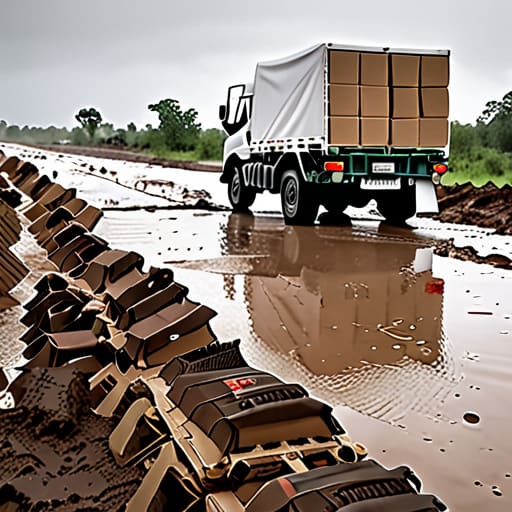
When a flood hits or a conflict breaks out, the standard aid agency tender process goes out the window. You don’t have three weeks to wait for three competitive bids and a committee review while people are dying for lack of clean water. In these moments, we trigger emergency procurement procedures that essentially strip the bureaucracy down to its skeleton. The goal shifts from finding the best long-term value to finding the fastest way to get a pallet of IV fluids or high-energy biscuits from a warehouse to a distribution point.
It is a high-wire act. You are forced to bypass the usual safeguards, which means the risk of fraud or poor quality skyrockets. I’ve seen it firsthand: you’re sitting in a dusty office, trying to decide if you trust a local vendor who has a truck available right now, or if you wait for a vetted supplier who is currently three hundred kilometers away behind a closed border. You aren’t looking for perfection; you are looking for functional reliability. In the heat of a crisis, procurement compliance in NGOs becomes a frantic balancing act between following the rules and actually doing the job. If the paperwork is flawless but the supplies are stuck in a port, the compliance didn’t matter.
## The Metric of Success
I have seen million-dollar procurement plans gather dust in headquarters while a single, unrecorded bribe at a provincial checkpoint determined whether a shipment of antibiotics reached a clinic or sat rotting in a warehouse. In this business, your efficiency isn’t measured by the elegance of your spreadsheet, but by the weight of the cargo that actually clears the final gate.
Yusuf Lindqvist
The Reality on the Ground

At the end of the day, procurement isn’t about the polished spreadsheets or the high-level strategic frameworks discussed in Geneva or Nairobi. It is a messy, grinding reality of navigating broken supply lines, managing unpredictable vendor reliability, and ensuring that every dollar spent translates into a physical item in a warehouse. We have looked at the necessity of rapid-response protocols and the complexities of long-term supply chain management, but the core truth remains: a procurement plan is just paper until it survives the last mile. If the paperwork is perfect but the inventory never reaches the clinic, the entire system has failed.
I still keep my old manifests in a box under my desk, not out of nostalgia, but as a reminder that every line item represents a life dependent on a successful delivery. We often get lost in the metrics of “impact” and “outreach,” but I urge you to look deeper. True success in this field isn’t found in the size of the humanitarian appeal; it is found in the quiet, unglamorous triumph of a shipment clearing a difficult border. If you want to change the world, don’t just fund the mission—make sure the lorry arrives.