
I remember sitting in a humid warehouse outside Goma, staring at a stack of signed manifests for three dozen trucks that were never going to move. The headquarters in Geneva was celebrating a “strategic realignment,” a polite term used by people who have never had to explain to a village chief why the cholera kits are stuck in a port three countries away. People love to talk about policy shifts and geopolitical tensions, but they never talk about the mechanical reality of how aid budgets get cut. It isn’t usually a single, dramatic decision; it’s a slow erosion of the line items that actually keep wheels turning, replaced by high-level “capacity building” funds that never see the dirt.
I’m not here to give you a lecture on macroeconomics or the shifting tides of donor sentiment. I’ve spent nine years tracking the movement of goods through some of the most difficult terrain on earth, and I know that logistics is the only truth. In this post, I’m going to strip away the humanitarian jargon and show you exactly where the money vanishes. We will look at the specific, unglamorous ways the supply chain breaks when the funding dries up, focusing on the real-world impact of every missing dollar.
Table of Contents
Legislative Budget Oversight and the Death of Intent
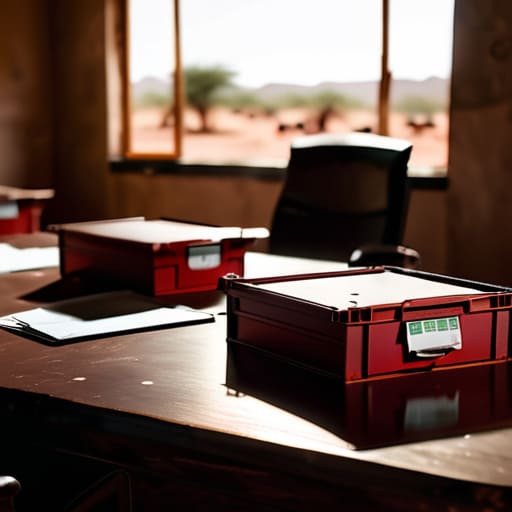
I’ve spent enough time staring at procurement lists to know that the real damage isn’t done in the field; it’s done in committee rooms thousands of miles away. When people talk about legislative budget oversight, they frame it as a tool for accountability, a way to ensure every dollar is accounted for. But from where I sit, it often feels more like a slow-motion strangulation of intent. A subcommittee meets in a climate-controlled room in D.C. or Brussels, looks at a line item for emergency medical supplies, and decides it’s “non-essential” compared to a new domestic infrastructure project. They aren’t looking at the broken cold chain in South Sudan; they are just moving numbers from one column to another.
This is the core of the government spending reallocation processes that keep me up at night. The bureaucrats see a percentage reduction as a manageable adjustment, a way to tighten the belt. They don’t see the cascading failure that follows. When the funding for a regional hub is slashed by 15%, it isn’t just a smaller budget; it’s the loss of the warehouse lease, the grounding of the local fleet, and the eventual disappearance of the entire supply route. The intent of the original program dies long before the money actually stops flowing.
Government Spending Reallocation Processes That Starve the Road

When the accountants in capital cities start talking about government spending reallocation processes, they treat money like digital ink on a screen. They move numbers from one column to another to balance a national ledger, and on paper, it looks like a clean adjustment. But I’ve seen what those adjustments look like when they hit the ground. In my experience, a “reallocation” isn’t just a line item shifting toward infrastructure or defense; it is the literal absence of diesel in a generator at a field clinic. You can’t reallocate a truck that was never purchased.
The real danger lies in how these shifts trigger a domino effect across various foreign assistance funding mechanisms. When a primary donor pulls back to plug a hole in their own domestic budget, the secondary partners—the smaller NGOs that actually do the heavy lifting—suddenly find their contracts frozen mid-stream. It’s not a sudden crash; it’s a slow starvation. You don’t see the impact of fiscal austerity on humanitarian aid when the news reports it; you see it when the supply chain simply stops moving because the fuel budget was diverted to a different priority three thousand miles away.
The Gap Between Policy and Payload
A minister in a climate-controlled office can slash a budget line by fifteen percent and call it ‘fiscal responsibility,’ but they never have to account for the fact that fifteen percent is exactly the margin required to pay for the extra fuel and the bribes needed to get a shipment through a contested checkpoint. They see a decimal point; I see a truck idling at a border, running out of diesel while the driver waits for a signature that isn’t coming.
Yusuf Lindqvist
The Final Manifest

When you strip away the diplomatic language and the high-level policy debates, you are left with a very simple, brutal reality. The legislative shifts and the strategic reallocations I’ve detailed aren’t just numbers on a slide deck in Geneva or DC; they are the direct cause of broken supply chains. We talk about “optimizing resource distribution,” but in the field, that translates to a warehouse in Juba sitting empty because the fuel budget was diverted to a different political priority. The math doesn’t lie, even when the politicians do. If the funding is cut at the source, the entire logistical architecture collapses long before a single person actually feels the hunger.
We need to stop measuring success by the size of the fundraising campaigns and start measuring it by the reliability of the delivery. My old cargo manifests taught me that a mission is only as good as its last successful arrival. If we want to fix the aid system, we have to stop treating humanitarian assistance as a discretionary luxury and start treating it as a non-negotiable commitment. We don’t need more sentiment; we need stable, predictable, and protected pipelines. Only when the budget reaches the actual road can we say we have actually done the work.