I remember sitting in a humid, windowless office in Goma, staring at a stack of UN resolutions that promised everything and delivered nothing. Everyone in the briefing room was talking about sovereignty and international mandates, but all I could think about was the fact that the fuel convoy was stuck three hundred kilometers away because nobody had cleared the checkpoints. People spend years debating the legal nuances of how the responsibility to protect was meant to work, treating it like a philosophical puzzle to be solved in a lecture hall. But in my experience, a mandate is just expensive paper if you don’t have the mechanical capacity to move assets through a conflict zone.
I’m not here to give you a lecture on international law or the high-minded rhetoric used in New York boardrooms. I want to talk about the gap between the policy and the pavement. I am going to strip away the diplomatic fluff and show you the logistical reality of intervention. We are going to look at the actual mechanics of how these frameworks fail or succeed, because at the end of the day, the only metric that matters is whether the supplies actually arrive.
Table of Contents
The Three Pillars of R2p a Logistics of Survival
The theory breaks down into the three pillars of R2P, but looking at them through a logistics lens changes the math. The first pillar is the state’s own responsibility to protect its people. In my experience, this is where the breakdown usually starts; a government that views its own population as an adversary has no interest in maintaining the supply lines of basic rights. The second pillar is international assistance—the idea that we step in to help a state build its capacity before the crisis hits. This is the preventative maintenance of diplomacy, trying to shore up the infrastructure of governance so the system doesn’t collapse under pressure.
The third pillar is the heavy lifting: the collective action taken when a state fails. This is where the debate over humanitarian intervention vs sovereignty gets messy and loud in the halls of New York. On paper, it’s a structured escalation. In reality, it’s a massive, chaotic scramble for a UN Security Council intervention that often arrives too late to matter. When we talk about the framework, we focus on the legalities of international law and human rights, but for those of us on the ground, the third pillar is only as good as the actual movement of assets. If the political will doesn’t translate into a cleared corridor, the pillar is just a theoretical concept.
Preventing Mass Atrocities Before the Engine Fails

The first pillar of R2P is essentially about maintenance. It’s the equivalent of checking the oil and the tire pressure before a long-haul trek through a dry season. In theory, states have the primary responsibility to protect their own populations, but in my experience, that responsibility often evaporates the moment a local militia starts mobilizing. Preventing mass atrocities isn’t just about high-level diplomacy in New York; it’s about the early warning signs that most people ignore until the smoke is already visible on the horizon. If the state’s internal mechanisms are broken, you aren’t looking at a political disagreement—you’re looking at a mechanical failure that will eventually stall the entire region.
The real friction starts when we move from state responsibility to international assistance. This is where the R2P implementation challenges become visible. It is easy to sign a declaration in a climate-controlled room, but it is much harder to build the actual capacity—the roads, the local governance, the supply chains—that keeps a society from fracturing. When the international community fails to provide the tools for prevention, they aren’t just being passive; they are effectively letting the engine seize. You can’t wait for a total breakdown to decide whether or not you’re going to help fix the vehicle.
The Gap Between Mandate and Movement
Everyone in New York talks about R2P as a triumph of international law, but a mandate is just ink on a page until you figure out how to clear a checkpoint or find a driver willing to take a payload into a contested zone; the responsibility to protect isn’t a legal theory, it’s the sheer, exhausting physics of getting supplies to the people who are supposed to be protected.
Yusuf Lindqvist
The Last Mile of Responsibility
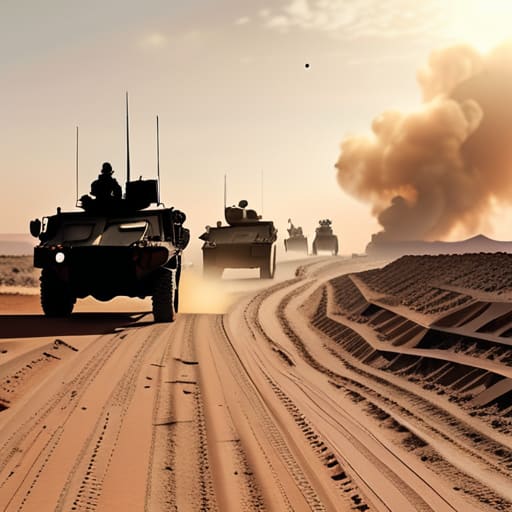
At the end of the day, R2P is a framework of layers: prevention, reaction, and reconstruction. We talk about the pillars and the international mandates like they are holy scripture, but in my experience, a mandate is just a piece of paper until it translates into movement. If the first pillar fails to stop the tension, and the second pillar fails to deploy the necessary assets, the third pillar is nothing more than a post-mortem. The entire mechanism relies on the seamless transition from political will to physical presence. Without that, we aren’t protecting anyone; we are just documenting a catastrophe in real-time.
I have spent enough time watching dusty roads to know that the gap between a UN resolution and a functioning supply chain is where lives are lost. We need to stop treating R2P as a philosophical debate and start treating it as a logistical imperative. The goal isn’t to win an argument in a boardroom in New York; the goal is to ensure that when the crisis hits, the resources are already in motion. If we can bridge that gap—if we can make sure the machinery of protection actually reaches the people it was built for—then we might finally move past the era of mere observation and into the era of actual delivery.