
I spent nine years watching NGOs argue over spreadsheets in air-conditioned offices while I was trying to figure out why a shipment of oxytocin was sitting in a humid warehouse in Goma because the “indirect costs” didn’t cover the driver’s bribe at the checkpoint. People love to get lost in the academic jargon of how overheads are calculated, treating it like some sacred, untouchable math problem that exists in a vacuum. But in the field, if you treat your administrative costs as a dirty little secret to be minimized, you aren’t being efficient; you are starving your own supply chain.
I’m not here to give you a lecture on accounting principles or help you massage your donor reports to look more “lean.” I’m going to show you how to look at these numbers through the lens of actual movement. We are going to strip away the fluff and look at what it really costs to keep a vehicle on the road and a warehouse locked. By the end of this, you’ll understand the difference between accounting for overheads and actually budgeting for the reality of getting goods from point A to point B.
Table of Contents
Distinguishing Fixed vs Variable Overheads for Survival

In my experience, the distinction between fixed vs variable overheads isn’t just an accounting exercise; it’s the difference between a mission that scales and one that collapses under its own weight. When I was managing fleets in South Sudan, the rent for our warehouse in Juba was a fixed cost—it didn’t matter if we moved ten crates or ten thousand. But the fuel, the vehicle maintenance, and the driver’s per diems? Those were variable. If you treat them as the same, you’ll find yourself staring at a budget deficit just as the rainy season hits and your transport costs spike.
The real danger lies in how you handle indirect cost allocation when things get unpredictable. Most headquarters want to use a clean, mathematical formula to spread costs across programs, but those formulas often fail when the reality on the ground shifts. If you rely on rigid absorption costing techniques without accounting for the fact that a broken axle in a remote province costs more than a broken axle in a capital city, your “calculated” rates are useless. You need to know which costs stay steady and which ones will bleed you dry the moment a supply chain breaks.
The Real Math of Operating Expenses Management
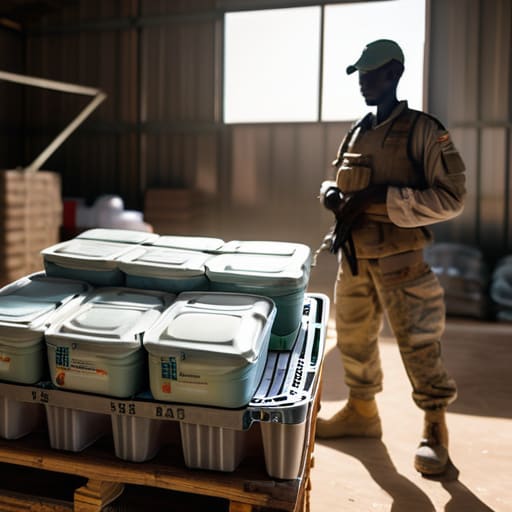
In the field, nobody sits around discussing theoretical models. But when you’re trying to figure out why a budget for a cholera response in South Sudan is bleeding out, you have to look at your operating expenses management through a very cold lens. It isn’t about the fancy spreadsheets in the Geneva headquarters; it’s about how you distribute the cost of the warehouse lease and the security detail across every single pallet of IV fluids. If your math is off, you aren’t just losing money—you’re losing capacity to move cargo.
Most people get bogged down in the weeds of indirect cost allocation, trying to figure out exactly how much of the HQ’s electricity bill belongs to a specific field mission. I’ve seen teams go in circles with complex absorption costing techniques that look great in an audit but fail the moment a bridge washes out. You can use various overhead allocation methods to spread the burden, but if those numbers don’t reflect the actual friction of moving goods through a conflict zone, your projections are useless. At the end of the day, the math only matters if it tells you exactly how much it costs to keep the trucks moving when the situation turns sideways.
The math vs. the reality
You can spend your entire career arguing over whether a line item is a fixed cost or a variable one, but in the field, an overhead isn’t a percentage on a spreadsheet—it’s the cost of the diesel, the bribe at the checkpoint, and the spare tire that keeps the medicine from rotting in the sun.
Yusuf Lindqvist
The Bottom Line

At the end of the day, calculating overheads isn’t some academic exercise in balancing a spreadsheet to satisfy a donor’s audit. It is about the granular reality of distinguishing what stays constant, like my office rent in Nairobi, from what fluctuates with every kilometer driven, like the diesel for a fleet of Land Cruisers. If you fail to account for the variable costs of your own movement, your entire budget is a fiction. You can categorize every indirect expense under a microscope, but if the math doesn’t account for the actual cost of keeping the lights on and the vehicles moving, you aren’t managing a mission—you’re just managing a fantasy. You have to know your numbers so you can ensure the supply chain doesn’t snap when the unexpected hits.
I’ve seen plenty of well-intentioned organizations fold because they treated overhead as a dirty word rather than the literal fuel for their engine. Don’t get caught up in the guilt of administrative costs; instead, focus on the integrity of the calculation. A properly funded overhead is the difference between a beautiful proposal on a desk and a crate of vaccines actually reaching a clinic in a remote province. The goal isn’t to have the lowest overhead possible; it is to have an overhead that is accurate enough to be reliable. Because in this business, the only metric that ultimately matters is whether the lorry actually arrived.