
I once sat in a humid, corrugated metal office in Goma, watching a consultant present a glossy PowerPoint on a fifty-million-dollar bridge project. He was talking about sovereign guarantees and multilateral debt instruments, but all I could think about was the fact that the gravel for the access road hadn’t even been cleared from the quarry. People love to get lost in the high-level mathematics of how infrastructure is financed, treating it like a theoretical game of chess played in air-conditioned boardrooms. But in my experience, a billion dollars in pledged capital is nothing more than expensive ink on paper if the procurement cycles are broken or the local banking liquidity dries up halfway through the build.
I am not here to lecture you on the intricacies of World Bank tranches or the nuances of public-private partnerships. Instead, I am going to strip away the jargon and show you the actual mechanics of the money trail. I’ll explain the friction points where the capital actually hits the ground, because if you want to understand how infrastructure is financed, you have to stop looking at the spreadsheets and start looking at the supply chain.
Table of Contents
Why Debt Financing for Large Scale Projects Is Secondary

I’ve spent enough years watching fuel convoys stall out in the mud to know that a signed loan agreement is just a piece of paper. People get obsessed with the macro-level math of debt financing for large scale projects, treating a billion-dollar credit line like it’s a guarantee of progress. It isn’t. In my experience, you can secure all the sovereign debt you want, but if the project finance structures aren’t built to handle local corruption or a sudden spike in diesel prices, that money will evaporate long before the first kilometer of road is paved.
The real bottleneck isn’t the availability of credit; it’s the execution of the delivery. We talk endlessly about capital expenditure for infrastructure as if the money itself has legs. It doesn’t. Whether you are looking at public private partnerships models or direct state loans, the financing is merely the fuel. If the engine—the actual procurement, the local labor, and the supply chain—is broken, the fuel just sits in the tank. I don’t care about the interest rates on a developmental loan; I care about whether the concession agreements in infrastructure actually include clauses that penalize a contractor for failing to deliver on time. Without that, the debt is just a weight around the neck of the people it was supposed to help.
The True Cost of Capital Expenditure for Infrastructure
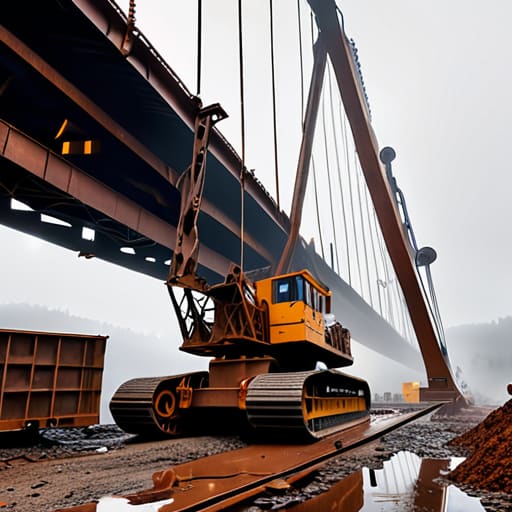
When people talk about capital expenditure for infrastructure, they tend to focus on the massive upfront sticker price. They look at the billions required to bridge a river or lay a rail line and treat it like a single, monolithic transaction. But in my experience, the sticker price is a lie. The real cost isn’t just the initial outlay; it is the operational friction that eats away at the budget before the first stone is even laid. You can secure the most sophisticated project finance structures in the world, but if you haven’t accounted for the localized cost of maintaining specialized machinery in a region with no spare parts, your budget is a fantasy.
The math gets even messier when you move into public private partnerships models. On paper, these look like a way to offload risk, but the “cost” often shifts from a direct line item to a long-term obligation hidden in concession agreements. You aren’t just paying for the bridge; you are paying for the decades of guaranteed returns promised to the private entity. In the field, I learned that a project doesn’t fail because the capital was insufficient; it fails because the hidden lifecycle costs were ignored in favor of a shiny, high-level financing plan. The money is easy to find; it’s the sustained execution that carries the actual price tag.
The Paperwork vs. The Pavement
I’ve seen enough billion-dollar credit lines vanish into administrative black holes to know that a signed loan agreement doesn’t build a bridge; it just buys the possibility of one. In my experience, the financing isn’t the victory—the victory is when the procurement cycle actually ends and the trucks start moving.
Yusuf Lindqvist
The Logistics of the Bottom Line
At the end of the day, we can debate interest rates, sovereign debt ceilings, and the nuances of blended finance models until the sun goes down, but none of that changes the physical reality on the ground. Financing is just a series of promises made on paper. Whether it is a multi-billion dollar loan or a complex public-private partnership, the math only matters if it survives the transition from a spreadsheet to a construction site. If the capital isn’t liquid enough to handle a sudden spike in fuel costs or a broken supply chain, the entire project is just expensive fiction. We have to stop treating infrastructure as a purely financial instrument and start viewing it as a chain of physical dependencies that must be funded with precision, not just volume.
I have spent too many years watching well-funded projects stall because someone forgot that money doesn’t move itself. We need to shift our focus from the scale of the investment to the reliability of the execution. Real progress isn’t measured by the size of the credit line, but by the durability of the asset once the accountants have gone home. If we want to build something that actually lasts, we must ensure that our financial structures are as rugged and practical as the roads and bridges they are meant to create. The goal isn’t to balance a ledger; it is to ensure the delivery arrives.