
I remember sitting in a humid warehouse outside Goma, staring at a stack of shipping manifests for a shipment of vaccines that was technically “too expensive” for the new budget cycle. On paper, the country had crossed a threshold; according to the bureaucrats in Geneva, they were no longer a priority. But looking at those crates, I didn’t see a change in GDP or a successful transition to a middle-income economy. I saw a logistical vacuum. This is the reality of how middle income countries lose access to support: they fall into a statistical gap where they are too “wealthy” for humanitarian grants but too unstable to attract reliable private investment.
I’m not here to lecture you on macroeconomics or recite the latest UN white paper. I’ve spent nine years watching how the gears of international aid actually grind, and I know that the spreadsheet is never the reality. In this post, I’m going to strip away the jargon and show you the actual mechanics of this transition. I’ll explain why the funding disappears and, more importantly, what happens to the supply chains when the safety net is pulled away.
Table of Contents
The Brutal Math of Gni Per Capita Thresholds

The math is cold, and it doesn’t care about the reality on the ground. When the World Bank updates its income classification, it’s based on a single, blunt metric: GNI per capita. It’s a line on a graph that decides everything. I’ve seen it happen in real-time. A country hits a certain number, and suddenly, the tap turns off. They aren’t “poor” enough for the grants anymore, but they aren’t “rich” enough to handle the sudden shift to market-rate loans. This development aid graduation process is treated like a graduation ceremony, but for a logistics manager, it feels more like a sudden loss of fuel in the middle of a desert.
The problem is that these GNI per capita thresholds are a blunt instrument for a complex problem. You can have a booming capital city and a massive GDP, yet still have provinces where the roads are washed out and the clinics are empty. The spreadsheets show growth, but they don’t show the economic vulnerability in middle income nations that occurs when the safety net is yanked away. You’re left managing the same broken supply chains with half the budget and twice the debt. It isn’t a transition; it’s a cliff.
When the World Bank Income Classification Changes Everything
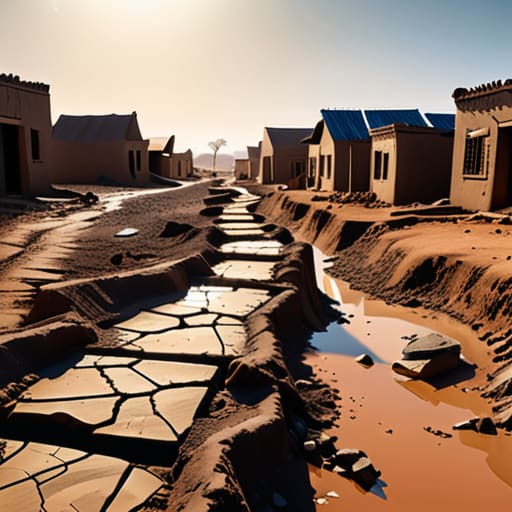
I spent years watching the numbers move on a screen in Nairobi, but the real shift happens in Washington. When the World Bank updates its figures, it isn’t just a clerical update; it is a tectonic shift for the people on the ground. The development aid graduation process is often treated like a graduation ceremony—a celebration of progress. But in my experience, it feels more like a sudden eviction. One year, you are eligible for concessional loans that keep your healthcare infrastructure from collapsing; the next, you are “too successful” for support, even if your internal wealth is concentrated in a few city skyscrapers while the rural provinces are starving.
The problem is that the World Bank income classification changes don’t account for the messy reality of economic vulnerability in middle income nations. A country can see its GNI per capita rise because of a single mineral boom or a spike in oil prices, yet the actual distribution of that wealth remains stagnant. The spreadsheet says the country is thriving, so the low-interest credit lines dry up. Meanwhile, I’m still staring at a broken bridge or a depleted warehouse of vaccines, knowing that the funding we relied on has vanished because a bureaucrat in D.C. clicked “update.”
The Spreadsheet Trap
I’ve spent years watching NGOs pivot their entire strategy because a country’s GNI per capita ticked up by fifty dollars. On a donor’s spreadsheet, that’s progress; on the ground, it’s a death sentence for the supply lines that the most vulnerable people still rely on. You can’t eat a statistical classification, and a middle-income label won’t fix a broken bridge or pay for a refrigerated truck.
Yusuf Lindqvist
The Ledger Doesn't Lie

At the end of the day, we are looking at a massive structural gap where the data fails the reality on the ground. We’ve seen how a slight bump in GNI per capita can trigger a domino effect, stripping away concessional loans and technical assistance just when a country needs to solidify its infrastructure. It isn’t a matter of whether a nation is “wealthy” in the way a European capital is; it is about whether they have the fiscal headroom to manage a crisis without a safety net. When the World Bank reclassifies a country, they aren’t just changing a label on a spreadsheet—they are effectively cutting the fuel line to the very projects meant to bridge the gap between survival and stability.
We need to stop treating development like a binary switch that flips from ‘on’ to ‘off’ based on a single metric. If we want to build resilient systems, our support models have to be as flexible as the supply chains they aim to bolster. The goal shouldn’t be to abandon countries the moment they stop being “poor,” but to help them navigate the dangerous middle ground where the old rules no longer apply. If we keep ignoring the logistical reality of this transition, we aren’t just failing a metric; we are ensuring that the next time a crisis hits, the trucks simply won’t be there.