I remember sitting in a dusty compound outside Goma, staring at a manifest for three tons of imported grain while the local vendor across the road told me his maize prices had just doubled. Everyone in the headquarters was celebrating a successful procurement cycle, but they weren’t looking at the street level. They talk about “macroeconomic stability” and “market interventions,” but they ignore the reality of how aid affects local prices when a massive influx of free goods suddenly hits a fragile ecosystem. It isn’t a theory to me; it’s the sound of a local trader closing his shutters because he can’t compete with a free truck.
I’m not here to give you a lecture on development economics or the latest white paper from Geneva. I’m going to tell you what actually happens when the heavy machinery rolls in and the supply chains shift. We are going to look past the funding totals and focus on the actual mechanics of the market. I’ll show you why a well-intentioned delivery can sometimes do more damage to a local economy than the shortage it was meant to fix.
Table of Contents
Supply and Demand in Crisis Zones the Arrival
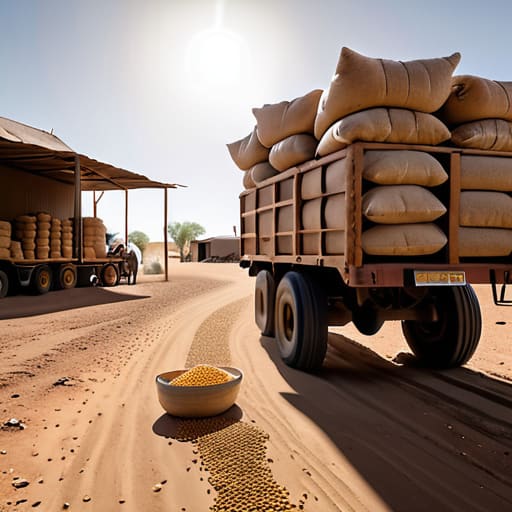
When a convoy pulls into a distribution hub, the math changes instantly. In my experience, people talk about the humanitarian aid economic impact in terms of long-term development, but on the ground, it’s a sudden, violent shift in the local supply chain. You aren’t just delivering grain; you are injecting a massive, unpriced volume of goods into an ecosystem that was already struggling to find its footing. This creates an immediate market equilibrium disruption. One day, the local trader is selling maize at a premium because stock is low; the next, my manifest shows fifty tons of subsidized grain hitting the depot. The price doesn’t just dip; it collapses.
This isn’t just about cheap food, though. The real friction occurs through local producer competition. When the free stuff arrives, the guy who spent his last shilling on seeds and fertilizer can’t compete with a lorry that costs the community nothing. You see it in the eyes of the local farmers—they aren’t celebrating the arrival of the aid; they are watching their entire season’s margin vanish. We often ignore how these sudden surges contribute to commodity price volatility, turning a predictable market into a guessing game for anyone trying to run a small business.
Commodity Price Volatility When the Trucks Roll in
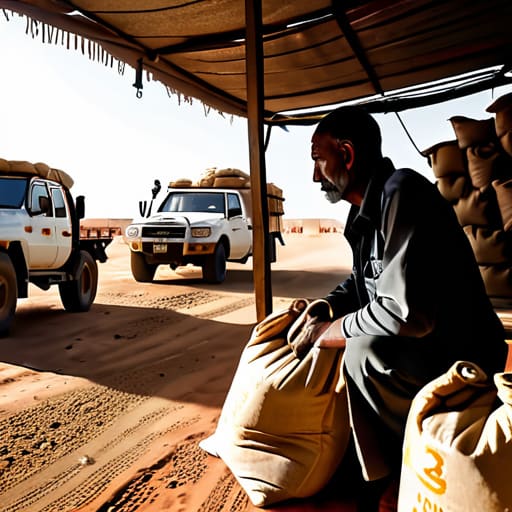
When a fleet of white Toyota Land Cruisers or heavy-duty trucks pulls into a district hub, the immediate reaction isn’t just relief; it’s a mathematical shift. I’ve seen it happen in camps from South Sudan to eastern DRC. The sudden influx of free grain or fortified flour creates an immediate market equilibrium disruption. You have a massive, unpriced supply hitting a localized system that was already operating on razor-thin margins. The local traders, who are often the only ones with any real liquidity, suddenly find themselves holding stock that no one wants to buy because the “free” stuff is sitting right there in the open.
This is where the real commodity price volatility takes hold. It’s not a slow creep; it’s a jagged spike. If the scale of the delivery is large enough, you aren’t just supplementing the market; you are drowning it. I’ve watched local farmers, who had spent months preparing for a harvest, see their projected income vanish overnight because the humanitarian aid economic impact shifted the baseline price below their cost of production. When the trucks roll in, the math changes for everyone—not just the people receiving the aid, but the entire local ecosystem trying to survive the surplus.
The Ghost in the Ledger
Don’t look at the donor’s wire transfer to understand inflation; look at the grain silos. When we drop ten tons of subsidized maize into a village that survives on the local mill, we aren’t just providing food—we are rewriting the math for every farmer in a fifty-mile radius.
Yusuf Lindqvist
The Ledger and the Reality

At the end of the day, the spreadsheets in the capital don’t reflect the reality on the ground. We talk about millions in emergency funding, but the local economy only cares about the sudden influx of bulk grain or the sudden vacuum of cash. When those trucks roll in, they don’t just bring relief; they bring a tectonic shift in what a kilo of maize costs at the stall. If we don’t account for the way our presence disrupts the local supply chain, we aren’t providing aid—we are inadvertently engineering a crisis of its own. The math has to include the local trader, not just the NGO’s procurement officer.
I still keep my old manifests because they remind me that every shipment is a physical intervention. We cannot pretend that our logistics exist in a vacuum. True success isn’t measured by the amount of capital we move, but by how we manage the ripple effects of that movement on the people who were already there. If we want to do this right, we have to stop looking at the appeal totals and start looking at the local market’s pulse. The goal isn’t just to deliver the cargo; it is to ensure that when the trucks finally leave, the market is still standing.