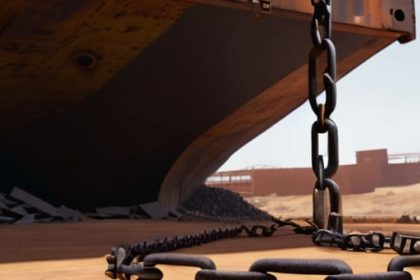
I spent nine years in the bush, watching trucks sit idle because a local ministry couldn’t clear a customs fee that should have been sitting in their budget. People love to debate the high-level ethics of global finance, but they miss the point entirely. When we talk about how tax avoidance affects public revenue, the economists start talking about percentage points and GDP fluctuations, but I see it in the broken axle of a delivery vehicle that never got replaced. It isn’t a theoretical gap in a spreadsheet; it is the literal absence of the resources required to move a crate of vaccines from point A to point B.
I am not here to lecture you on international fiscal policy or the nuances of shell companies. I am going to strip away the jargon and show you the mechanical reality of what happens when the money evaporates before it hits the ground. I will explain how tax avoidance affects public revenue by looking at the supply chain of a nation—from the empty coffers in the capital to the empty clinics in the provinces. This isn’t about sentiment; it’s about the math of whether the system actually functions.
Table of Contents
Corporate Tax Erosion Impact Is the Empty Dock

In my time managing supply lines through the DRC, I learned that a broken link in the chain doesn’t just slow you down; it stops the entire operation dead. You can have the most sophisticated procurement plan in the world, but if the fuel trucks don’t show up because the budget evaporated, the plan is just paper. This is exactly what we see with corporate tax erosion impact. When massive entities use aggressive multinational corporation tax strategies to shave cents off every dollar of local profit, they aren’t just playing a clever game of accounting. They are effectively cutting the fuel lines to the state.
The result isn’t a theoretical dip in a spreadsheet; it is the physical absence of resources where they are most needed. We talk about base erosion and profit shifting as if it’s a technical glitch in a software update, but in the real world, it manifests as a clinic without bandages or a bridge that remains a blueprint. When the money intended for the collective good is diverted into offshore holding companies, the impact on public services funding becomes a tangible, empty dock where a shipment of essential supplies was supposed to arrive. The ledger might balance in a boardroom in London or New York, but on the ground, the shelf is bare.
The Missing Cargo of Fiscal Policy and Tax Loopholes

In my old line of work, if a manifest said fifty crates of antibiotics were leaving Mombasa, I didn’t care about the charity’s fundraising gala or the glossy brochure. I cared if those crates actually hit the warehouse floor in Goma. When we talk about fiscal policy and tax loopholes, we are talking about a massive, systemic failure in the supply chain of governance. It isn’t just a technicality on a balance sheet; it is a breakdown in the delivery of essential goods. When a multinational corporation uses base erosion and profit shifting to move its taxable presence to a shell company in a different hemisphere, they aren’t just “optimizing.” They are effectively hijacking the cargo before it even reaches the port.
Every time a company successfully navigates a loophole, a shipment of something vital goes missing. We see the impact on public services funding not as a theoretical deficit, but as a broken bridge that never gets repaired or a clinic that lacks the basic reagents needed to run a test. You can track the money through every offshore account in the world, but that won’t tell you why the local clinic’s roof is still leaking. The real cost of these multinational corporation tax strategies is measured in the empty shelves of the state’s inventory.
The phantom in the supply chain
You can print all the fundraising brochures you want about closing the gap, but if the tax base is being bled dry by shell companies, you aren’t just losing money—you’re losing the fuel, the parts, and the actual capacity to move anything at all. A budget deficit isn’t a math problem; it’s a broken axle on a road that was supposed to be paved.
Yusuf Lindqvist
The Final Manifest

At the end of the day, the debate over tax avoidance isn’t an academic exercise in fiscal theory; it is a breakdown in the supply chain of the state. We have looked at how corporate erosion leaves the docks empty and how loopholes act as leaks in a pressurized system. When money is diverted through offshore channels, the result isn’t just a line item on a spreadsheet—it is a failure of delivery. You can talk about GDP growth and economic stability all you want, but if the tax revenue doesn’t reach the central treasury, the actual infrastructure of society remains unbuilt, unmaintained, and broken.
I have spent enough time in remote outposts to know that you cannot run a mission on promises of future funding. You need the supplies on the ground, and you need them now. The fight against tax avoidance is fundamentally about closing the gap between what is promised to the public and what actually arrives at the destination. We need to stop measuring success by the size of the global economy and start measuring it by the integrity of the arrival. If the revenue doesn’t reach the people who need the services, then the entire system has failed its manifest.