
I’ve spent enough years sitting in humid, makeshift offices in Goma to know that people love to talk about the “sanctity” of international treaties. They treat legal frameworks like they are some kind of magic shield that descends from the clouds to save a family. But in my experience, the truth of how refugee law protects people isn’t found in a high-level summit in Geneva; it’s found in the mud and the bureaucracy at a checkpoint. A law is just ink on a page until it determines whether a truck carrying grain is allowed to pass or if a family is turned back into a combat zone.
I am not here to give you a lecture on the nuances of the 1951 Convention or the lofty ideals of human rights. I’ve seen too many beautiful documents fail to stop a single bullet. Instead, I’m going to show you how these legal mechanisms actually function when they hit the friction of reality. I will break down the practical, often messy ways that legal protections translate into physical safety, focusing on the logistics of survival rather than the sentiment of the law.
Table of Contents
The Legal Definition of a Refugee Is a Lifeline
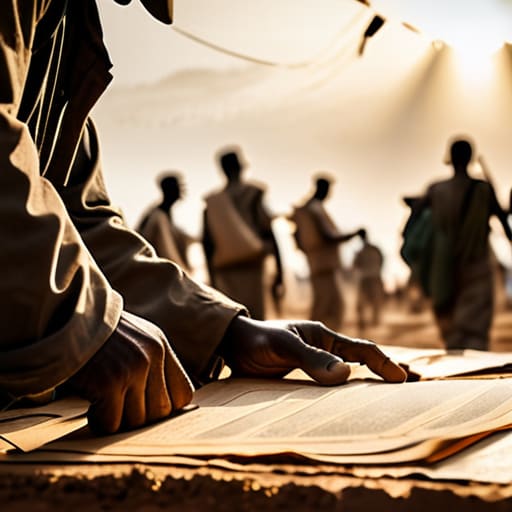
In the field, you learn quickly that a person’s status isn’t just a label; it is a functional requirement for survival. When I was managing supply lines near the border, I saw how a single word could change the entire logistical reality of a camp. The legal definition of a refugee acts as a gatekeeper. Without that specific designation, a person is just another displaced body in a transit zone, often without the right to access the very food, medicine, and shelter my teams were trying to deliver. It is the difference between being a “migrant” and being someone to whom the international community owes a specific, documented duty of care.
This isn’t about academic debate or the nuances of international human rights law. For those of us on the ground, it’s about the principle of non-refoulement. To put it simply: it is the legal barrier that prevents a state from forcibly sending someone back to the very danger they are fleeing. If that principle fails, the entire humanitarian machinery grinds to a halt because there is no longer a safe destination to receive the cargo or the people. The law provides the operational framework that allows us to build a stable point of arrival.
Asylum Seeker Rights and Legal Frameworks in Motion

In my experience, the gap between a legal theory and a person’s survival is measured in transit points. You can have all the high-minded language of international human rights law written into a treaty, but if a border guard refuses entry to someone claiming fear of persecution, that law is just ink on a page. For an asylum seeker, the framework isn’t an abstract concept; it is the thin line between being processed for aid or being pushed back into a conflict zone.
This is where the principle of non-refoulement explained becomes more than a classroom lecture. In the field, non-refoulement is the hard, physical reality of preventing a forced return to danger. It is the legal shield that dictates whether a person is allowed to stand on sovereign soil to make their case. When we talk about asylum seeker rights and legal frameworks, we aren’t talking about philosophical debates; we are talking about the specific, procedural safeguards that prevent a person from being discarded the moment they cross a line on a map. If the mechanism for claiming asylum breaks down at the checkpoint, the entire legal structure fails the person standing in the dust.
The gap between law and reality
A legal status is just a piece of paper until it translates into a physical corridor; you can debate the nuances of non-refoulement in a boardroom in Geneva all day, but if the law doesn’t stop a border guard from turning a truck around at midnight, then the law hasn’t actually done its job.
Yusuf Lindqvist
The Reality of the Paperwork

At the end of the day, refugee law isn’t just a collection of academic theories or high-minded principles debated in Geneva. It is the mechanism that dictates whether a person is processed as a human being with rights or discarded as a statistical anomaly. We have looked at how definitions provide the necessary legal status, how asylum frameworks attempt to govern the chaos of displacement, and how these protections are supposed to function in practice. But I have learned through years of managing supply chains in the field that a law is only as strong as its implementation on the ground. Without the legal mandate to allow movement, the most well-funded humanitarian corridor is nothing more than a dead end.
People often ask me if the system works. My answer is always the same: the system is a tool, not a solution. Laws provide the blueprint, but they do not move the trucks or open the gates; people do. If we want to truly protect the displaced, we have to stop looking at law as a static document and start seeing it as a living commitment to action. The measure of our success won’t be found in the elegance of our legal drafting, but in the tangible reality of a person reaching safety because the law gave them a way to get there.