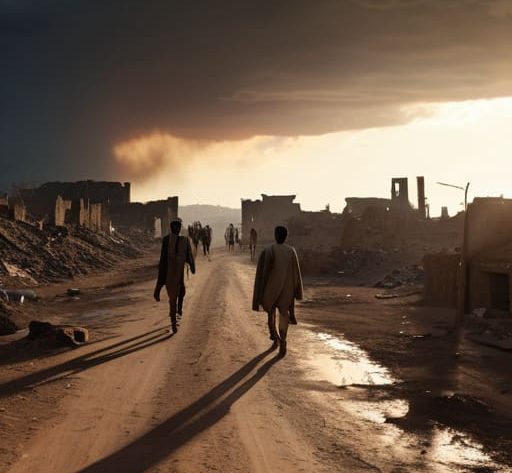
I remember sitting in a humid, makeshift office in Goma, staring at a map that looked more like a work of fiction than a logistics plan. The diplomats in Geneva were busy debating the legal nuances of what a humanitarian corridor is, using lofty language about sovereignty and international law. Meanwhile, I was staring at a manifest for three trucks carrying high-protein Plumpy’Nut that were currently idling fifty kilometers away because a local commander hadn’t been “consulted.” To the people in the air-conditioned rooms, a corridor is a theoretical concept; to me, it was the physical space between a checkpoint and a warehouse.
I am not here to give you a lecture on UN resolutions or the political theory of neutral zones. If you want a textbook definition, go to a library. I’m going to tell you how these routes actually function when the paperwork hits the mud. I will strip away the sentiment and the multimillion-dollar appeal totals to show you the mechanical reality of moving supplies through a conflict zone. By the end of this, you’ll understand that a corridor isn’t a victory of diplomacy—it is simply a guarantee of passage for the cargo.
Table of Contents
The Mechanics of Safe Passage for Civilians
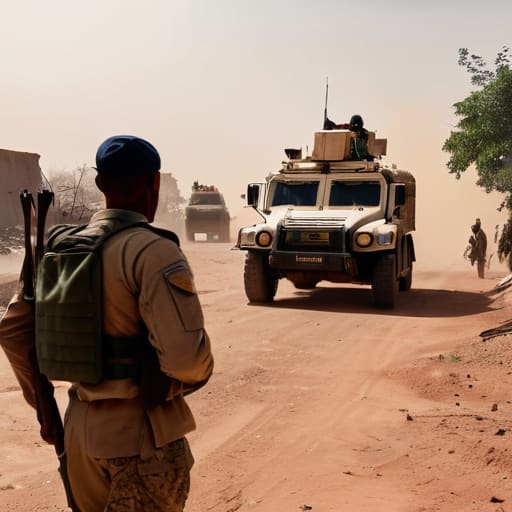
In my experience, “safe passage for civilians” is rarely a smooth, paved road. On paper, it’s a series of negotiated agreements and UN humanitarian corridor protocols, but on the ground, it is a grinding exercise in constant communication. You aren’t just following a map; you are managing a moving target of shifting frontlines. To make it work, you need more than just a signed document from a capital city; you need the local commander at a specific checkpoint to actually believe that letting a convoy pass won’t cost him his standing with his superiors.
The actual mechanics rely heavily on maintaining absolute neutrality in humanitarian operations. If a single truck in your fleet is suspected of carrying anything other than what is on the manifest—even if it’s just extra fuel for a generator—the entire window of opportunity slams shut. You aren’t just navigating terrain; you are navigating the fragile trust of combatants who view any movement as a potential tactical shift. Success isn’t measured by the elegance of the diplomatic framework, but by the fact that the evacuation routes in war zones remain predictable enough for people to actually use them without being caught in a crossfire.
Why Un Humanitarian Corridor Protocols Actually Matter Much More Than Rheto
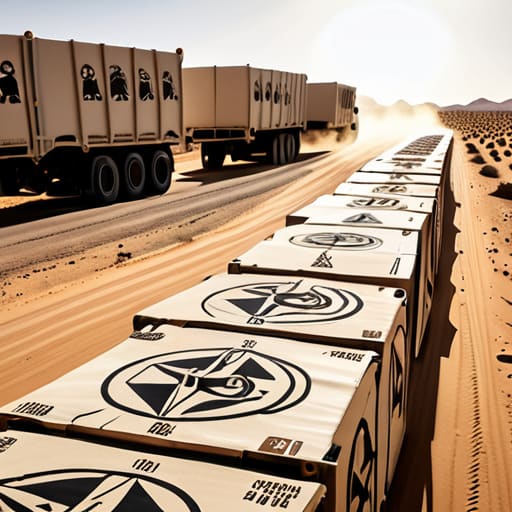
In my experience, a press release announcing a “humanitarian corridor” is just ink on paper. The real weight lies in the UN humanitarian corridor protocols that dictate exactly who moves, when they move, and what they carry. Without these specific, granular frameworks, a corridor is nothing more than a target. When we talk about neutrality in humanitarian operations, we aren’t discussing a moral high ground; we are discussing the technical necessity of ensuring that a convoy of grain or medicine isn’t mistaken for a troop movement. If the protocols aren’t ironclad, the corridor becomes a trap rather than a lifeline.
The paperwork is what keeps the trucks moving. I’ve seen plenty of high-level diplomacy fail because the ground-level reality didn’t account for the specificities of international humanitarian law protections. It’s one thing to agree on a concept in Geneva; it is quite another to coordinate the precise timing of evacuation routes in war zones so that a civilian bus doesn’t collide with a supply truck at a contested checkpoint. To me, the value of these protocols isn’t found in the diplomatic success they signal, but in the technical certainty they provide to the drivers who actually have to navigate the chaos.
Forget the Diplomatic Language
People talk about humanitarian corridors as if they are sacred, invisible lines drawn on a map by men in suits. They aren’t. A corridor is just a series of checkpoints, a specific set of fuel requirements, and the terrifyingly thin margin between a truck reaching a distribution point or being stripped for parts in a ditch. If the cargo doesn’t move, the corridor doesn’t exist.
Yusuf Lindqvist
Beyond the Paperwork

At the end of the day, a humanitarian corridor is not a political victory or a diplomatic breakthrough recorded in a press release. It is a grueling, granular exercise in coordination. It requires the alignment of deconfliction protocols, the securing of physical transit routes, and the constant, nervous monitoring of movement by people on the ground. We have discussed the mechanics of safe passage and the necessity of UN protocols, but we must remember that these are merely the blueprints. A blueprint doesn’t feed anyone; it only provides the framework for the actual movement of life-saving supplies from a warehouse to a person in need.
I have spent too many nights staring at cargo manifests, wondering if the fuel supplies would clear the next checkpoint or if the convoy would be turned back by a local commander. The reality of humanitarian work is found in those moments of tension, not in the soaring rhetoric of international summits. If we want to move the needle, we have to stop obsessing over the scale of the appeals and start focusing on the integrity of the supply chain. Because in this field, the only metric that truly carries weight is whether the lorry actually arrived at its destination.