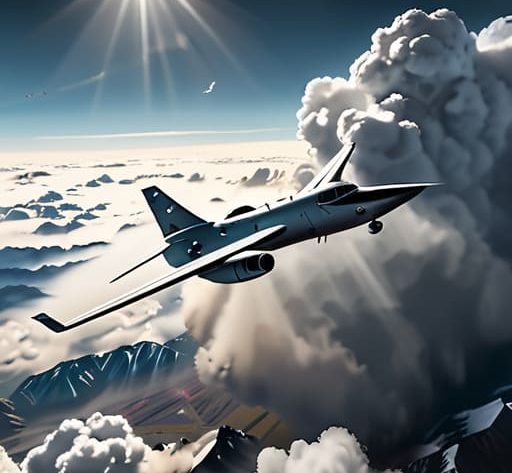
I remember sitting in a humid, corrugated metal office in Goma, staring at a satellite feed that promised “security” while the radio crackled with reports of intercepted supply lines. People love to talk about the high-level politics and the grand strategic declarations, but they rarely tell you the grit of what a no-fly zone involves when you’re actually on the ground. It isn’t just a line drawn on a map or a resolution passed in a distant capital; it is a massive, grinding logistical nightmare of radar coverage, interceptor readiness, and the constant, looming threat that the rules of engagement will shift the moment a cargo plane enters the airspace.
I’m not here to give you a lecture on international law or the theoretical benefits of aerial denial. I have spent too many years tracking manifests to care about the sentiment behind a policy. Instead, I am going to strip away the jargon and tell you how this actually functions in a theater of operations. I will show you the real mechanics—the hardware, the coordination, and the inevitable friction—that determines whether the sky stays clear enough for the supplies to actually reach the people who need them.
Table of Contents
What a No Fly Zone Involves When the Engines Stop
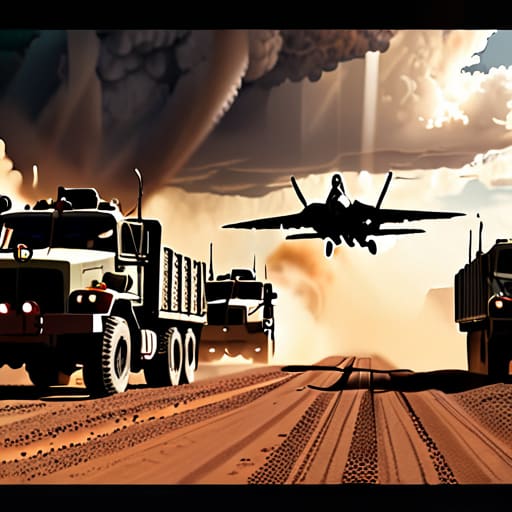
When the engines stop, the theoretical frameworks of international law regarding airspace fall away, and you’re left with the friction of reality. In my experience, a no-fly zone isn’t just a line on a digital map; it is a massive, kinetic logistical problem. It requires constant military enforcement of no fly zones to ensure that the perimeter holds. If the patrols aren’t active, the zone is just a suggestion. For those of us on the ground, the concern isn’t the political debate in Geneva, but the sudden, jarring silence in the sky that signals a shift in how we move our supplies.
The real complexity lies in the friction between security and movement. You have to navigate strict airspace restrictions and regulations that can turn a standard delivery into a nightmare. It’s not just about keeping combatants out; it’s about the frantic coordination of civilian aviation safety protocols to ensure a cargo plane doesn’t wander into a kill box. When the rules change mid-transit, the manifest doesn’t matter if the pilot is forced to divert or ground the fleet. You stop looking at the fuel gauges and start looking at the radar, wondering if the corridor is actually open or if it’s just a trap.
International Law Regarding Airspace and the Weight of Silence
Lawyers love to argue over the nuances of international law regarding airspace, citing sovereignty and treaty obligations as if those things hold weight when a surface-to-air missile is tracking a target. In my experience, the legal framework is just a layer of paper meant to provide a veneer of legitimacy to what is essentially a kinetic operation. When a mandate is issued, the debate shifts from the legality of the boundary to the mechanics of military enforcement of no-fly zones. It doesn’t matter how many resolutions are passed in Geneva if there isn’t a pilot in the air ready to intercept a violation.
The real friction occurs where the legalities meet the ground reality of civilian aviation safety protocols. You can draw a line on a digital map, but those lines don’t account for a pilot losing radio contact or a cargo plane straying off course due to mechanical failure. For a logistician, the law is secondary to the risk profile. If the enforcement is too aggressive, you risk a catastrophe; if it’s too lax, the zone is meaningless. The law provides the permission, but the actual safety of the corridor depends entirely on how strictly those boundaries are patrolled.
The reality of a closed sky
People talk about no-fly zones as a triumph of international law or a strategic blockade, but for those of us on the ground, it’s just another variable in the supply chain. A no-fly zone doesn’t just ground combat aircraft; it grounds the cargo planes carrying the vaccines, the grain, and the surgical kits. You can declare the airspace sovereign all you want, but if the planes can’t land, the mission is dead in the water regardless of what the diplomats signed.
Yusuf Lindqvist
The Ground Reality
At the end of the day, a no-fly zone isn’t just a legal designation or a line drawn on a satellite map. It is a massive, expensive, and violent logistical undertaking. It involves the constant calibration of radar, the deployment of interceptor jets, and the heavy burden of enforcing sovereign airspace against those who refuse to acknowledge the boundary. We talk about international law and the mechanics of flight, but the reality is found in the tension between the theoretical rules of the UN and the physical presence of hardware in the sky. If the enforcement isn’t constant, the zone is nothing more than a suggestion on a piece of paper.
I have spent too many years watching cargo sit idle because a corridor wasn’t secure or a sky wasn’t cleared. While the diplomats debate the nuances of jurisdiction, the people on the ground are simply waiting to see if the silence above translates into safety below. A no-fly zone is a tool, and like any tool, its value is measured solely by its operational success. It isn’t about the grand gesture of a resolution; it is about whether the supply lines remain unbroken because the sky stayed controlled. That is the only metric that actually matters when the dust settles.