
I remember sitting in a humid warehouse outside Goma, staring at a stack of waybills that didn’t add up, while a radio announcer in Geneva used sweeping, academic language to describe the chaos unfolding fifty kilometers away. People love to debate the nuances of political theory, but they rarely talk about the physical reality of how a population is actually erased. To the pundits, it’s a sociological phenomenon; to me, what ethnic cleansing means is the sudden, violent disappearance of a supply route and the terrifying silence that follows when the local distributors stop answering their phones. It isn’t a textbook definition; it is the systematic dismantling of a community’s ability to exist in a specific space.
I am not here to give you a lecture on international law or a sanitized history lesson. My goal is to strip away the sentimentality and show you the mechanics of how these operations actually function on the ground. I will tell you how borders are manipulated, how resources are choked off, and how the logistics of displacement are executed with surgical precision. If you want to understand the machinery behind the headlines, you’ve come to the right place.
Table of Contents
- Beyond the Narrative What Ethnic Cleansing Means
- The Calculus of Erasure and Human Rights Violations
- The Distinction Between Ethnic Cleansing and Genocide
- When the Lorry Arrives Crimes Against Humanity
- Tracing the Ghost Maps Through Historical Examples
- Patterns of Ruin in Historical Examples of Ethnic Cleansing
- The Logistics of Silence and Disappearance
- The Calculus of Absence
- The Final Manifest
Beyond the Narrative What Ethnic Cleansing Means

In the NGO world, we spend a lot of time debating international law definitions in air-conditioned offices in Geneva. They talk about intent and legal frameworks, but on the ground, the mechanics are much more visceral. To me, it isn’t an abstract concept found in a textbook; it is the logistical nightmare of the forced displacement of populations. It is the sudden, violent reconfiguration of a map where entire villages are emptied overnight, leaving behind nothing but abandoned manifests and empty hearths.
There is often a messy distinction between ethnic cleansing and genocide in the briefings I used to read, and while the legal nuance matters for the prosecutors, it doesn’t change the reality of the movement. Genocide is about the destruction of a people; ethnic cleansing is about the removal of a presence. It is a systematic clearing of territory to ensure a specific group no longer holds ground. When I see the data, I don’t look at the rhetoric—I look at the sudden, massive shifts in population density and the broken supply lines that follow. It is a calculated, administrative effort to erase a demographic footprint, one forced exodus at a time.
Defining the Void International Law Definitions
Lawyers in Geneva like to talk about “intent” and “systematic patterns.” They sit in climate-controlled rooms, parsing through the Rome Statute to decide if a specific action meets the threshold of a crime against humanity. They look for the paper trail of a policy. But when I was moving medical supplies through contested corridors, the legal definition felt like a luxury we couldn’t afford. To a jurist, ethnic cleansing is a technical violation of sovereignty; to a logistician, it is the deliberate destruction of the supply chain that keeps a community alive.
The law focuses on the “why”—the intent to remove a group from a territory. I focused on the “how.” If a village’s grain stores are burned and the only road out is blocked by a militia, the legal definition is being written in real-time, but the reality is simply a broken route. The law defines the crime, but it doesn’t account for the vacuum left behind when the people are gone and the infrastructure is gutted.
The Mechanics of Forced Displacement of Populations
In my experience, displacement isn’t a sudden tidal wave; it’s a calculated breakdown of the supply chain. It starts with the quiet removal of essentials—the sudden disappearance of fuel stocks, the “misplacement” of grain shipments, or the blocking of a single key bridge. When you control the movement of goods, you control the movement of people. You don’t need to fire a shot if you can make a village logistically uninhabitable by cutting off the very things required to sustain life.
Once the pressure builds, the physical removal follows a predictable, brutal pattern. It is rarely a chaotic scramble; it is often a managed extraction. I have seen how militias use checkpoints not just to search, but to funnel specific demographics toward certain borders. It’s about the systematic stripping of assets—the burning of granaries and the seizure of livestock—to ensure that once a family is pushed out, there is nothing left to return to.
The Calculus of Erasure and Human Rights Violations
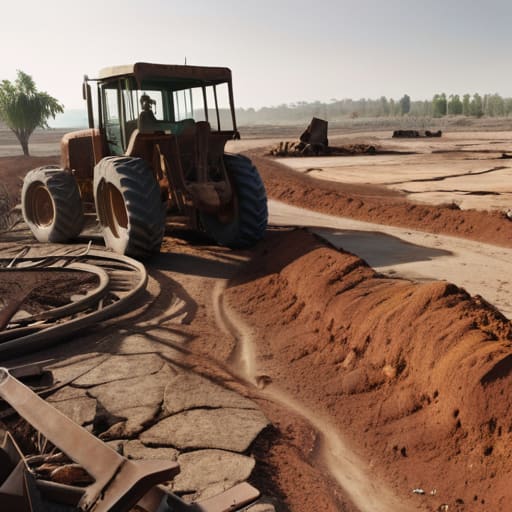
When you look at the spreadsheets of a humanitarian crisis, you don’t see the ideology; you see the breakdown of the supply chain. The calculus of erasure isn’t just a political strategy; it is a systematic attempt to remove a population from a specific geography. In my experience, the most brutal aspect is how these human rights violations are often staged to look like collateral damage or spontaneous civil unrest. But if you track the movement of heavy machinery, the sudden seizure of agricultural assets, or the coordinated blockage of food corridors, a pattern emerges. It is a deliberate, logistical effort to make a territory uninhabitable.
There is often a messy, legalistic debate regarding the distinction between ethnic cleansing and genocide, but on the ground, that distinction rarely changes the immediate reality for the displaced. While genocide focuses on the physical destruction of a group, ethnic cleansing is about the territorial removal of that group. From a logistics standpoint, it is the difference between a targeted strike and a sweeping, structural eviction. Whether it is through the destruction of water infrastructure or the forced march of entire villages, the objective remains the same: to clear the map and ensure that once the people are gone, they have nothing to return to.
The Distinction Between Ethnic Cleansing and Genocide
In the NGO world, people use these terms interchangeably, but in the field, the distinction is a matter of operational reality. Genocide is an attempt to erase a people through death—it is the final, absolute outcome. Ethnic cleansing is different; it is about the removal of a presence from a specific geography. If genocide is the destruction of the vessel, ethnic cleansing is the forced emptying of the room. One seeks to end a lineage, while the other seeks to redraw a map by any means necessary, including terror, arson, and displacement.
From a logistical standpoint, the distinction often comes down to the objective of the violence. In a genocidal campaign, the goal is the body count. In ethnic cleansing, the goal is the vacancy. You might see a village burned not to kill every inhabitant, but to ensure no one ever wants to return. It is the difference between a massacre and a forced migration, though the trauma left in the wake of both is identical.
When the Lorry Arrives Crimes Against Humanity
In the field, the distinction between a localized skirmish and a crime against humanity often comes down to the scale of the logistics. When I was managing supply lines in South Sudan, you didn’t look for a signed declaration of intent from a warlord; you looked at the pattern of the movement. Crimes against humanity are characterized by a widespread or systematic attack directed against a civilian population. It isn’t just a single instance of violence; it is the organized, repetitive application of force. It is the difference between a single riot and a coordinated effort to clear a valley of its inhabitants through state-sanctioned or organized terror.
From a logistical standpoint, these crimes require a certain level of infrastructure. You cannot move thousands of people or systematically deprive a region of food and medicine without a chain of command and a method of transport. When the “lorry arrives”—whether it is carrying soldiers, heavy weaponry, or the very tools used to facilitate displacement—the crime moves from the realm of theory into the realm of operational reality.
Tracing the Ghost Maps Through Historical Examples

When you look at historical examples of ethnic cleansing, you don’t see a single, unified blueprint. Instead, you see a series of logistical improvisations designed to achieve the same result: the removal of a specific group from a specific geography. In the Balkans during the 1990s, it wasn’t just about the high-level political rhetoric; it was about the systematic seizure of property and the calculated use of terror to ensure people wouldn’t return. It was the deliberate creation of a vacuum where a community once stood.
The difficulty in these cases often lies in the distinction between ethnic cleansing and genocide. While genocide aims to destroy a group in whole or in part, ethnic cleansing is frequently a tool of territorial consolidation. It is the violent push to make a map match a nationalist’s vision. I have seen how the forced displacement of populations is often treated by local actors as a mere “population transfer,” a sanitized term used to mask the reality of crimes against humanity. In the field, you realize that the map doesn’t change because of a treaty; it changes because the people who lived there were forcibly erased from the ledger.
Patterns of Ruin in Historical Examples of Ethnic Cleansing
When you look at the historical data, the patterns aren’t found in the speeches of leaders, but in the sudden, violent restructuring of geography. Whether it was the forced removals during the Balkan conflicts or the systematic displacement of indigenous populations across various continents, the methodology remains depressingly consistent. It starts with the administrative stripping of rights, followed by the physical severance of people from their land. You see a deliberate attempt to deconstruct the social fabric before the first tent is even pitched in a refugee camp.
The logistics of these operations always follow a specific rhythm: isolation, intimidation, and then the final, forced movement. It is never a chaotic accident; it is a calculated effort to ensure that once a group is moved, there is no physical or legal mechanism for them to return. In my experience, the most effective way to erase a culture isn’t just to kill people, but to systematically destroy the infrastructure of their existence, leaving nothing behind but empty houses and broken supply lines.
The Logistics of Silence and Disappearance
In my experience, erasure isn’t just a political intent; it is a logistical operation. When a population is being systematically removed, the perpetrators don’t just rely on violence; they rely on the intentional disruption of supply chains. You see it in the way checkpoints are positioned not to catch smugglers, but to choke off food and medicine to specific villages. You see it when the fuel allocations for local transport vanish, or when the communication lines go dark just as the convoys move in. It is a calculated effort to ensure that once the movement begins, no one is left to document the departure.
The goal is to create a vacuum where information cannot travel. If you can control the movement of goods, you can control the movement of truth. It’s about making sure the paper trail vanishes alongside the people. When the manifests are burned and the trucks are redirected, the world is left staring at a map that looks empty, rather than a map that has been forcibly cleared.
The Calculus of Absence
“Lawyers will argue over the intent and the definitions in air-conditioned rooms in Geneva, but on the ground, ethnic cleansing isn’t a legal concept—it’s a logistical operation. It is the systematic removal of a people from a map, achieved through the calculated destruction of the supply lines that keep a community alive. You don’t need to kill every person to erase them; you just need to make sure the grain doesn’t arrive, the medicine doesn’t reach the clinic, and the homes no longer exist to hold them.”
Yusuf Lindqvist
The Final Manifest
We have moved past the academic definitions and the legalistic debates over intent versus outcome. What we have mapped out is a process of systematic subtraction. From the calculated destruction of infrastructure to the forced movement of bodies across borders, ethnic cleansing is not a sudden explosion of chaos; it is a deliberate logistical operation. It relies on the precise orchestration of displacement to create a void where a community once stood. Whether it is through the slow erosion of rights or the sudden violence of a paramilitary raid, the goal remains the same: the erasure of presence from a specific geography.
If there is a lesson to be drawn from the wreckage of these historical patterns, it is that silence is the most efficient tool in the perpetrator’s kit. We often wait for the grand declarations from international bodies, but the reality is found in the granular details—the missing people, the burned villages, and the broken supply lines. We must look past the high-level rhetoric and focus on the mechanics of prevention. True accountability starts when we stop treating these events as inevitable tragedies and start seeing them as preventable logistical failures. The goal is not just to document the disappearance, but to ensure the trucks keep moving and the people stay home.