
I spent a decade watching NGOs spin grand narratives about justice, but I learned early on that legal jargon doesn’t feed anyone. When people ask me what crimes against humanity are, they usually expect a lecture on the Rome Statute or a breakdown of international treaties. They want the polished, academic version that looks good in a glossy annual report. But in the field, those definitions don’t mean a damn thing when a supply route is intentionally severed or a village is systematically emptied to clear a path for a militia. To me, the distinction isn’t found in a courtroom in The Hague; it’s found in the calculated destruction of the systems that keep people alive.
I’m not here to give you a law school seminar or a lecture on moral philosophy. My goal is to strip away the sentimentality and show you the mechanics of how these atrocities actually function on the ground. I will explain what crimes against humanity are by looking at the logistics of suffering—the way patterns of violence are organized, executed, and sustained. We’re going to focus on the concrete reality of how human life is targeted, moving past the high-level abstractions to see the actual machinery of the crime.
Table of Contents
Decoding the Rome Statute Definition

When you sit in a headquarters in Geneva or The Hague, the language gets sanitized. They talk about “legal elements of international crimes” as if they are solving a math equation rather than documenting a massacre. But if you look at the Rome Statute definition, the core isn’t just about the act itself; it is about the scale and the intent. To trigger the International Criminal Court jurisdiction, we aren’t just looking at a single, isolated incident of violence. We are looking for a widespread or systematic attack directed against a civilian population.
In my experience, the difference between a tragic accident and a crime against humanity is the pattern. A single warehouse being looted is a crime. A coordinated, state-sanctioned campaign to starve a specific province by blocking every single food convoy is a different beast entirely. This is the fundamental distinction between war crimes and crimes against humanity. War crimes happen within the context of an armed conflict—they are violations of the rules of engagement. Crimes against humanity, however, can happen in peacetime. They require a level of organized, repetitive cruelty that suggests the machinery of the state, or a powerful non-state actor, has been deliberately turned against its own people.
The Widespread or Systematic Attack Requirement
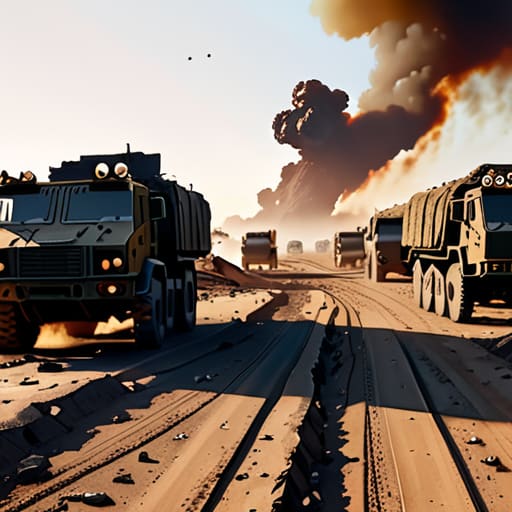
In my years moving medical supplies through contested zones, I learned that scale is everything. You don’t see a single rogue checkpoint or a lone soldier acting out; you see a pattern. In legal terms, this is the widespread or systematic attack requirement. It is the difference between a localized incident of violence and a coordinated effort to target a civilian population. “Widespread” refers to the sheer scale—the number of victims and the geographic spread. “Systematic” refers to the organized nature of the violence, implying a level of planning or a policy that drives the chaos.
This distinction is crucial when navigating the distinction between war crimes and crimes against humanity. A war crime might be a single, isolated breach of conduct during a skirmish, but a crime against humanity requires that the violence is part of a larger, orchestrated campaign. When I look at a broken supply chain or a village emptied of its people, I’m not looking for a single bad actor; I’m looking for the machinery behind it. To satisfy the legal elements of international crimes, the prosecution has to prove that these weren’t just random outbursts, but part of a deliberate, large-scale mechanism of harm.
Beyond the Legal Paperwork
You can debate the nuances of the Rome Statute in a climate-controlled room in The Hague all you want, but in the field, a crime against humanity isn’t a legal theory—it is the moment the supply chain is intentionally severed to starve a population into submission. It is the calculated decision to ensure the medicine never reaches the clinic and the trucks never reach the border.
Yusuf Lindqvist
Beyond the Legal Framework

We have spent this time dissecting the Rome Statute and the necessity of a widespread or systematic attack against a civilian population. It is easy to get lost in the technicalities of “state or organizational policy” and the specific thresholds that separate a tragic crime from a crime against humanity. But from where I sit, these definitions are not just academic exercises for lawyers in The Hague; they are the logistical boundaries of human accountability. If the attack isn’t systematic, it’s a failure of policing; if it is, it is a failure of civilization itself. Understanding these distinctions is the only way to ensure that when the reports come in, we aren’t just counting casualties, but identifying the machinery of intent.
At the end of the day, the law is just a ledger. It provides the framework, but it doesn’t stop the violence. My years in the field taught me that while the world debates definitions, the reality remains on the ground, often in the most broken places imaginable. We study these crimes not to satisfy a legal curiosity, but to build a standard of evidence that can actually hold power to account. The goal is to ensure that when the dust settles and the manifests are signed, there is a mechanism in place to prove that the suffering wasn’t an accident of war, but a calculated choice.