
I spent a decade watching NGOs pour millions into “capacity building” workshops, where experts in crisp khakis sit under shade trees and lecture farmers on theoretical yields. It’s a performance, and it’s a waste of money. Everyone wants to talk about the pedagogy of training, but nobody wants to talk about why the subsidized fertilizer is still sitting in a warehouse three provinces away because the bridge washed out in June. If you want to understand how agricultural extension works, you have to stop looking at the colorful PowerPoint presentations and start looking at the supply chain.
I’m not here to give you a lecture on developmental theory or the sociological nuances of rural outreach. I’ve seen too many well-intentioned programs collapse because they forgot that a farmer can’t plant a “knowledge transfer.” In this series, I’m going to strip away the jargon and show you the mechanics of what actually happens on the ground. We are going to focus on the logistical reality of getting tools, seeds, and technical advice into the hands of the people who actually do the work.
Table of Contents
The Brutal Reality of Knowledge Transfer in Farming

The training sessions don’t matter if the fertilizer truck never makes it up the dirt road. I’ve seen plenty of glossy reports detailing successful farmer training programs, but those documents usually omit the part where the “new method” requires a specific pesticide that hasn’t been in stock at the regional depot for six months. You can lecture a cooperative on the nuances of soil pH until you’re blue in the face, but if the supply chain is broken, that knowledge is just intellectual clutter.
In my experience, the actual extension agent roles and responsibilities are often swallowed by the sheer friction of the terrain. An agent isn’t just a teacher; they are a navigator, a negotiator, and sometimes a mechanic. Real knowledge transfer in farming fails when we treat it as a classroom exercise rather than a logistical hurdle. If the recommended seed variety requires a specific irrigation schedule that the local infrastructure can’t support, the most sophisticated technology adoption in agriculture will fail before the first sprout even breaks the surface. It’s not about the complexity of the science; it’s about the reliability of the delivery.
Why Most Agricultural Advisory Services Fail the Soil

The problem usually starts with the paperwork. On a donor report in Geneva, the metrics look flawless: three hundred farmers trained, fifty workshops held, ten new manuals printed. But I’ve seen those same manuals sitting in a damp office in a provincial capital, untouched because the person supposed to deliver them couldn’t find a working motorbike. We talk about extension agent roles and responsibilities as if they are theoretical concepts, but in the field, those roles are dictated by fuel prices and road conditions. If the agent can’t reach the village, the most sophisticated training program in the world is just expensive paper.
Then there is the gap between theory and the actual dirt. Most agricultural advisory services are designed by people who have never had to worry about a broken irrigation pump during a dry spell. They push for high-yield seeds or specific chemical inputs, assuming that technology adoption in agriculture is a simple matter of instruction. It isn’t. If the supply chain for those specific fertilizers isn’t there, the advice is actually dangerous; it sets a farmer up for a debt cycle they can’t escape. You can teach a man how to plant a new variety all day, but if the seed doesn’t arrive on time, the lesson is worthless.
The Logistics of Knowledge
You can send a thousand experts with PhDs to lecture a village on soil pH, but if the local cooperative can’t source the specific nitrogen-based fertilizer they were just taught to use, those lectures are nothing more than expensive noise. Extension isn’t about what people know; it’s about what they can actually get their hands on.
Yusuf Lindqvist
The Last Mile is the Only Mile
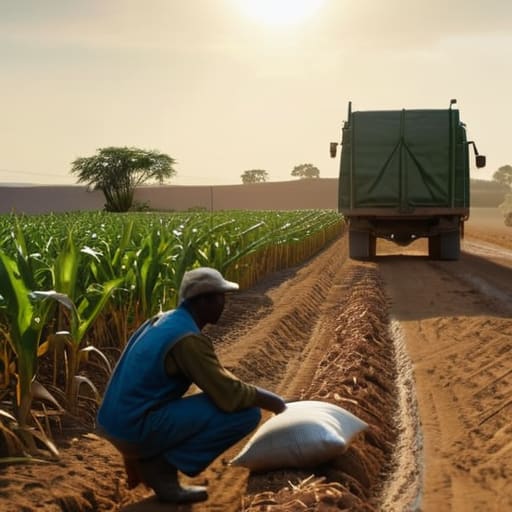
We can spend decades refining the curriculum of an extension program or perfecting the pedagogy of a training seminar, but none of that math matters if the supply chain breaks. An advisor can teach a farmer the exact nitrogen requirements for a high-yield maize variety, but if the fertilizer doesn’t reach the village before the rains start, that knowledge is nothing more than a theoretical exercise. Real extension isn’t just about the transfer of information; it is the integration of technical advice with physical reliability. If the inputs, the tools, and the seeds aren’t moving through the same channels as the instructions, the entire system is just expensive noise.
If you want to actually change the landscape of rural development, stop looking at the glossy brochures of “capacity building” and start looking at the integrity of the delivery route. Success isn’t measured by how many people attended a workshop, but by how many hectares were actually improved because the farmer had both the skill and the material to execute it. We need to stop treating knowledge and logistics as separate silos. When we finally align the two, we move past the stage of mere instruction and into the realm of actual, measurable resilience.