
I spent a decade watching headquarters in Geneva and DC churn out hundred-page strategy documents, all filled with high-level jargon about “gender-transformative frameworks” and “empowerment paradigms.” They spend months debating how girls’ education programmes are designed in air-conditioned boardrooms, yet they rarely account for the fact that a school is just a building without a roof, or that a girl won’t attend if the path to get there is a death trap. I’ve seen millions of dollars vanish into “capacity building” workshops while the actual tools for learning—the pencils, the desks, the sanitary kits—get stuck in a customs warehouse three borders away.
I’m not here to talk to you about theoretical models or the latest buzzwords from the UN. I’m going to tell you how these initiatives actually survive the transition from a glossy PDF to a dusty classroom. We are going to look at the logistical reality of implementation: the supply chains, the local gatekeepers, and the hard math of distribution. My promise is simple: I will show you why the most sophisticated design in the world is worthless if it doesn’t account for the actual movement of goods and people on the ground.
Table of Contents
Applying Educational Equity Frameworks to Real World Chaos
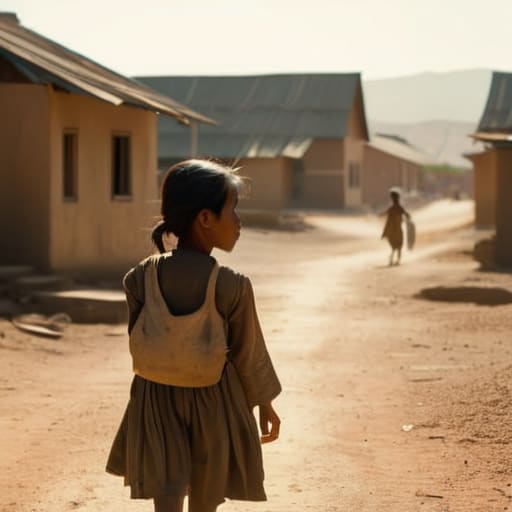
I’ve seen too many brilliant educational equity frameworks gather dust in a binder in Geneva because they failed to account for a washed-out bridge or a sudden spike in fuel prices. In a seminar, talking about gender-responsive pedagogy is easy; it’s all about curriculum and teacher training. But when you are on the ground, those frameworks hit the wall of socio-economic barriers to schooling that no amount of theory can solve. If a girl has to choose between a classroom and fetching water for her family because the local well failed, the most sophisticated pedagogy in the world won’t keep her in her seat.
The reality is that a program’s success isn’t measured by the elegance of its design, but by its ability to withstand local volatility. We often see NGOs pivot to conditional cash transfers for education as a way to bridge that gap, providing a tangible reason for a family to prioritize school over immediate labor. It’s not about the high-level ideology; it’s about the math of survival. If the incentive structure doesn’t align with the household’s daily struggle, the entire design collapses the moment the first rainy season hits.
Navigating the Socio Economic Barriers to Schooling

When I was managing supply lines in South Sudan, I saw plenty of well-funded programs fail because they ignored the math of a household. You can design the most sophisticated curriculum in the world, but if a girl is needed to fetch water or care for siblings to keep the family unit afloat, that curriculum is just paper. We talk about socio-economic barriers to schooling in boardrooms like they are abstract variables, but on the ground, they are hard, physical constraints. If the cost of a uniform or a notebook competes with the cost of a meal, the notebook loses every single time.
To bridge that gap, we have to look at practical levers like conditional cash transfers for education. It isn’t about “empowerment” in the poetic sense; it is about offsetting the opportunity cost of a girl being in a classroom instead of the fields. If the program doesn’t account for the immediate economic reality of the family, the enrollment numbers might look good for the first quarter, but the attrition rate will eventually gut the project. You don’t solve a poverty problem with a textbook; you solve it by making sure the girl staying in school doesn’t become a financial liability for her parents.
The gap between the boardroom and the bush
You can spend millions designing the most sophisticated gender-equity framework in Geneva, but if your program doesn’t account for the fact that the bridge to the school district washes out every October, your entire design is just expensive paper.
Yusuf Lindqvist
The Last Mile of the Design

At the end of the day, a perfectly engineered educational framework is just paper if it cannot survive a mudslide or a broken supply chain. We have looked at the equity models and the socio-economic hurdles, but the reality is that design fails when it ignores the logistical friction of the actual environment. You can design a program for gender parity in a boardroom in Geneva, but if that design doesn’t account for the cost of a girl’s uniform or the safety of the road she walks to get there, the program is dead on arrival. Success isn’t measured by the sophistication of the theory; it is measured by the physical presence of a student in a seat.
I have spent too many years watching well-funded initiatives stall because they prioritized the “why” over the “how.” If we want to change the trajectory for girls in these regions, we have to stop treating design as a purely academic exercise and start treating it as a delivery challenge. The goal isn’t to write the most beautiful report for the donors; the goal is to ensure that the resources, the teachers, and the textbooks actually arrive. When the design is robust enough to withstand the chaos of the field, that is when we stop talking about potential and start seeing actual results.