I remember sitting in a humid office in Goma, staring at a glossy brochure from a major NGO that detailed the “holistic community-building frameworks” required for humanitarian response. It was all high-level theory and beautiful renderings of sustainable settlements. But outside that window, the reality was much simpler and much uglier: we didn’t need a framework; we needed a way to move ten thousand liters of clean water through a mud track that disappeared every time it rained. People love to talk about the sociology of displacement, but when you look at the actual mechanics of how a refugee camp is established, the conversation shouldn’t be about social cohesion—it should be about supply chain integrity.
I’m not here to give you a lecture on international policy or the ethics of aid. I’ve spent nine years watching budgets evaporate while the actual physical infrastructure lagged behind, so I’m going to tell you how this works when the cameras are off. I will strip away the jargon and show you the unvarnished logistics of site selection, water procurement, and the brutal reality of moving heavy equipment into hostile terrain. If you want to understand the true blueprint of how a refugee camp is established, you have to stop looking at the spreadsheets and start looking at the dirt.
Table of Contents
Displacement Crisis Management and the First Mile

When the first reports of mass movement hit my desk, the NGOs started talking about “displacement crisis management” in these lofty, strategic terms. To me, it always looked like a math problem with a ticking clock. Before you can even think about long-term camp infrastructure development, you are fighting for the first mile. That means figuring out if the dirt tracks are washed out by the rains or if a local checkpoint is going to hold up a convoy for three days for a bribe. You don’t manage a crisis with a PowerPoint; you manage it by ensuring the heavy-duty trucks carrying the primary supplies don’t get bogged down in a ravine twenty kilometers from the site.
Once the vehicles are moving, the focus shifts to the immediate chaos of arrival. This is where the theory of humanitarian settlement planning meets the reality of thousands of people arriving at once with nothing but what they can carry. The priority isn’t a master plan; it’s emergency shelter deployment. If you can’t get the plastic sheeting and the toolkits to the landing zone within the first forty-eight hours, the rest of your logistics chain doesn’t matter. You can have all the funding in the world, but if the physical movement of goods fails at this stage, you aren’t running a camp—you’re just watching a disaster unfold.
Humanitarian Settlement Planning Under Fire
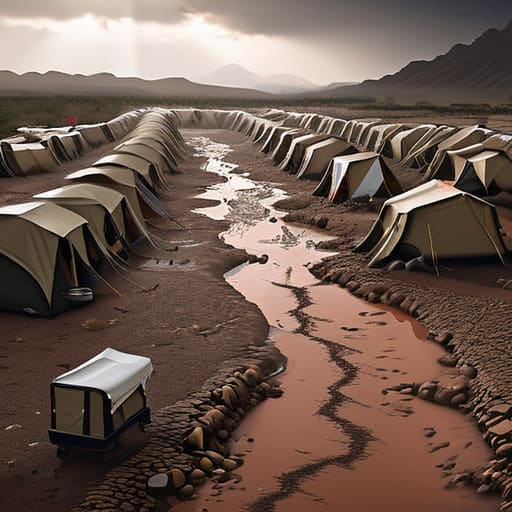
When you sit in a planning meeting in a capital city, the maps look clean. They show neat grids for latrines and organized rows of tents. But on the ground, humanitarian settlement planning is a fight against geography and chaos. You aren’t just drawing lines; you are trying to predict where a thousand people will move when the rain turns a dry track into a river of sludge. If your site selection is off by even a few hundred meters, you end up with a drainage nightmare that turns a camp into a swamp within a week.
The real pressure comes when you try to marry emergency shelter deployment with the reality of the terrain. You can have the best blueprints in the world, but if the soil is too rocky for the stakes or too sandy to hold a trench, the plan fails. I’ve seen teams try to force a standard layout onto a hillside, only to realize they’ve ignored the fundamental physics of water runoff. It isn’t about the aesthetic of the camp; it’s about ensuring that WASH standards in refugee camps are actually achievable when the ground is actively working against you. You don’t build for the ideal scenario; you build for the mud.
The Myth of the Master Plan
You can spend six months in a Geneva boardroom drafting the perfect settlement layout, but that plan is just paper until the first heavy-duty truck clears the mud and drops the high-density polyethylene sheeting. A camp isn’t established by a policy document; it’s established the moment the supply chain stops being a theory and starts being a physical presence on the ground.
Yusuf Lindqvist
The Bottom Line
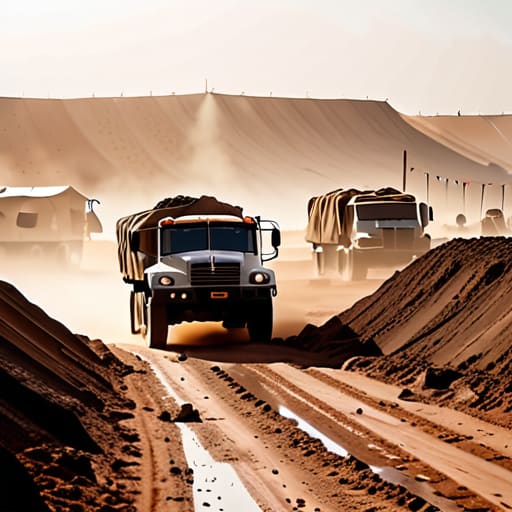
At the end of the day, establishing a camp isn’t about the high-level policy papers or the glossy donor brochures. It is a brutal, granular exercise in supply chain management under extreme pressure. We have looked at the initial chaos of displacement, the frantic push for the first mile of supplies, and the impossible task of planning settlements while the ground is still shifting. Whether it is securing water points, managing fuel stocks, or navigating the nightmare of broken axle shafts on unpaved tracks, the success of the entire operation hinges on the integrity of the movement. If the procurement office signs the check but the truck is stuck in a mudslide fifty miles away, the humanitarian mission has failed.
I have spent a decade staring at cargo manifests, and they tell a much more honest story than any fundraising campaign ever could. The true measure of our work isn’t found in the millions of dollars pledged in Geneva or New York; it is found in the physical presence of life-saving goods at the point of need. We do not work in abstractions. We work in tons, liters, and kilometers. If we can master the logistics, if we can ensure that the lorry actually arrives, we give people something more valuable than sympathy: we give them a chance to survive.