I once spent three weeks in a dusty warehouse outside Goma, staring at a mountain of high-grade fertilizer that had been sitting under a tarp while the planting season literally passed us by. On the donor reports back in Geneva, the program looked like a triumph of policy; in reality, it was just expensive, rotting gravel. Most people think understanding how seed and input subsidies work is about studying economic models or government fiscal policy, but they’ve got it backward. It isn’t about the macroeconomics of a subsidy; it’s about the last mile of the supply chain.
I’m not here to give you a lecture on developmental theory or the lofty goals of food security. I’m going to tell you how these programs actually function when the ink on the contracts dries and the real world takes over. We are going to look at the mechanics of procurement, the reality of storage, and the inevitable friction of distribution. If you want to know the truth about how seed and input subsidies work, you have to stop looking at the spreadsheets and start looking at the delivery manifests.
Table of Contents
The Mechanics of Farm Subsidies Versus the Mud on the Boots
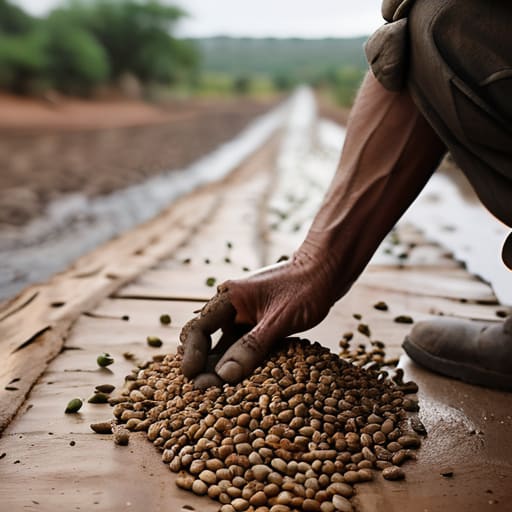
On a policy brief, the mechanisms of farm subsidies look like a series of clean, elegant arrows: money flows from the treasury to the producer, lowering the barrier to entry. It looks like a solved equation. But in my experience, there is a massive, widening gap between the intended agricultural policy impact on farmers and the reality of a broken supply chain of agricultural inputs. You can draft the most sophisticated government agricultural support programs in a climate-controlled office in Nairobi or Geneva, but those documents don’t account for a washed-out bridge or a middleman who decides to skim ten percent off the top of a fertilizer shipment.
The math on a spreadsheet says a subsidy reduces crop yield and input costs, making the season viable. But a subsidy doesn’t exist if the bags of urea are sitting in a warehouse three provinces away because the procurement paperwork is stuck in a loop. I’ve seen plenty of “subsidized” seasons fail not because the farmers lacked the will, but because the physical movement of goods failed. At the end of the day, a farmer doesn’t care about the theoretical economic effects of fertiliser subsidies; they care about whether the bag is actually sitting in their field when the rains start.
Tracing the Supply Chain of Agricultural Inputs to the Field
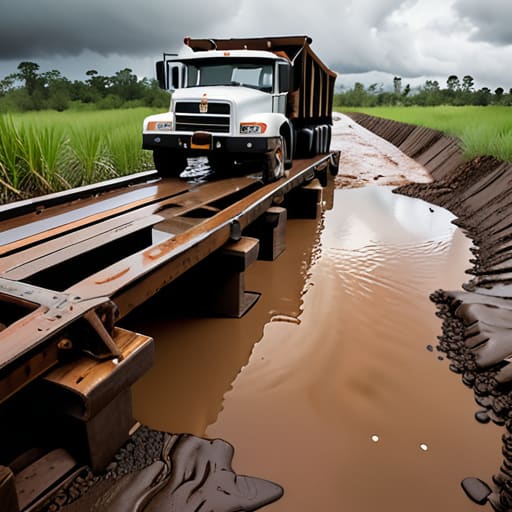
On paper, the supply chain of agricultural inputs looks like a clean, linear progression: government procurement, warehouse storage, and distribution to local cooperatives. But in my experience, the gap between a signed purchase order and a bag of NPK fertiliser sitting in a village center is where most programs fail. You can study the mechanisms of farm subsidies all day in a climate-controlled office in Geneva or Nairobi, but those mechanisms don’t account for a washed-out bridge or a corrupt checkpoint. I’ve seen millions allocated in budget cycles, only for the actual physical movement of goods to stall because the last-mile logistics weren’t factored into the initial cost.
The reality is that the supply chain of agricultural inputs is rarely a straight line; it is a series of handoffs, each one a potential point of failure. When a government announces a new wave of support, they focus on the macro-economic figures, but the farmer only cares about the micro-reality of the delivery date. If the seeds arrive two weeks after the rains have already started, the subsidy is effectively zero. It doesn’t matter how much the economic effects of fertiliser subsidies are projected to boost the GDP if the bags are sitting in a damp warehouse three hundred kilometers away from the people who need them.
The gap between the policy and the dirt
You can print all the subsidy vouchers you want in a capital city, but a voucher is just a piece of paper until it meets a bag of fertilizer that actually survives the last fifty kilometers of a washed-out track.
Yusuf Lindqvist
Beyond the Spreadsheet

At the end of the day, a subsidy program is just a collection of line items on a donor’s ledger until it meets the reality of a broken axle or a washed-out bridge. We can debate the efficiency of voucher systems versus direct input distribution all night, but the technicalities matter little if the last mile remains broken. If the seeds sit in a government warehouse in the capital because the transport budget was diverted, the subsidy effectively does not exist. Success isn’t measured by the amount of capital allocated to agricultural development; it is measured by the physical presence of the inputs in the hands of the farmer when the planting season actually begins.
I have spent too many years watching millions of dollars vanish into the gap between policy and practice. We need to stop treating humanitarian aid as a matter of sentiment and start treating it as a matter of rigorous logistics. The goal isn’t to fund a vision of food security; it is to ensure that the supply chain holds firm under pressure. If we can master the movement of goods as effectively as we master the movement of money, we might actually see the results we keep promising. The math is simple: the mission succeeds only when the delivery is complete.