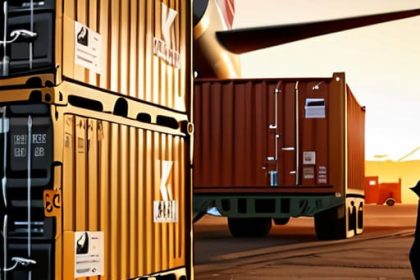
I spent nine years in the dust of South Sudan and the DRC, watching people present glossy spreadsheets to donors while the actual supplies sat rotting in a warehouse three hundred kilometers away because a bridge had washed out. Most people will try to sell you a dream of high-tech dashboards and real-time GPS tracking when they explain how third party monitoring works. They’ll use words like “optimization” and “synergy” to hide the fact that they’re just selling you more paperwork. But in my experience, all that digital noise is useless if it doesn’t answer the only question that matters: Did the cargo actually reach the destination?
I’m not here to give you a lecture on theoretical frameworks or the latest software subscriptions. I’m going to tell you how this actually functions on the ground, where the data meets the dirt. I will strip away the jargon and show you how to use these monitors to find the real gaps in your supply chain. This isn’t about making your reports look pretty for the headquarters; it is about ensuring that when a manifest is signed, the goods are actually in the hands of the people who need them.
Table of Contents
The Truth Behind External Verification Services

Most people think external verification services are just about checking boxes to satisfy a donor in Geneva or DC. They see it as a layer of bureaucracy designed to prove the money wasn’t stolen. But when you’ve spent years trying to move vaccines through a mud track in South Sudan, you realize the reality is much more granular. These services exist because, on paper, everything looks perfect. A spreadsheet can tell you that 500 kits were “distributed,” but it won’t tell you if they were left in a warehouse because the local bridge washed out or if they were handed to people who didn’t need them.
The real value of independent oversight mechanisms isn’t in the high-level reports; it’s in the friction they create. When a firm comes in to conduct third party auditing processes, they are looking for the gap between the manifest and the reality on the ground. They aren’t looking for “impact stories”—they are looking for the discrepancy between what the contractor claimed was delivered and what the end-user actually received. If the goal is true accountability, we have to stop focusing on the sentiment of the mission and start focusing on the impartiality in monitoring that forces a hard look at why a supply chain failed.
Why Compliance Monitoring Frameworks Fail the Road Test

Most compliance monitoring frameworks look great in a boardroom in Geneva or Nairobi, but they fall apart the moment they hit a dirt track in the rainy season. I’ve seen it a dozen times: a consultant sits in a climate-controlled office, reviewing digital timestamps and GPS pings, claiming the oversight is airtight. But a green dot on a map doesn’t tell you if the driver bypassed a broken bridge or if the cargo was diverted two towns back. These systems focus on checking boxes rather than verifying reality. They prioritize the paperwork of the audit over the physical movement of the goods.
The real issue is that many third party auditing processes are designed to satisfy donors, not to catch systemic leakage. They rely on a paper trail that can be easily manufactured. If a local sub-contractor knows exactly what the inspector is looking for, they can present a perfectly curated set of documents that satisfy every metric of a contractor performance evaluation while the actual supply chain remains a mess. You can have the most sophisticated independent oversight mechanisms in the world, but if they aren’t looking at the actual condition of the crates when they reach the warehouse, they aren’t monitoring anything—they’re just documenting a fiction.
The gap between the dashboard and the dirt
I don’t care how many green checkmarks appear on a consultant’s digital dashboard in Geneva; if they haven’t stood in the dust at a warehouse gate to verify the seal on a crate of oxytocin, they aren’t monitoring anything—they’re just reading a spreadsheet.
Yusuf Lindqvist
The Bottom Line
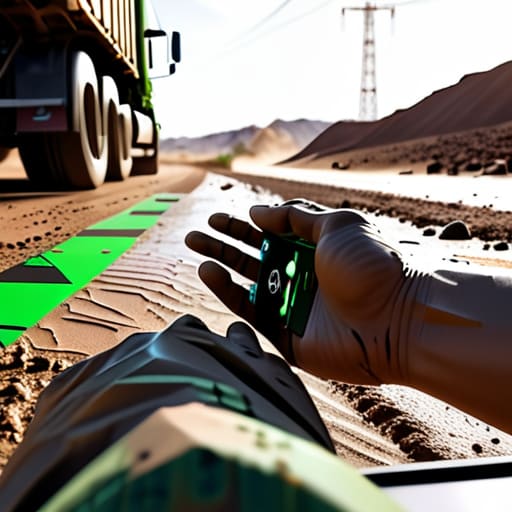
At the end of the day, third-party monitoring is a tool, not a solution. We can spend millions on sophisticated digital verification and high-level compliance frameworks, but if those systems aren’t grounded in the reality of the dirt road, they are useless. A dashboard might show a green checkmark for a completed delivery, but that doesn’t account for the broken axle or the bribe demanded at a checkpoint that delayed the shipment by three days. We have to stop confusing a well-formatted report with actual operational success. The metrics only matter if they reflect the physical movement of goods from point A to point B.
My advice is to look past the polished spreadsheets and find the people actually standing at the warehouse gates. Real oversight isn’t found in a sanitized PDF sent from a headquarters in Geneva; it is found in the grit of the field. If we want to actually improve how aid works, we need to stop obsessing over the sentiment of the impact and start obsessing over the integrity of the supply chain. Don’t aim for a perfect audit; aim for a guaranteed arrival. That is the only metric that truly counts when lives are on the line.