
I spent most of my years in the field watching people argue over spreadsheets while the actual supplies sat idling at a border crossing. You’ll hear economists and policy wonks drone on about interest rate differentials and grace periods, trying to make a simple concept sound like high art, but they miss the point entirely. When you strip away the jargon and the glossy brochures, what concessional lending is boils down to a very practical question: does the cost of the money allow the project to actually function? If the terms are so rigid that the capital vanishes into debt service before a single crate of medicine hits a warehouse, then the math is meaningless.
I’m not here to give you a textbook definition that you could find in any graduate seminar. Instead, I want to talk about how these low-interest flows actually behave when they hit the ground. I’ll skip the academic fluff and show you the mechanics of how this capital moves, why it often fails to reach the intended destination, and how it actually works in the real world. We are going to focus on the delivery, not just the debt.
Table of Contents
Beyond the Numbers Soft Loans vs Commercial Loans

When you look at a spreadsheet, the difference between soft loans vs commercial loans looks like a simple math problem. On paper, it’s just a comparison of percentages. But in the field, that gap is the difference between a project that actually breathes and one that suffocates under its own weight. Commercial loans are driven by the market; they demand a return that matches the perceived risk of the territory. If you’re trying to build a bridge in a region with unstable governance, a commercial lender is going to price that risk into a rate that might make the project impossible before the first stone is laid.
That is where subsidized loan terms change the physics of the operation. With concessional financing for developing nations, the goal isn’t to turn a profit for a shareholder in London or New York; it’s to ensure the capital survives the journey to the destination. You aren’t just looking at low interest rate loans as a way to save money; you are looking at them as a way to provide breathing room. When the terms are soft, the project can absorb the inevitable delays—the broken axles, the seasonal floods, the bureaucratic bottlenecks—without the entire financial structure collapsing. In my experience, a commercial loan demands perfection, but a soft loan allows for the reality of the terrain.
Why the Cargo Matters More Than the Rate
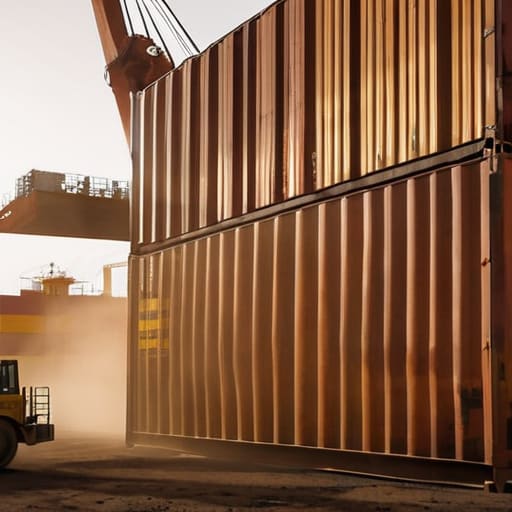
I’ve spent enough nights in humid warehouses in Goma to know that a spreadsheet is a fantasy until the physical goods are offloaded. You can talk all you want about subsidized loan terms and the elegance of a low-interest model, but that math is useless if the capital is tied up in bureaucratic knots or conditionalities that prevent the funds from actually being deployed. In my experience, the primary value of concessional financing for developing nations isn’t just the “cheapness” of the money; it’s the predictability of its arrival.
When you’re dealing with standard commercial debt, the lender’s priority is risk mitigation and immediate return. That’s fine for a skyscraper in Dubai, but it’s a death sentence for a rural health initiative. Concessional lending functions differently because it builds in a buffer for the reality of the field. It provides the breathing room necessary to navigate local volatility without the immediate threat of a default triggered by a seasonal flood or a sudden currency dip. At the end of the day, the most sophisticated development finance mechanisms in the world are just noise if they don’t translate into the ability to actually move the needle on the ground.
## The difference between a promise and a delivery
“In my experience, a low interest rate is just a line item on a spreadsheet; it doesn’t mean a damn thing if the terms are so restrictive that the money stays stuck in a bank in Geneva while the actual project is starving on the ground.”
Yusuf Lindqvist
The bottom line

At the end of the day, concessional lending isn’t some abstract academic exercise in macroeconomics. It is a tool designed to bridge the gap between what a country can afford and what it actually needs to function. We have looked at how the lower interest rates and extended grace periods act as the lubricant for these gears, and why the distinction between a soft loan and a commercial one determines whether a nation can build a hospital or if they are simply servicing a debt they can never outrun. If the terms aren’t favorable, the money stays in the bank, and if the money stays in the bank, the project never starts. It is about ensuring the financial mechanism is actually fit for purpose before the first shovel hits the dirt.
I have spent too many years watching well-intentioned funds vanish into the friction of high-interest repayment schedules. We need to stop obsessing over the sheer volume of capital being pledged and start looking at the quality of the terms. True development isn’t measured by the billions promised in a press release; it is measured by the stability of the infrastructure that remains once the lenders have moved on. If we want to see real change, we have to ensure that the financial architecture is built to deliver the cargo, not just to collect the interest. Only then can we say the mission was actually accomplished.