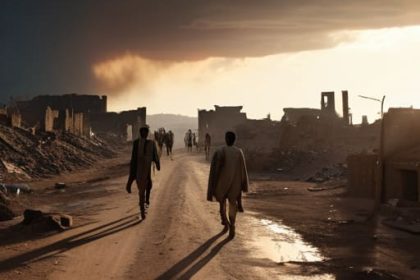
I remember sitting in a humid, windowless office in Goma, staring at a stack of glossy reports that claimed everything was under control while the local markets were actually bone-dry. Everyone in the capital was debating the technicalities of what a famine declaration requires, arguing over specific IPC thresholds and caloric deficit percentages as if the math itself would move the needle. But I wasn’t looking at the spreadsheets; I was looking at the empty dirt tracks where the supply trucks should have been. A declaration is a massive, bureaucratic milestone, but in my experience, a signature in a high-rise office means nothing if it doesn’t translate into a cleared customs bottleneck or a secured fuel depot.
I’m not here to give you a lecture on international law or the sentimental politics of aid appeals. Instead, I’m going to strip away the jargon and tell you how the machinery actually grinds. I will explain what a famine declaration requires from a purely operational standpoint—focusing on the logistical reality of moving tonnage from a port to a starving village. We are going to talk about the actual requirements: the transport corridors, the warehouse security, and the cold, hard movement of goods.
Table of Contents
Beyond Numbers Ipc Scale Food Security Phases

The technical folks love to talk about the Integrated Food Security Phase Classification (IPC), and on paper, it’s a tidy way to categorize suffering. You’ll see reports breaking down the IPC scale food security phases from Phase 1 through Phase 5. To a donor or a politician, these numbers provide a sense of order. But when I was sitting in a dusty office in Juba or Goma, looking at a spreadsheet of nutritional status monitoring data, those phases felt like a dangerous abstraction.
The problem is that the jump from Phase 3 to Phase 5—the actual famine threshold—is often treated as a mathematical inevitability in reports. In reality, it’s a race against time. By the time the acute malnutrition mortality rates hit the specific triggers required to call a famine, the window for preventative logistics has already slammed shut. You aren’t just looking at a shift in a graph; you are looking at the moment when the supply chain is no longer catching up to the crisis, but is instead merely documenting the fallout. For me, the classification matters less than the reality of whether the calorie deficit is outstripping our ability to move grain across a border.
When Mortality Rates Outpace the Paperwork

The gap between a formal declaration and the reality on the ground is where people die. By the time the Integrated Food Security Phase Classification (IPC) reaches a consensus and the bureaucratic machinery begins to grind, the window for preventative action has often slammed shut. I’ve seen it in the field: officials are debating the specific threshold of acute malnutrition mortality rates in a climate-controlled office in a capital city, while the actual mortality spike is already happening in a remote district three hundred kilometers away.
The problem is that the protocols are designed for precision, but precision is a luxury of the living. We follow strict food insecurity assessment protocols to ensure the data is “defensible” for donors, but those very protocols can act as a bottleneck. If you wait for the perfect dataset to prove a famine exists, you aren’t managing a crisis; you are just documenting a catastrophe. In my experience, if you are waiting for the official stamp of approval to move supplies, you have already lost the race against the clock. The math matters, but the math doesn’t move the trucks.
The Gap Between Protocol and Presence
“You can debate the IPC metrics in a climate-controlled room in Geneva all you want, but a famine declaration doesn’t feed a single person. It’s just a formal permission slip. The real metric isn’t the declaration itself; it’s whether the fuel reaches the trucks and the trucks reach the village before the people are too weak to walk to the distribution point.”
Yusuf Lindqvist
The Reality of the Result
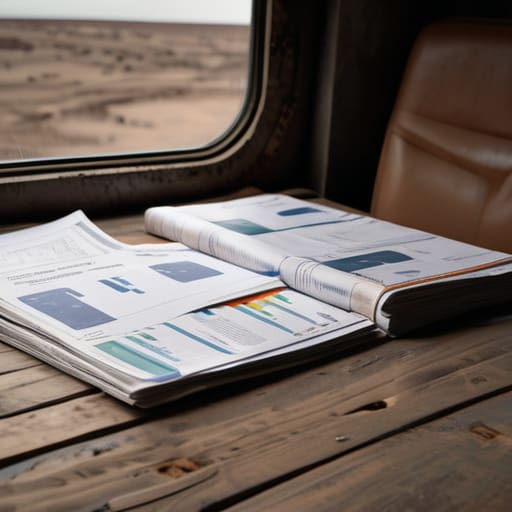
At the end of the day, a famine declaration is a cocktail of IPC metrics, mortality thresholds, and political willpower. We spend months debating whether the malnutrition data meets the specific technical criteria or if the seasonal hunger qualifies as a formal catastrophe. But as someone who has spent a decade tracking crates through mud and checkpoints, I know that these metrics are just the prelude to the actual work. The declaration is the trigger, but it isn’t the solution. You can have the most scientifically accurate, peer-reviewed declaration in the world, but if the supply chain remains broken, the data is nothing more than a post-mortem.
We need to stop treating these declarations as the finish line of a humanitarian response. A declaration is merely the signal to move. The real victory isn’t found in a successful briefing at a UN summit or a headline about a new funding round; the victory is found in the logistical triumph of a convoy navigating a washed-out road to deliver grain. If we want to honor the gravity of a famine declaration, we must focus our energy on the last mile of delivery. Because in this business, the only metric that truly matters is whether the cargo actually reaches the hands of the people who are waiting for it.