
I remember sitting in a humid warehouse outside Goma, staring at a stack of colorful brochures promising “transformative healthcare interventions.” They were beautiful, filled with photos of smiling children and soaring budget projections, but they meant nothing because the road to the clinic was washed out and the fuel depot was empty. People love to talk about the high-level theory of how emergency health care is delivered, but they focus on the wrong metrics. They obsess over the amount of money raised in a London ballroom or the complexity of a new digital tracking system, while completely ignoring the fact that a surgical kit is just a heavy box of metal if it’s stuck in a ditch fifty miles away.
I’m not here to give you a lecture on humanitarian policy or the latest buzzwords from the UN. I want to talk about the grit, the grease, and the actual mechanics of the supply chain. I will show you the reality of the movement—from the way we secure a cold chain for vaccines in a heatwave to the brutal math of choosing which supplies get on the last working truck. This is about the hard logistics that actually save lives, stripped of the sentiment.
Table of Contents
The Brutal Math of Paramedic Response Systems
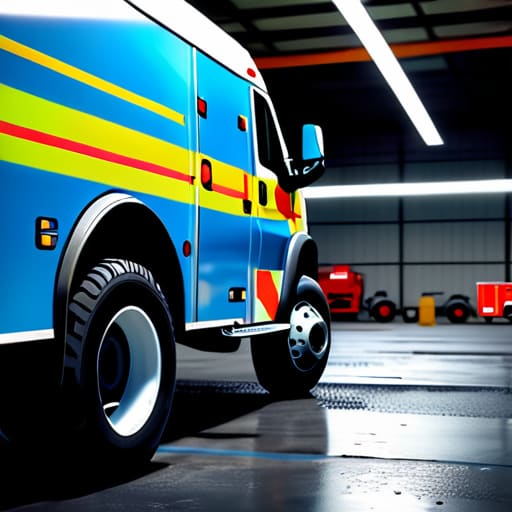
People like to talk about the “miracle” of modern medicine, but in the field, there are no miracles—only math. When we talk about paramedic response systems, we aren’t talking about heroism; we are talking about response times, fuel consumption, and vehicle maintenance schedules. If a unit is stuck in a depot because a replacement gasket didn’t clear customs, the entire chain breaks. You can have the most advanced medical triage protocols in the world, but they are useless if the ambulance is sitting idle due to a broken axle or a lack of diesel.
The math is brutal because it is binary. It’s a zero-sum game played against a clock that doesn’t care about your mission statement. In my experience, the gap between urgent care vs emergency room capability often comes down to the reliability of the transit link. If the patient stabilization processes fail because the oxygen canisters were under-filled at the warehouse, the clinical expertise of the medic becomes a moot point. It isn’t about the quality of the care provided at the bedside; it is about the mechanical reliability of the delivery system that gets the patient to that bedside in the first place.
Patient Stabilization Processes the Only Metric That Matters
Once the ambulance clears the gate, the clock doesn’t just tick; it hammers. In my experience, the transition from the field to the facility is where the most critical failures occur. People talk about “care” as if it’s a continuous stream, but it’s actually a series of handovers. If the medical triage protocols are broken at the door, it doesn’t matter how fast the driver was. You can have the most advanced equipment in the world, but if the receiving team hasn’t accounted for the physical reality of a patient arriving in shock, you’re just watching a slow-motion disaster.
Stabilization isn’t a feeling; it’s a mechanical process of preventing total systemic collapse. I’ve seen clinics where the patient stabilization processes were treated like a checklist to be completed for the sake of the paperwork. That is a mistake. You aren’t checking boxes to satisfy a donor; you are managing blood pressure, oxygen saturation, and airway integrity under extreme pressure. The goal isn’t to “treat” the patient in that moment—it is simply to keep them from dying before they can reach the next stage of the emergency department workflow. Everything else is secondary.
Beyond the Donation Totals
You can fund a thousand training seminars and print a million brochures about health equity, but none of it moves the needle if the cold chain breaks down in a humid warehouse or the fuel truck doesn’t show up at the depot. In this business, compassion is just noise; the only thing that actually saves a life is a functioning supply chain.
Yusuf Lindqvist
The Final Manifest
At the end of the day, the high-level discussions about policy frameworks and funding allocations don’t change the reality on the ground. We have looked at the math behind paramedic response times and the granular, messy necessity of patient stabilization. None of those theories matter if the supply chain breaks down at the last mile. You can have the most sophisticated medical protocols in the world, but if the oxygen tanks are sitting in a warehouse three hundred kilometers away because of a broken axle or a closed border, those protocols are just ink on paper. The entire system of emergency healthcare delivery rests on a foundation of unseen, unglamorous logistics.
I have spent enough years tracking shipments through dust and rain to know that success isn’t found in a glossy annual report or a soaring fundraising total. Success is found in the quiet, mechanical certainty of a delivery that actually happens. It is the sound of a diesel engine idling outside a clinic when it’s needed most. We shouldn’t be looking for grand narratives of heroism; we should be looking for the reliability of the arrival. If we want to save lives, we have to stop obsessing over the sentiment and start obsessing over the integrity of the route.