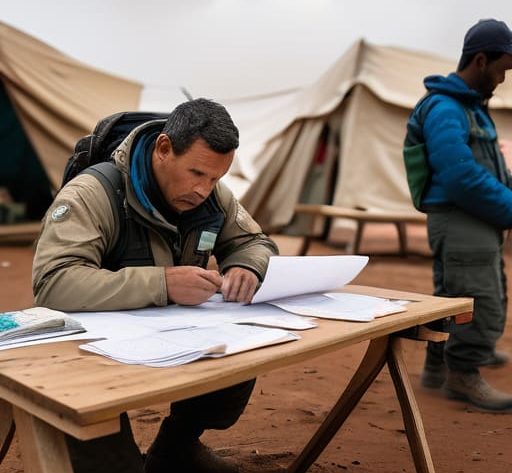
I once spent three days in a dusty compound outside Goma, watching a consultant in a crisp polo shirt try to explain how needs assessments are done using a colorful PowerPoint deck. He was talking about “qualitative indicators” and “stakeholder engagement matrices,” while I was looking at a broken axle on a Toyota Land Cruiser and a warehouse full of antibiotics that nobody had requested. The problem with most of these high-level exercises is that they treat humanitarian work like a math equation rather than a physical movement of goods. If your assessment doesn’t account for the fact that the bridge is washed out or the fuel depot is empty, then you aren’t assessing needs; you’re just writing expensive fiction.
I’m not here to teach you how to fill out a standardized NGO template or how to satisfy a donor’s reporting requirements. Instead, I’m going to show you the reality of the ground truth. I will tell you how to strip away the academic jargon to find out what actually matters: the logistics of survival. We are going to look at how to build an assessment that ensures the supplies don’t just exist on a spreadsheet, but actually hit the ground where they are needed.
Table of Contents
A Needs Assessment Framework for Real Results

When I look at a proposed needs assessment framework, I don’t look at the theoretical models. I look at the logistics. A framework is useless if it’s built on assumptions that fall apart the moment a rainy season turns a dirt track into a river. You need a needs assessment methodology that accounts for the physical reality of the terrain. If your plan relies on digital surveys in a zone where the only reliable communication is a crackling shortwave signal, your data is already dead on arrival.
Practicality dictates your data collection methods for assessments. It isn’t enough to sit in a capital city and crunch numbers from a donor’s spreadsheet. You have to verify the delta between what the report says is needed and what the warehouse actually holds. This is where real gap analysis techniques come into play. You aren’t just looking for “shortages”; you are looking for the specific break in the chain—is it a lack of cold-chain storage, a shortage of driver fuel, or a bridge that can no longer support a five-ton lorry? The data only matters if it translates into a manifest.
Identifying Organizational Needs Before the Wheels Turn

Before you even look at a field report, you have to look at your own house. I’ve seen too many missions stall out in the middle of a dry season not because the demand wasn’t there, but because the organization lacked the basic capacity to move the weight. You can have the most sophisticated needs assessment methodology in the world, but if your procurement chain is broken or your local warehouse is a hollow shell, that data is just noise. Identifying organizational needs means being brutally honest about your own limitations—your fleet age, your fuel security, and your actual ability to manage the volume you’re promising to donors.
This is where most people fail; they treat the assessment as something that happens to a community, rather than something that happens within an operational structure. You need to apply rigorous gap analysis techniques to your own internal logistics before you commit to a single delivery. If your internal data collection shows a shortage of heavy-duty axles or a lack of qualified drivers in a specific corridor, that is a more critical finding than any community survey. If you don’t account for these internal gaps, you aren’t planning a response; you’re just scheduling a failure.
The Gap Between Data and Delivery
You can spend six months drafting a perfect needs assessment in a climate-controlled office in Geneva, but if that document doesn’t account for the fact that the bridge on the main supply route washes out every April, you haven’t conducted an assessment—you’ve written a piece of fiction.
Yusuf Lindqvist
The Bottom Line
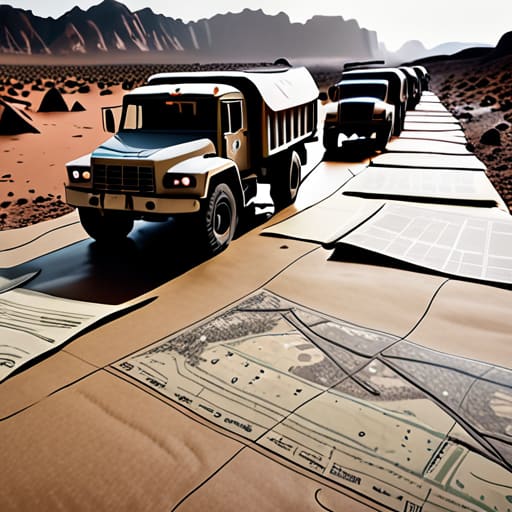
At the end of the day, a needs assessment isn’t a bureaucratic exercise meant to satisfy a donor’s reporting requirements or to fill a binder on a shelf in Geneva. It is a functional roadmap. If you haven’t accounted for the seasonal mud that turns the South Sudan roads into a swamp, or the specific fuel grades required by the local truck fleets, your assessment has failed. You can have the most sophisticated data models in the world, but they are useless if they don’t translate into actionable logistics. We have to stop treating these documents as academic papers and start treating them as operational blueprints that dictate whether a shipment of vaccines reaches a clinic or sits rotting in a warehouse because the last-mile transport was never actually vetted.
I’ve spent too many nights listening to the static on my shortwave radio, wondering if a convoy I’d cleared on paper actually made it through the night. The difference between a successful mission and a wasted budget isn’t found in the grandiosity of the mission statement; it is found in the integrity of the process. We owe it to the people on the ground to move past the sentiment and focus on the mechanics. If we do the groundwork right—if we bridge the gap between the initial assessment and the actual delivery—then we aren’t just moving numbers on a spreadsheet. We are ensuring that the lorry actually arrives.