
I remember standing at a checkpoint outside Goma in 2014, watching a driver try to explain why his cargo of temperature-sensitive vaccines was sitting in the sun. He wasn’t a criminal; he just didn’t have the one piece of paper that proved he existed in the eyes of the state. People love to get lost in the high-minded legal theories and the sweeping UN declarations when discussing what statelessness means, but they miss the actual mechanics of the crisis. To the academics, it’s a gap in international law; to me, it’s the reason a shipment of life-saving medicine never actually reaches the clinic.
I am not here to give you a lecture on human rights philosophy or a list of sympathetic statistics. I’m going to tell you how this reality functions on the ground, from the broken supply chains to the administrative dead ends that turn people into ghosts. My goal is to strip away the sentiment and show you the logistical reality of living without a footprint. We’re going to look at the hard facts of how a person survives when the system refuses to acknowledge their arrival.
Table of Contents
Decoding the Unhcr Statelessness Definition

The UNHCR statelessness definition is a technical piece of drafting, designed to be precise enough for legal frameworks but often too clinical for the field. In the manuals, it’s described as a person who is not considered a national by any state under the operation of its law. To a lawyer, that’s a clear boundary. To me, sitting in a dusty office in Goma or Juba, it’s a description of a functional void. It isn’t just a lack of a passport; it is the administrative reality that you do not exist in the eyes of the systems meant to track, protect, and feed you.
When we look at the causes of statelessness worldwide, we aren’t just looking at political shifts; we are looking at gaps in the ledger. It could be a conflict of laws, a discriminatory nationality law, or simply a failure to register a birth in a remote district. If the paperwork doesn’t exist, the person doesn’t exist. This is the core of the impact of lacking nationality: when you cannot prove who you are, you cannot access the very logistics of survival—the clinics, the schools, or the formal markets. It is the ultimate breakdown in the supply chain of human rights.
The Invisible Friction of the Legal Status of Stateless Persons
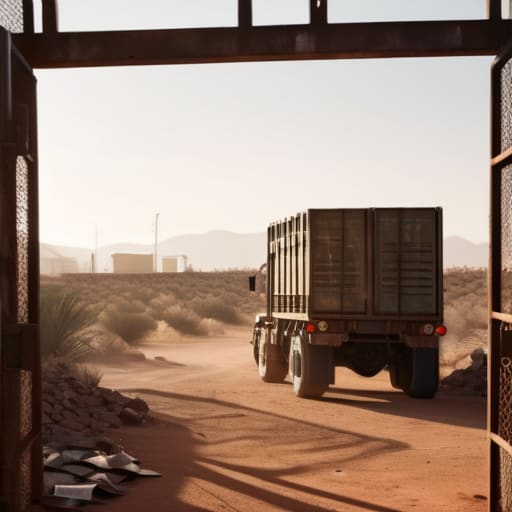
In my experience, the legal status of stateless persons isn’t a theoretical debate held in air-conditioned conference rooms; it is a series of physical roadblocks. When I was moving medical supplies through border crossings, I saw how a missing stamp or an unrecognized ID could turn a three-hour transit into a three-week standstill. It’s a specific kind of friction. You can have the most sophisticated humanitarian mandate in the world, but if the people you are trying to reach cannot prove they exist to the local authorities, the entire supply chain of human rights breaks down.
The impact of lacking nationality manifests as a constant, grinding resistance to every basic necessity. It’s the inability to register a birth, which effectively ensures the cycle continues by failing at the most basic level of preventing statelessness in children. Without that paper trail, you aren’t just a person without a country; you are a person who cannot legally occupy space. I’ve seen families stuck in a permanent state of transit, not because the roads were washed out, but because the bureaucratic infrastructure simply refused to acknowledge their presence. In logistics, if a shipment has no manifest, it doesn’t exist. For a stateless person, the world operates on that same brutal logic.
The Logistics of Non-Existence
You can talk about legal frameworks and international conventions all day, but in the field, statelessness isn’t a legal concept; it’s a broken supply chain. It’s the inability to register a birth, which means you can’t register a clinic, which means the medicine never reaches the person who needs it because, on paper, that person doesn’t exist.
Yusuf Lindqvist
Beyond the Legal Definitions

At the end of the day, statelessness isn’t a theoretical debate for a seminar in Geneva; it is a systemic failure of the most basic logistical unit: the identity. We have looked at the UNHCR’s definitions and the friction this creates in the real world, but the takeaway is simple. Without a recognized status, the legal machinery of a country simply refuses to engage. You cannot register a birth, you cannot secure a work permit, and you certainly cannot move goods or people through a regulated system when you don’t officially exist. It is a permanent state of administrative paralysis that turns human lives into ghosts in the machine.
If there is any hope, it lies in moving past the sentimentality of the “crisis” and focusing on the mechanics of inclusion. We need to stop treating statelessness as an abstract tragedy and start treating it as a broken supply chain of rights. The goal shouldn’t just be to feel sympathy for those without papers; it should be to fix the broken links that prevent a person from accessing the basic infrastructure of life. When we finally bridge the gap between legal theory and on-the-ground reality, we ensure that the people who need the most help aren’t just waiting at a border that doesn’t recognize them.