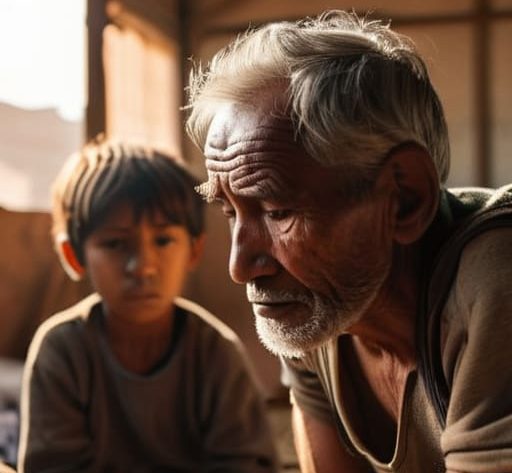
I spent most of my years in East Africa watching people try to define humanitarian crises with academic jargon and sweeping statistics, but none of that matters when you’re standing at a dusty checkpoint in the middle of the night. Most people think they understand what an internally displaced person is because they’ve seen a polished infographic or a high-budget charity commercial, but the reality is much grittier. It isn’t a category on a spreadsheet; it is a father sitting on a plastic crate because he can’t cross the border to find work, yet he can’t go back to his farm because the militia is still there. It’s the logistical nightmare of a person who is technically still in their own country, but effectively has nowhere to call home.
I’m not here to give you a lecture on international law or recite UN resolutions. If you want a textbook definition, go to a library. What I’m going to give you is the ground-level reality of how these movements actually function and why the distinction matters when we talk about moving supplies. I will tell you exactly how displacement shifts the burden from global policy to the actual, physical movement of goods and people.
Table of Contents
Defining What an Internally Displaced Person Is
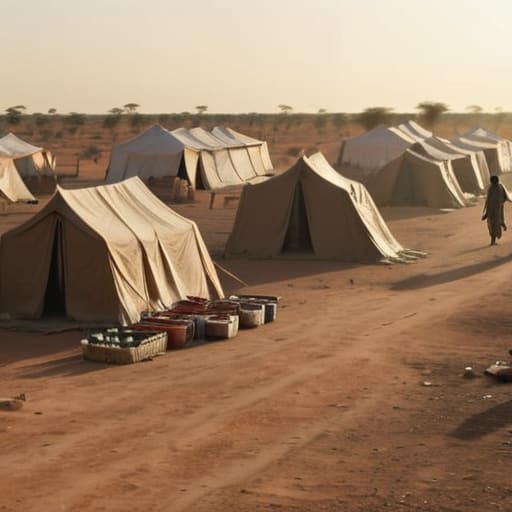
In the field, we don’t use textbooks to define people; we use maps and manifests. When I was managing supplies in South Sudan, the distinction wasn’t academic—it was a matter of legal jurisdiction and who was responsible for the cargo. To put it plainly, an IDP is someone who has been forced to flee their home due to conflict or disaster but remains within their own country’s borders. They haven’t crossed a line on a map that triggers international asylum protocols. This is the fundamental difference between refugees and IDPs: a refugee has a different legal status and a different set of protections, whereas an IDP is still technically under the sovereignty of the government that might be part of the reason they had to run in the first place.
This lack of a border crossing makes the logistics of humanitarian aid for displaced populations a nightmare. Because they haven’t left the country, they are often trapped in “gray zones”—areas where the state has lost control or where the government refuses to grant access to NGOs. While the Guiding Principles on Internal Displacement exist to provide a framework for their rights, those principles don’t move grain or distribute vaccines. On the ground, the definition matters less than the reality: they are people stuck in a legal limbo, waiting for a supply chain that might never reach them.
The Heavy Cost of Forced Migration Within Borders
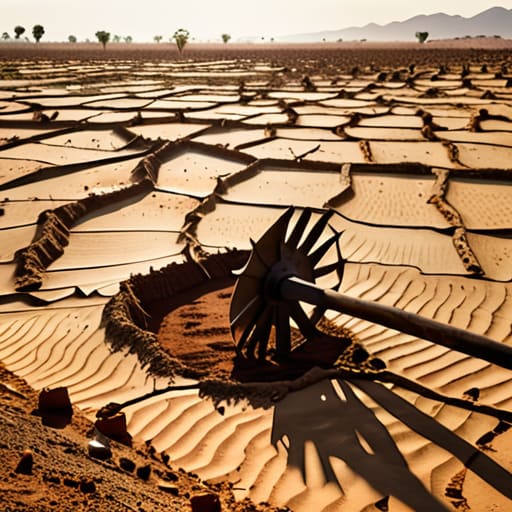
When people talk about the causes of internal displacement, they usually focus on the macro-level: the sudden outbreak of conflict or the slow-motion disaster of a drought. But on the ground, the cost isn’t measured in political shifts; it’s measured in the sudden, violent evaporation of a person’s assets. A family doesn’t just “move.” They leave behind the tools of their survival—the plow, the livestock, the small shop that kept them solvent. By the time they reach a settlement, they aren’t just travelers; they are stripped of their economic agency, forced into a state of total dependency on whatever arrives on the next truck.
This is where the distinction becomes vital. Many people confuse the difference between refugees and IDPs, but for a logistician, the distinction is a matter of sovereignty and access. A refugee has crossed a line, triggering international legal protections. An IDP is still trapped within their own country’s borders, often under the very government that may be driving them out. This creates a massive gap in IDP protection frameworks, as the state is technically responsible for them, even when the state is the problem. When the lines of authority blur, the humanitarian aid for displaced populations often gets caught in the same bureaucratic friction that keeps the roads blocked.
Beyond the Definition
“Don’t look at the legal definitions or the UN acronyms to understand displacement. Look at the supply chain. An internally displaced person is someone who has lost their home but hasn’t yet lost their citizenship, which sounds like a privilege until you realize it just means they are stuck in a legal limbo where the aid is technically meant for them, but the road to get it there is blocked by the very government that is supposed to protect them.”
Yusuf Lindqvist
The Reality on the Ground
When we strip away the academic definitions and the high-level policy debates, being an internally displaced person comes down to a breakdown in the systems that are supposed to keep a society functioning. It is not just a statistic in a UN report; it is the reality of families who have lost their land, their livelihoods, and their sense of permanence, all while remaining trapped within the same borders that failed to protect them. We have discussed the staggering economic costs and the human toll of this movement, but the core issue remains: displacement is a failure of stability. Until the underlying drivers—conflict, climate, and governance—are addressed, the cycle of movement will continue, leaving millions in a state of permanent transience.
Ultimately, the success of any humanitarian effort isn’t measured by the grandiosity of the mission statement or the size of the fundraising goal. It is measured in the granular, unglamorous details of the supply chain. It is measured by whether the grain reaches the camp, whether the medicine stays cold in transit, and whether the last mile of delivery is actually completed. We cannot solve the crisis of displacement with sentiment alone; we solve it with reliable logistics and a refusal to look away from the hard math of survival. The goal isn’t just to understand displacement—it is to ensure that when the need arises, the resources actually arrive.