
I once sat in a humid, windowless office in Goma, staring at a spreadsheet that claimed we had “secured” enough funding to stabilize the entire province. The numbers were massive, printed in crisp black ink, and looked magnificent on a donor’s annual report. But as I looked out the door at a line of empty, idling trucks waiting for fuel and spare parts, I realized the truth: knowing how international aid budgets are set is a completely different exercise from knowing if that money can actually buy a working axle. Most people think the story is in the billions pledged in Brussels or DC, but to me, the only number that actually matters is the one that clears customs.
I’m not here to walk you through the polite, sanitized versions of multilateral negotiations or the high-level diplomacy used to justify them. Instead, I’m going to pull back the curtain on the messy, unglamorous reality of where the money goes—and more importantly, where it gets stuck. I’ll show you how the math on a donor’s ledger translates into the physical reality of a supply chain, stripping away the sentiment to focus on the hard logistics that determine whether a project succeeds or simply exists as a line item on a page.
Table of Contents
The Fog of Official Development Assistance Allocation

When I look at the spreadsheets coming out of the major capitals, I don’t see relief; I see a layer of abstraction that makes my skin crawl. The official development assistance allocation process is treated like a mathematical certainty in Brussels or D.C., but on the ground, it feels more like a game of telephone played through several layers of bureaucracy. By the time a budget line item moves from a high-level meeting to a regional procurement officer, it has been stripped of its context. You see these massive figures in the annual reports, but they don’t account for the friction of reality—the bribes at the checkpoint, the sudden fuel shortages, or the bridge that washed out three days before the shipment was due.
The real disconnect happens within the international development finance frameworks. These systems are designed for stability and predictable cycles, but humanitarian needs are inherently chaotic. There is a massive gap between the legislative intent of a donor nation and the actual capability of a local warehouse to receive goods. We spend months debating the intricacies of multilateral funding mechanisms, yet we rarely discuss whether the recipient country even has the paved roads necessary to move the weight of the promised cargo. To the bureaucrats, the money is “spent” once the wire transfer clears; to me, the money hasn’t even begun to exist until the seal on the container is broken.
When Government Fiscal Policy and Aid Collide
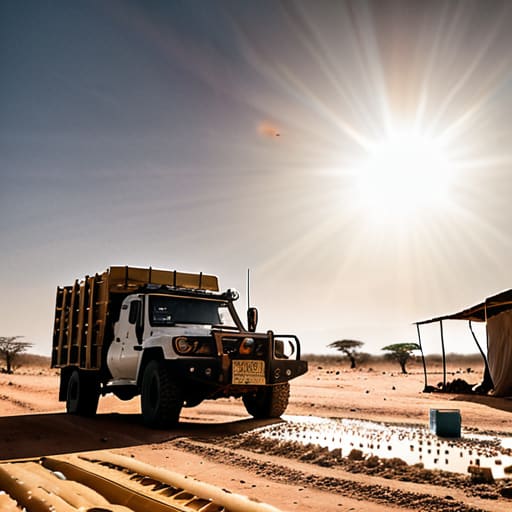
When government fiscal policy and aid collide, the view from the field changes instantly. Back in the office, bureaucrats talk about official development assistance allocation as if it’s a mathematical certainty, a series of predictable shifts in a spreadsheet. But in reality, when a donor nation hits a domestic recession or shifts its tax priorities, the impact isn’t felt in a boardroom in Brussels or DC; it’s felt at a checkpoint in South Sudan. A sudden shift in a country’s internal budget can freeze the very funds meant to stabilize a region, leaving us with a warehouse full of temperature-sensitive vaccines and no way to pay the local drivers.
The friction occurs because international development finance frameworks often operate on a timeline that ignores the volatility of national politics. A government might pass a new fiscal policy to curb domestic spending, and suddenly, the multilateral funding mechanisms we rely on start to stutter. You see it in the sudden “re-prioritization” of grants. To a policy analyst, it’s a strategic pivot; to a logistician, it’s a broken supply chain. When the money moves according to a political whim rather than a logistical need, the aid effectiveness and budget planning becomes nothing more than a theoretical exercise.
## The Disconnect Between Policy and Pavement
“You can sit in a climate-controlled room in Brussels and move billions on a spreadsheet, but those numbers don’t account for a washed-out bridge in South Sudan or a corrupt customs official demanding a bribe to release a shipment of oxytocin. A budget is just a wish list until it survives the transit from a donor’s bank account to a dusty warehouse floor.”
Yusuf Lindqvist
The Reality at the End of the Road

We have looked at the high-level mechanics—the ODA figures, the fiscal tug-of-wars, and the bureaucratic machinery that churns out these budgets in air-conditioned rooms. But looking at a spreadsheet of promised billions tells you nothing about the actual efficacy of the money. You can track every dollar from a donor’s treasury to a multilateral agency’s account, yet that trail often goes cold long before it reaches the ground. The truth is that budget allocation is a theoretical exercise; it is a map, not the territory. If the fiscal policy of a donor nation shifts or a diplomatic priority changes, the numbers on the page change, and suddenly, the supply lines we rely on begin to fray.
At the end of the day, I don’t care about the grandiosity of the allocation models or the political posturing in the halls of power. My focus remains on the last mile. All the strategic planning in the world is worthless if the fuel isn’t there to move the supplies or if the border stays closed. We need to stop measuring success by the size of the pledge and start measuring it by the integrity of the delivery. Because in this business, the only metric that carries any real weight is whether the goods actually arrived at the destination they were meant for.