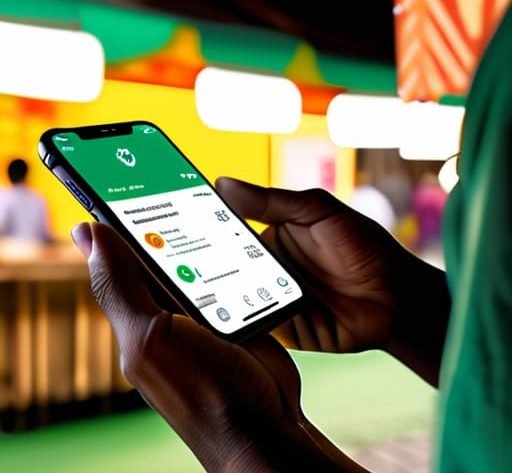
I spent nine years in South Sudan and the DRC watching NGOs move millions of dollars in aid, but I learned early on that a spreadsheet doesn’t mean a damn thing if the fuel truck gets stuck in the mud. People love to sit in air-conditioned offices in Geneva or DC debating the high-level theory of what financial inclusion means, treating it like some abstract social metric to be checked off a list. They talk about “banking the unbanked” as if it’s a magic wand, but in the field, that’s just noise. If a woman in a rural village has a digital wallet but no way to charge her phone or a reliable way to move that cash to the market before the prices spike, then she isn’t “included”—she’s just digitally stranded.
I’m not here to give you the glossy, polished version you’ll find in a World Bank brochure. I want to talk about the friction, the broken links, and the actual mechanics of how money moves when the infrastructure is failing. I’m going to strip away the jargon and show you the reality of how these systems function—or fail—on the ground. We’re going to look past the sentiment and focus on the logistics of access.
Table of Contents
The Gap Between Digital Accessibility and Real Access

The metrics in a donor report will tell you that mobile penetration is up, implying that digital financial services accessibility is solving the problem. But I’ve seen how that plays out on the ground. A farmer in a remote district might have a smartphone and a signal, but if the local agent has no liquidity or the network drops every time he tries to transfer funds for seeds, that digital connection is a ghost. Having a digital wallet is not the same as having a functional lifeline; it’s just a different way to be stuck.
We talk a lot about the unbanked and underbanked populations as a monolith, but the reality is a series of granular, physical friction points. You can roll out an app across an entire province, but if the user doesn’t understand the transaction fees or fears the technology will vanish their savings, the digital tool is useless. This is where the impact of financial literacy becomes a logistical necessity rather than a buzzword. Without it, we aren’t providing tools for stability; we are just handing out complicated gadgets that offer nothing but a false sense of progress.
Breaking the Barriers to Financial Services for All

I’ve seen too many programs focus on the “reach” of a mobile money platform while ignoring the reality of the person at the other end. You can distribute ten thousand SIM cards across a province, but if the local agent is out of cash or the network drops every time a storm hits, those cards are just pieces of plastic. We talk about digital financial services accessibility as if it’s a binary switch—on or off—but in the field, it’s a spectrum of reliability. Real access isn’t just having a digital wallet; it’s the certainty that when a medical emergency hits, the transaction actually clears.
The real barriers to financial services are rarely just technological; they are structural and systemic. I’ve sat in meetings where people discussed the potential for economic empowerment through finance using high-level spreadsheets, yet they overlooked the fact that a woman in a rural settlement might not have the legal documentation required to satisfy a digital KYC protocol. If the bureaucracy of the system is designed for a person with a fixed address and a formal salary, then the unbanked and underbanked populations are effectively locked out by design, regardless of how many apps we launch.
The Metric That Matters
Financial inclusion isn’t a statistic about how many people have a mobile wallet or a digital ID; it’s whether a woman in a remote district can actually withdraw enough cash to pay for a sudden medical emergency without having to walk three days to the nearest town.
Yusuf Lindqvist
The Last Mile is the Only Mile That Matters
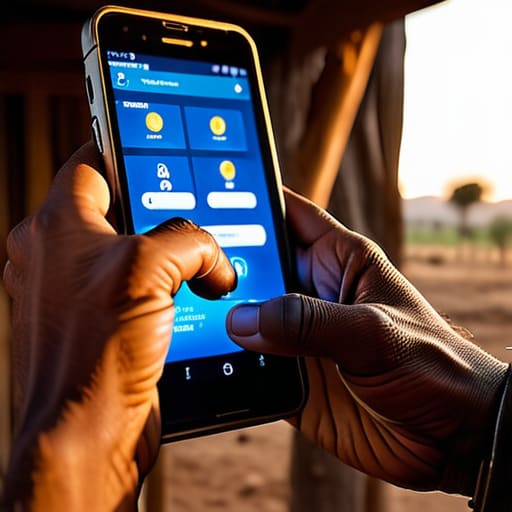
We have spent this time dissecting the difference between having a digital footprint and having actual agency. It is easy to look at a spreadsheet of new mobile money registrations and call it a success, but I have seen too many “successful” rollouts stall because the local agent ran out of liquidity or the network went dark during a harvest. True financial inclusion isn’t a metric of how many people have downloaded an app; it is about the reliability of the infrastructure and the removal of the invisible barriers that keep a person from actually using their funds when the crisis hits. If the system cannot handle the pressure of a real-world transaction, the digital access is nothing more than expensive window dressing.
At the end of the day, my time in the field taught me that progress isn’t measured in grand proclamations or billion-dollar aid packages. It is measured in the quiet, functional reality of a transaction that actually clears. We need to stop chasing the high of the “reach” statistics and start obsessing over the integrity of the delivery. When we move past the sentiment and focus on the hard logistics of access, we stop talking about inclusion as a theoretical concept and start treating it as a functional reality. That is the only way we ensure the resources actually reach the people they were meant for.