
I remember sitting in a humid tent outside Goma, staring at a stack of laminated registration forms that were more useful as scrap paper than actual data. The HQ in Geneva was obsessed with the digital transformation of everything, preaching that a fancy biometric scan was the only way to ensure integrity. But they weren’t the ones standing in the dust, watching a line of five hundred people wait for a shipment that might never clear customs. Everyone wants to talk about the high-level theory of how beneficiary registration works, but they conveniently ignore the reality that a perfect database is worthless if it doesn’t translate into a physical delivery at the end of a dirt track.
I’m not here to sell you on the latest software or the glossy brochures from the big agencies. I’ve spent nine years watching where the friction actually happens—between the spreadsheet and the actual person on the ground. In this post, I’m going to strip away the jargon and show you the unvarnished mechanics of the process. We’ll talk about why the data matters, where the systems usually break, and how to ensure that the registration process actually serves its purpose: getting the cargo to the right hands.
Table of Contents
The Raw Mechanics of Beneficiary Enrollment Steps

In the field, enrollment isn’t a high-level strategy session; it’s a messy, manual grind under a canvas tent. The actual beneficiary enrollment steps usually start with a line of people stretching into the dust, waiting for someone to confirm they actually exist in the system. We don’t have the luxury of seamless cloud syncing when the satellite link is down. Instead, we rely on a rigid sequence: gathering basic demographic data, cross-referencing it against local community leader lists, and then moving into the heavy lifting of the beneficiary verification process. It’s about establishing a baseline of who is actually standing in front of you versus who is just a name on a ledger.
Once the names are down, the real headache begins: identity authentication protocols. If you don’t get this right, you end up with “ghost” recipients or, worse, a single household claiming three separate rations because they have three different names in three different registers. I’ve seen entire shipments of high-value nutritional supplements vanish into the ether simply because we weren’t rigorous about preventing duplicate registrations. You aren’t just checking boxes; you are building a firewall against waste. If the data is sloppy at the point of entry, the entire supply chain downstream becomes a mathematical fiction.
Why Identity Authentication Protocols Dictate the Delivery
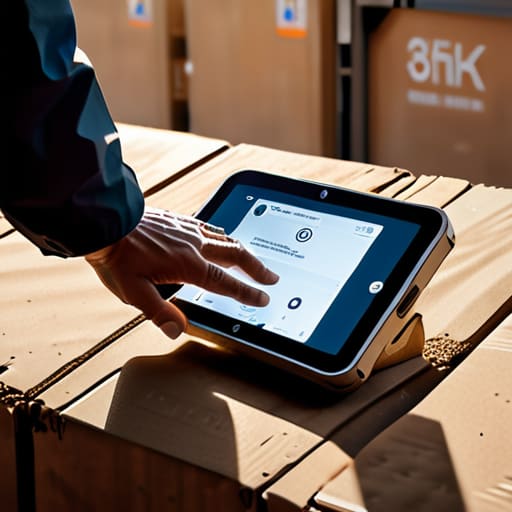
You can have the best procurement chain in the world, but if your identity authentication protocols are broken, you aren’t delivering aid; you’re just feeding a leak. I’ve seen it happen in transit hubs from Goma to Juba: a manifest says 500 kits are loaded, but by the time the distribution point opens, the “verified” list is padded with ghosts. When the beneficiary verification process fails at the gate, the physical cargo starts disappearing into the vacuum of phantom names. It isn’t about the math on a spreadsheet; it’s about the fact that the actual supplies never reach a real person.
The tension usually lies between speed and security. In the field, there is a massive push to move fast, but skipping rigorous secure identity management is a recipe for systemic theft. If you aren’t preventing duplicate registrations at the point of entry, you are effectively handing your inventory to whoever is clever enough to register twice. I don’t care how much the donor’s glossy brochure promises “rapid response”—if the identity check is a joke, the entire logistics tail is compromised before the first truck even leaves the warehouse.
The friction between data and delivery
You can spend months perfecting a digital biometric database, but if the registration process is so cumbersome that the local warehouse manager can’t verify a name against a manifest, the entire supply chain breaks. A perfect list is useless if it doesn’t translate into a driver knowing exactly which person is standing at the back of the truck.
Yusuf Lindqvist
The Bottom Line
At the end of the day, beneficiary registration isn’t about the elegance of the database or the sophistication of the biometric scan. It is about the integrity of the link between a person’s identity and the physical goods sitting in a warehouse. If the registration process is flawed, the data becomes noise, and that noise leads to empty trucks and missed targets. You can have the most comprehensive enrollment protocols in the world, but if they don’t translate into a verifiable trail from the initial intake to the final hand-off, then the entire system has failed. The goal isn’t to collect data; it is to ensure the cargo finds its rightful owner.
I have spent too many nights listening to the static on my shortwave radio, thinking about the gap between what is written in a donor report and what actually happens on a dirt road in South Sudan. We often get lost in the metrics of “reach” and “impact,” forgetting that those words are hollow without the mechanical reality of delivery. If we want to do this work properly, we have to stop obsessing over the sentiment of the mission and start focusing on the precision of the process. When the registration is tight and the logistics are sound, the result isn’t just a successful audit—it is the sound of a truck engine finally pulling into a village where people were actually waiting.