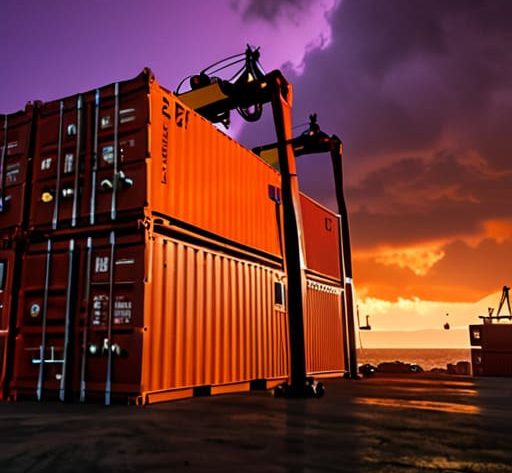
I remember sitting in a dusty transit office outside Goma, staring at a stack of UN resolutions that looked more like fiction than policy. Everyone in the capital was talking about high-level diplomacy and the moral weight of international law, but they weren’t the ones watching the trucks. They treat an arms embargo like it’s a magical barrier that just makes weapons vanish, but if you’ve ever tried to move medical supplies through a conflict zone, you know that what an arms embargo involves is rarely about the grand speeches in New York. It is actually about the sudden, frustrating silence of a supply chain and the way a shipment of much-needed antibiotics gets tied up in customs because a single crate of “dual-use” hardware is suspected of being on a blacklist.
I’m not here to give you a lecture on international relations or the legal nuances of the Geneva Convention. My goal is to strip away the political theater and tell you how these restrictions actually work on the ground. I will show you the logistical reality of how an embargo shifts the movement of goods, creates bottlenecks for humanitarian aid, and changes the way we move everything from fuel to bandages.
Table of Contents
Un Security Council Arms Embargoes and the Broken Contract

When the UN Security Council passes a resolution, the bureaucrats in New York see a legal framework. I see a mountain of paperwork that usually ends in a stalemate at a checkpoint. UN Security Council arms embargoes are intended to starve a conflict of its fuel, but in practice, they often function as a blunt instrument that fails to account for the reality of the terrain. The “contract” is the idea that if we restrict the flow of hardware, the violence slows down. But a piece of paper signed in a high-rise doesn’t stop a shipment once it’s already moving through a porous border.
The real friction happens within the grey areas of compliance and export controls. You can ban rifles, but how do you handle the truck parts, the fuel, or the communications gear that everyone needs to survive? This is where the system breaks. We call it dual-use goods regulation, but on the ground, it’s just a headache for every driver trying to prove that his cargo isn’t being diverted to a militia. When the sanctions are poorly defined, the legitimate supply lines—the ones carrying the medicine and the grain—get caught in the same net as the illicit ones. The embargo exists on the books, but the cargo remains stuck in limbo.
The Weight of Compliance and Export Controls
In my experience, the real friction isn’t the political debate in New York; it’s the paperwork that sits on a desk in a customs office halfway across the world. When we talk about compliance and export controls, most people think of high-level legal frameworks. I think of the three-week delay on a shipment of surgical kits because a single component was flagged under dual-use goods regulation. It’s the same mechanism used to stop heavy machinery from reaching a militia, but it’s applied with a bluntness that doesn’t care if the crate contains a rifle or a generator.
The bureaucracy of international sanctions mechanisms creates a massive shadow effect. You have these strict weapons trade restrictions designed to choke off conflict, but they often end up choking the supply chain for everything else. I’ve seen entire convoys stalled because a compliance officer couldn’t verify if a truck’s engine parts fell under a specific restriction. To the bureaucrats, it’s a matter of risk mitigation; to the person on the ground, it’s just another empty warehouse and a list of promises that can’t be kept.
The Paperwork Gap
An arms embargo isn’t a sudden silence in a conflict zone; it’s a massive, frantic shift in the supply chain. It’s the sudden disappearance of legitimate spare parts for a humanitarian convoy because a single crate of dual-use components flagged a shipment, leaving a truck idling at a border while the local reality continues to bleed regardless of what the UN resolution says.
Yusuf Lindqvist
The Reality on the Ground
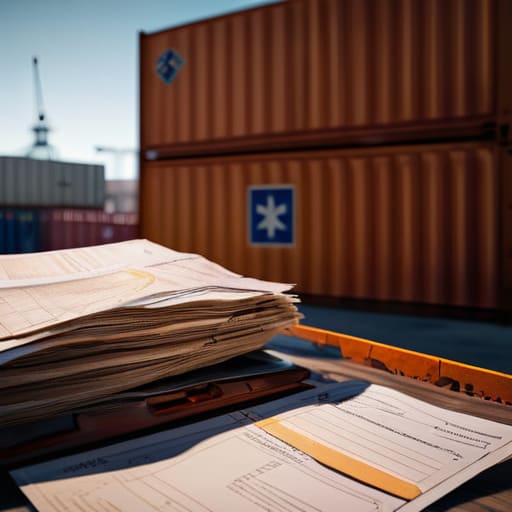
At the end of the day, an arms embargo is a complex web of legal frameworks, UN mandates, and export control protocols. We have looked at how these restrictions are designed to freeze the flow of weaponry, yet we have also seen how they often fail to account for the friction of real-world implementation. It isn’t just about the high-level signatures in New York; it is about the regulatory friction that occurs at every customs checkpoint and the way compliance often creates a secondary layer of difficulty for legitimate humanitarian aid. When the paperwork for a shipment of surgical kits gets caught in the same bureaucratic drag as a shipment of small arms, the embargo has achieved its legal aim but failed its humanitarian intent.
We tend to measure the success of these international mandates by the number of resolutions passed or the severity of the sanctions imposed. But if you want to know if an embargo is actually working, don’t look at the press releases. Look at the supply lines. Look at whether the essential cargo is still moving despite the restrictions. The goal shouldn’t just be to stop the bullets; it should be to ensure that the logistical pathways for life remain open even when the world is trying to shut everything else down. Success is found in the precision of the distinction between what fuels a war and what sustains a people.