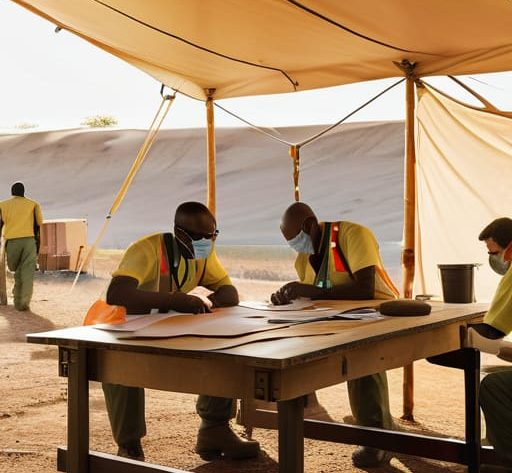
I remember sitting in a humid, corrugated metal office in Goma, staring at a spreadsheet that claimed we had “optimized our strategic response framework.” Outside, the rain was turning the only access road into a soup of red clay that would swallow a Land Cruiser whole. Everyone in Geneva was talking about high-level coordination, but nobody was talking about the broken axle or the lack of diesel. Most people think understanding how the humanitarian system is organised means memorizing the hierarchy of UN clusters and the acronyms of various agencies. They’re wrong. The system isn’t a flowchart on a PowerPoint slide; it’s a series of messy, often broken links between a donor’s bank account and a warehouse floor.
I’m not here to give you a lecture on international policy or the lofty goals of the Sustainable Development Goals. I have no interest in the glossy brochures or the inflated appeal totals that look great in annual reports. Instead, I’m going to pull back the curtain on the actual mechanics of the work. I’ll show you how the gears really turn—from the procurement bottlenecks to the last-mile delivery struggles—so you can see the difference between how the system is described and how it actually functions when the mud starts rising.
Table of Contents
The Un Humanitarian Response Architecture in Motion
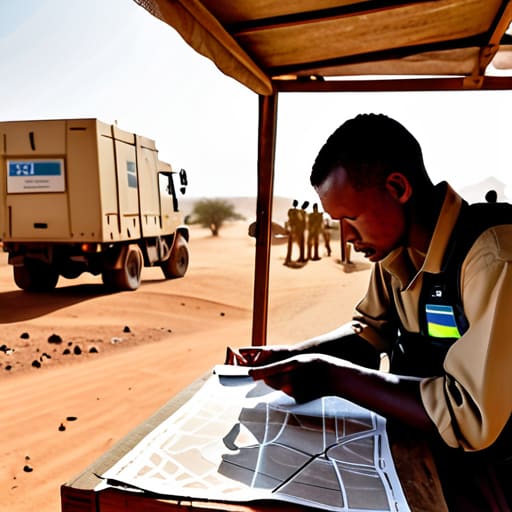
When people talk about the UN humanitarian response architecture, they usually picture high-level meetings in Geneva or New York. From where I sat, usually in a dusty compound in Goma or Juba, that architecture looked a lot less like a blueprint and a lot more like a series of frantic radio calls. At the center of this is the OCHA role in crisis management, which is essentially trying to act as the glue between dozens of different agencies that all have their own ways of doing things. It isn’t about grand strategy; it’s about preventing three different NGOs from trying to deliver the same shipment of grain to a village that actually needs antibiotics.
The practical backbone of this is the cluster approach. On paper, it’s a way to organize sectors like WASH, health, or logistics to ensure nothing falls through the cracks. In reality, cluster approach effectiveness is often measured by how well the different heads of agency can actually talk to one another when a road washes out. You can have the best inter-agency coordination mechanisms in the world, but if the logistics cluster can’t secure a convoy through a contested zone, the entire framework is just expensive paperwork. The system only works when the mandates on the page translate into movement on the ground.
Humanitarian Principles and Mandates Beyond the Paperwork

In the field, you quickly learn that humanitarian principles and mandates are more than just high-minded ideals printed on glossy brochures in Geneva. On paper, neutrality and impartiality look clean; in practice, they are the tools you use to negotiate a checkpoint or convince a local commander to let a convoy pass. It isn’t about the philosophy of aid; it is about the functional necessity of being seen as an actor that doesn’t take sides. If you lose that perceived neutrality, your trucks stop moving, and the paperwork becomes useless.
This is where the OCHA role in crisis management actually hits the ground. It isn’t just about high-level diplomacy; it is about managing the friction between different agencies trying to occupy the same space. We often talk about inter-agency coordination mechanisms as if they are seamless gears in a machine, but in a real crisis, it often feels like trying to steer three different ships through a single narrow strait. You aren’t just managing supplies; you are managing the egos and the overlapping mandates of every organization in the sector. The goal isn’t a perfect meeting minutes report—it’s ensuring that two different NGOs aren’t sending grain to the same village while the next one over starves.
## The Gap Between Paper and Pavement
You can study the cluster system and the coordination frameworks until you’re blue in the face, but none of those organizational charts matter when a bridge is washed out and the fuel bladder is empty. The system isn’t defined by how many agencies sit at the table in Geneva; it’s defined by the distance between the warehouse and the person who actually needs the supplies.
Yusuf Lindqvist
The Real Metric of Success

At the end of the day, the architecture we’ve discussed—the UN clusters, the mandates, and the complex web of NGOs—is just a framework. It is a way to organize the chaos, but it isn’t the work itself. You can study the coordination mechanisms and the high-level principles until you’re blue in the face, but none of that matters if the supply chain breaks at the last mile. We spend so much time debating the structure of the response that we risk forgetting that the entire system exists for one singular, unglamorous purpose: to ensure that the cargo reaches the destination. If the coordination fails, the paperwork is just expensive scrap.
I know it’s easy to get lost in the spreadsheets and the massive appeal totals reported in the news. But if you want to understand if this system actually works, stop looking at the budget lines and start looking at the roads. The true measure of our humanitarian architecture isn’t found in a boardroom in Geneva; it is found in the dust and the grit of a successful delivery. We don’t work to build perfect organizations; we work to build reliable pathways. When the truck finally pulls into that village, through the mud and the broken terrain, that is when the system has actually done its job.