I spent a decade watching people in Geneva and New York draft fifty-page frameworks on diplomacy, convinced that high-level summits were the key to getting aid into conflict zones. They talk about “principled engagement” and “humanitarian corridors” as if these things exist on a map. But if you’ve ever sat in a dusty, sweltering checkpoint outside Goma, you know that’s nonsense. Understanding how access negotiations work isn’t about mastering international law; it’s about the uncomfortable reality of convincing a man with a Kalashnikov that your truck isn’t a threat.
I’m not here to give you a lecture on political theory or the nuances of UN mandates. I’ve spent nine years watching the gap between what is written in a briefing note and what actually happens on the ground. In this piece, I’m going to strip away the jargon and show you the actual mechanics of getting a convoy through a contested border. We are going to talk about the bribes, the local power brokers, and the granular, unglamorous details that determine whether a shipment of medicine reaches a clinic or sits rotting in a warehouse because someone forgot to grease the right palm.
Table of Contents
Authentication Protocols and Handshake the Drivers Paperwork
In the field, an “authentication protocol” isn’t a digital handshake or a line of code; it’s a weathered folder of stamped waybills and a driver who knows which local commander needs a nod of recognition. When we talk about the authorization negotiation process, we aren’t discussing high-level diplomacy in Geneva. We are talking about the thirty minutes spent at a dusty checkpoint in South Sudan, where the driver must prove the cargo matches the manifest to a man with a Kalashnikov. If the stamps are wrong or the ink is too fresh, the truck stays put.
Effective security checkpoint validation relies on more than just having the right papers; it’s about the physical reality of the documentation. I’ve seen entire convoys stalled because a single signature didn’t align with the local authority’s expectations. You can have the most sophisticated permission management workflows designed in a London office, but they mean nothing if the paper in the driver’s hand doesn’t survive the heat and the scrutiny of a roadside inspection. In this line of work, the paper is the only truth that moves the wheels.
Security Checkpoint Validation Proving You Belong
Once you’ve cleared the main administrative gates, you hit the real test: the tactical checkpoints. This isn’t about high-level diplomacy or UN mandates; it’s about a guy with an AK-47 and a clipboard deciding if your truck is a lifeline or a threat. This is where the security checkpoint validation actually happens. I’ve spent many nights sitting in a cab, watching a local commander squint at a crumpled waybill, trying to decide if the cargo matches the verbal briefing. If the paperwork doesn’t align with the physical reality of the crates in the back, the whole access request lifecycle grinds to a halt.
In these moments, the formal authorization negotiation process becomes incredibly stripped-back and physical. You aren’t arguing policy; you are proving your presence is legitimate through a series of micro-validations. It’s a constant loop of showing IDs, verifying vehicle numbers, and sometimes even letting a soldier inspect the seal on a medical crate. You learn quickly that if your local contacts haven’t pre-cleared your route, you’re just a target. In this world, trust is a perishable commodity, and it’s usually measured by how much evidence you can provide to prove you aren’t there to cause trouble.
## The Real Currency of Access
“You can spend six months in high-level meetings in the capital discussing ‘humanitarian principles’ and ‘neutrality,’ but none of that matters when you’re idling at a muddy checkpoint with a driver who’s losing light. In the field, access isn’t negotiated with diplomats; it’s negotiated with a stack of stamped manifests and the ability to prove that your cargo is exactly what you said it was.”
Yusuf Lindqvist
The Reality of the Last Mile
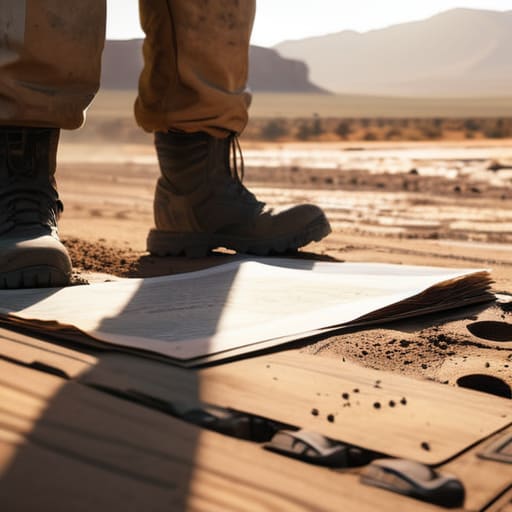
At the end of the day, access isn’t a high-level diplomatic summit in Geneva; it is a series of granular, often exhausting, local interactions. It is the way a driver presents a stamped manifest at a muddy checkpoint, the way a local commander recognizes a specific NGO logo, and the meticulous verification of every single crate in the back of the truck. You can have all the funding in the world and the most polished mission statement, but if your authentication protocols fail at a provincial border or your driver can’t navigate the local hierarchy, that cargo stays parked. Access is built on provenance and presence, not just permission.
People like to talk about the “humanitarian impact” in terms of sweeping statistics and multi-million dollar appeals. But I’ve seen enough empty warehouses to know that impact is measured in kilograms and liters. The real victory isn’t the press release; it is the sound of a diesel engine idling at a remote clinic after a twelve-hour journey through contested territory. We do this work because the math has to work. If we can ensure the logistics hold firm under pressure, then—and only then—does the actual aid begin to move.