
I remember sitting in a dusty office in Goma, staring at a stack of “compliance frameworks” that were thicker than the actual manifest for the malaria kits we were trying to move. Everyone in the NGO circuit loves to talk about grand moral principles and high-level oversight, but none of that matters when you’re stuck at a checkpoint at 2:00 AM. People spend thousands on consultants to teach them how to work with a fixer ethically, as if a polished handbook will stop a local official from demanding a “facilitation fee” to let the trucks pass. In the real world, ethics isn’t about following a corporate flowchart; it’s about the integrity of the movement.
I’m not here to give you a lecture on virtue signaling or theoretical morality. I’m going to tell you how this actually works when the pavement ends and the bureaucracy gets heavy. I will show you how to vet your contacts, how to handle the inevitable “gray areas” without losing your soul, and how to ensure your money is actually buying progress rather than just lining someone’s pocket. If you want the sanitized version, go read a donor report; if you want to know how to get the cargo to the destination, read on.
Table of Contents
Vetting Local Production Assistants Without Breaking the Line
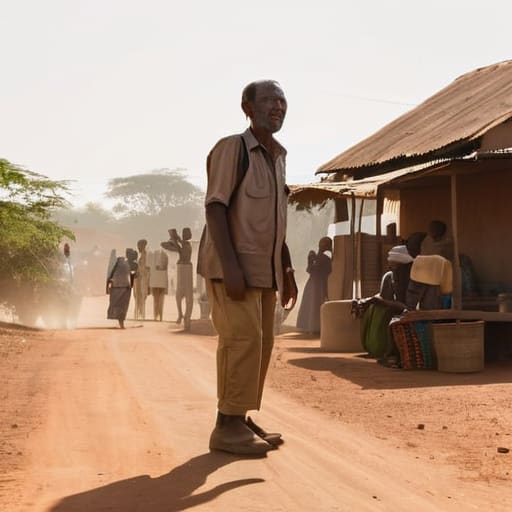
When I was moving medical supplies through the Kivus, a broken axle was a headache, but a bad contact was a catastrophe. In production, your fixer is your axle. Vetting local production assistants isn’t about checking their social media following; it’s about verifying their footprint in the community. I don’t care about their “vision”; I care about their history of reliability and their ability to navigate a checkpoint without getting the crew detained. You need to run due diligence for freelance fixers that goes beyond a CV—ask around the local radio stations or the veteran NGOs in the area. If their name doesn’t carry weight in the local market, they aren’t a fixer; they’re a liability.
The real friction starts when the budget meets the reality of the ground. You cannot expect a fixer to maintain your standards of journalistic integrity and fixers’ safety if you are lowballing them to save a few dollars on the manifest. If you underpay, you aren’t being “frugal”—you are actively eroding the security of your entire operation. When the pressure mounts and the road washes out, a fixer who feels exploited will not go the extra mile to keep your team safe. Pay the local rate, even if it stings the production budget, because a well-compensated contact is the only thing standing between a successful shoot and a total logistical collapse.
Due Diligence for Freelance Fixers in Unstable Zones

When you’re operating in a zone where the maps are outdated and the checkpoints are unpredictable, due diligence for freelance fixers isn’t about a background check on a laptop; it’s about understanding their footprint on the ground. I’ve seen too many crews arrive with a stack of credentials and zero concept of the local power dynamics, only to find themselves stranded when a “contact” turns out to be a liability. You need to know who they are talking to, not just what they say they can do. True vetting means checking if their reputation is built on actual movement or just being the loudest person in the hotel lobby.
The real risk isn’t just a missed deadline; it’s the legal and physical fallout of a bad connection. Mitigating legal risks with local contacts requires a clear-eyed assessment of how they operate under pressure. If they suggest a “shortcut” through a restricted zone or a payment that feels off, that’s your signal to pause. You aren’t just looking for a guide; you are looking for someone who understands that journalistic integrity and fixers are inextricably linked by the weight of the consequences they carry. If their methods compromise your safety or the mission’s legality, the cargo—and the story—will never make it out.
## The Price of a Paper Trail
You can spend all day drafting a code of conduct in a climate-controlled office in Geneva, but out in the field, ethics isn’t a document; it’s the transparency of the transaction. If you aren’t willing to look a fixer in the eye and account for every cent of the grease money required to keep the wheels turning, you aren’t being ethical—you’re just being naive.
Yusuf Lindqvist
The Bottom Line

At the end of the day, ethical engagement isn’t about a signed code of conduct sitting in a dusty filing cabinet; it is about the mechanics of the relationship. You have to vet your people thoroughly, conduct real due diligence in the zones that matter, and ensure that your local partners are treated as professionals rather than disposable tools. If you skip the groundwork to save time, you aren’t being efficient—you are just gambling with the mission. You can have the most polished ethics policy in the NGO sector, but if your vetting process is hollow, your entire supply chain is built on sand. Integrity is a logistical requirement, not a luxury.
I have seen too many well-intentioned projects collapse because someone thought they could bypass the messy reality of local dynamics in favor of a clean spreadsheet. Real development happens in the friction between the plan and the ground. When you invest in your fixers—when you pay them fairly, respect their local intelligence, and treat the partnership as a two-way street—you aren’t just being “good.” You are ensuring that when the rain starts and the roads turn to sludge, the cargo actually makes it to the destination. The goal is the arrival. Everything else is just noise.