
I once spent three days sitting in a humid, dust-choked warehouse outside Goma, staring at a stack of “verified” impact reports that claimed our medical supplies had reached the clinics. The paperwork said everything was perfect, but the reality was a pile of rusted crates and a driver who hadn’t seen a pallet in a week. This is the fundamental lie in our industry: we have become obsessed with the aesthetics of oversight while ignoring the actual mechanics of delivery. People spend millions on sophisticated software and consultant-led frameworks to figure out how projects are monitored, but they forget that a digital dashboard doesn’t mean a damn thing if the physical goods are sitting in a ditch fifty miles from the border.
I’m not here to talk to you about high-level theory or the latest buzzwords coming out of Geneva. I’m going to tell you how monitoring actually works when the power goes out and the spreadsheets fail. We are going to strip away the fluff and look at the hard metrics of reality—the stuff that actually proves a project is functioning. I’ll show you how to move past the performative data and focus on the only thing that matters: did the work actually happen?
Table of Contents
Drowning in Project Management Performance Metrics
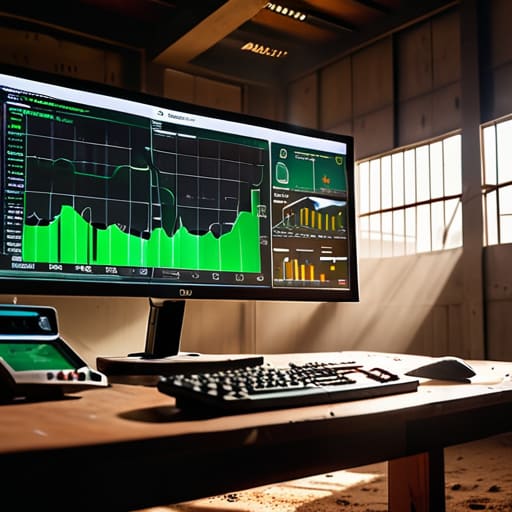
I’ve spent enough time in dusty warehouses in South Sudan to know that a spreadsheet is a comfortable lie. In the headquarters, people love to talk about key performance indicators for projects, treating them like holy scripture. They sit in air-conditioned offices in Geneva or Nairobi, staring at dashboards that show a green light for “resource allocation” or “community engagement levels.” But a green light on a screen doesn’t mean a single box of oxytocin reached a cold chain in a remote village.
The problem is that we have traded reality for a bloated monitoring and evaluation framework that prioritizes what can be easily counted over what actually matters. We track “percentage of beneficiaries reached” or “training sessions completed,” but these are just abstractions. I’ve seen entire project lifecycles documented as “successful” in a quarterly report, even while the actual supplies were sitting on a sun-baked tarmac because of a broken axle or a bribe that wasn’t budgeted for. We are drowning in data that tells us how we intended to work, rather than what actually happened on the ground.
The Truth About Real Time Project Tracking Methods

The problem with most “real-time” solutions is that they assume a stable environment. In a boardroom in Geneva, real-time project tracking methods look like a dashboard with green, yellow, and red lights. But when I was coordinating cold-chain vaccine runs through the South Kivu highlands, “real-time” wasn’t a digital ping; it was a crackling radio transmission telling me the bridge was washed out. If your monitoring and evaluation framework relies entirely on a cloud-based app, you aren’t tracking a project—you’re tracking a fantasy.
The reality is that most data fed into a centralized system is sanitized before it ever reaches the screen. People report what they think the donor wants to see. They see a shipment leave the warehouse and mark it as “in transit,” which is a convenient way of saying they have no idea where it actually is. True project lifecycle oversight requires looking past the automated updates. It requires knowing that a status report is just a piece of paper until you verify the physical presence of the assets at the destination. If the data says the project is 80% complete, but the fuel drums are still sitting in a port five hundred miles away, that 80% is a lie.
## Metrics vs. Reality
I have seen million-dollar monitoring frameworks fail because they were too busy tracking ‘engagement levels’ to notice the bridge on the supply route had washed out three weeks ago. You can report on a project’s progress until you’re blue in the face, but if the cold chain broke somewhere in the middle of the bush, your data is just a collection of expensive lies.
Yusuf Lindqvist
The Bottom Line

We can spend all day debating the nuances of qualitative versus quantitative data, but at the end of the day, monitoring isn’t about perfecting a dashboard. It is about stripping away the noise of bloated KPIs and the vanity of colorful progress reports to find the signal. If your monitoring system doesn’t tell you exactly where the bottleneck is—whether it’s a customs delay in Mombasa or a broken axle in the bush—then it is just expensive paperwork. Real monitoring is about the hard data of movement: the weight of the cargo, the timestamp of the delivery, and the integrity of the supply chain.
I have spent enough years looking at manifests to know that a project isn’t successful because the spreadsheet says it is; it is successful when the intended impact actually reaches the ground. We need to stop managing for the sake of the donor’s quarterly review and start managing for the sake of the delivery. If we shift our focus from reporting sentiment to verifying arrival, we might actually start doing the work we set out to do. The metrics only matter if they lead to a lorry reaching its destination.