
I remember sitting in a humid office in Juba, staring at a spreadsheet that claimed we had “successfully mitigated risk” for a new regional program. On paper, the compliance framework was flawless; in reality, the local bank had flagged our primary vendor as a “high-risk entity” and frozen the transfer. It didn’t matter that the funds were earmarked for malaria nets. When you look at how de-risking affects aid transfers, you realize the math in the headquarters’ boardroom is often a fantasy. While the policy experts debate risk appetite, the actual movement of goods grinds to a halt because a compliance officer in London or New York decided a specific corridor was too messy to touch.
I’m not here to give you a lecture on institutional theory or the nuances of global financial regulation. I’m going to tell you what happens when the money hits the wall. I will show you the gap between a signed grant and a delivered payload, focusing on the practical reality of how these banking restrictions create bottlenecks on the ground. This isn’t about sentiment; it’s about the mechanics of making sure the lorry actually arrives.
Table of Contents
When Correspondent Banking Relationships Break the Chain

I’ve seen it happen from Nairobi to Goma: the money is cleared in London or New York, but it hits a wall before it ever touches a local ledger. This is the reality of broken correspondent banking relationships. When a major global bank decides that a specific region is too “high-risk” to bother with, they don’t just send a warning; they sever the link entirely. They pull out of the local markets to avoid even the slightest headache from regulators. For a field office, this isn’t a theoretical banking issue. It means the local vendor won’t take our transfers, the fuel supplier won’t release the diesel, and the entire supply chain grinds to a halt.
The impact of AML/CFT regulations on NGOs is often discussed in boardrooms as a matter of legal compliance, but on the ground, it functions as a physical blockade. We talk about financial inclusion for humanitarian aid as if it’s a policy goal, but when the correspondent banks vanish, that inclusion disappears. You can have a million dollars sitting in a donor account, but if there is no reliable pipe to move it into the local economy, that money is effectively non-existent. It’s just numbers on a screen that can’t buy a single bag of grain.
The High Cost of Cross Border Payment Barriers
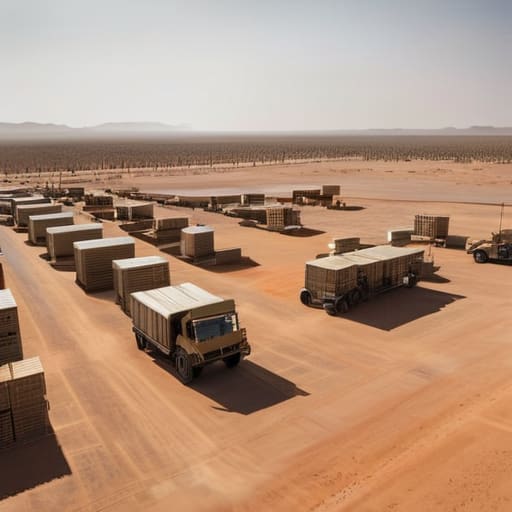
I’ve seen it happen in the middle of a procurement cycle: a vendor in Juba or Goma suddenly stops taking our orders. It isn’t because they’ve gone out of business or changed their prices. It’s because their local bank can no longer process an incoming wire from our headquarters. These cross-border payment barriers act like a sudden, invisible blockade on a highway. You can have the fuel, the drivers, and the medicine ready to go, but if the funds for the local purchase are stuck in a compliance loop in Frankfurt or New York, the supply chain dies on the tarmac.
The reality is that the impact of AML/CFT regulations on NGOs is often framed in boardrooms as a necessary safeguard, but on the ground, it feels like a blunt instrument. When banks decide that a specific region is too “high-risk” to bother with, they don’t just slow down the transactions; they sever the connection entirely. We talk about financial inclusion for humanitarian aid as a goal, but we are actually seeing the opposite: a systematic exclusion that forces us to use more expensive, less transparent informal channels just to keep the lights on. It turns a logistical problem into a survival gamble.
The Paperwork Gap
I’ve seen millions sit in frozen accounts in London or Frankfurt because a compliance algorithm flagged a region as ‘high risk.’ To a banker, that’s a successful mitigation of liability; to me, it’s just a pile of medical supplies rotting on a dock because the wire transfer never cleared.
Yusuf Lindqvist
The Real Metric of Success

At the end of the day, we have to stop conflating financial compliance with actual humanitarian impact. We’ve seen how the collapse of correspondent banking ties and the suffocating weight of cross-border payment barriers create a vacuum where money exists on a balance sheet in London or New York, but cannot move when it is needed most. You can have all the de-risking protocols in the world, but if the digital rails are broken, the funds are effectively trapped. We cannot pretend the mission is succeeding if the financial plumbing is clogged at the exact moment the crisis peaks.
I spent years looking at manifests, ensuring that every crate of antibiotics and every sack of grain actually hit the dirt in the provinces where they were promised. In this industry, we often get lost in the high-level rhetoric of “risk mitigation,” but the reality is much more grounded. We need to stop treating de-risking as a purely administrative hurdle and start seeing it for what it is: a logistical bottleneck. If we want to bridge the gap between a donor’s intent and a community’s survival, we must ensure that the money follows the same path as the supplies. The goal isn’t to move capital; it is to deliver results.