
I spent most of my decade in East Africa staring at dusty manifests and listening to the static on my shortwave radio, not watching the polished press conferences in Geneva. When people talk about how casualty figures are produced, they usually point to grand econometric models or sweeping satellite imagery as if the truth lives in a spreadsheet. It doesn’t. The truth is usually found in a crumpled notebook held by a local clinic worker who hasn’t had a clean glass of water in three days. The high-level math is often just a sophisticated way of guessing when the actual data pipeline has been severed by a washed-out road or a closed border.
I am not here to give you a lecture on statistical methodology or the nuances of data aggregation. Instead, I’m going to show you the mechanical reality of where those numbers actually come from—and more importantly, why they fail. I will strip away the humanitarian jargon to explain the actual movement of information from a remote field site to a global report. You won’t get any sentiment here; you will get the unvarnished logistics of how we count the cost of a crisis.
Table of Contents
Conflict Data Collection Techniques Are Never Clean

Conflict data collection techniques are never clean. In my time moving supplies through the Kivu provinces, I learned that data doesn’t just flow from a source; it gets stuck in the mud, hijacked by local politics, or lost in the static of a broken radio. You rarely get a clean tally. Instead, you get fragments. You get a village elder telling you what he saw, a hospital clerk trying to keep track of bodies in a basement, and a satellite image that shows a smoking ruin but cannot tell you if the people inside were combatants or children.
When people talk about civilian death toll verification, they tend to treat it like a laboratory experiment. It isn’t. It is a messy, desperate scramble to find truth in a vacuum. Often, the only way to bridge the gap is through statistical modeling in humanitarian crises, using proxy indicators like sudden shifts in food consumption or the disappearance of certain age demographics. It is an educated guess, wrapped in a veneer of math. But even the most sophisticated model can’t account for the person who died of cholera three weeks after a raid because the medical shipment never cleared the checkpoint. The math is a shadow; the reality is the gap between the estimate and the empty village.
Why Civilian Death Toll Verification Fails the Living
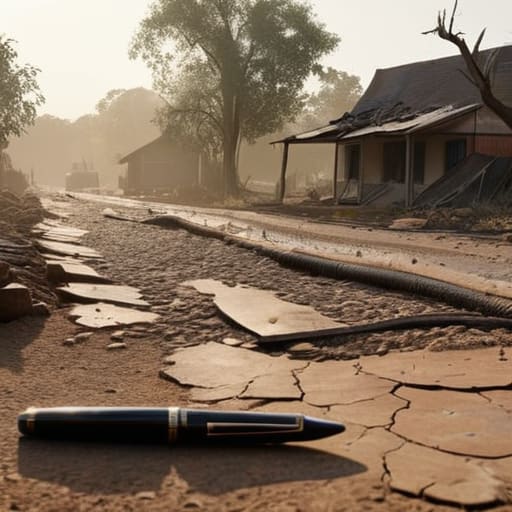
The problem with civilian death toll verification isn’t just a lack of access; it’s the gap between a data point and a person. When we talk about mortality rate estimation challenges, we are often looking at shadows. In my time moving supplies through South Sudan, I saw how easily a family disappears from a registry when the local clinic is leveled or the clerk flees. You can run all the statistical modeling in humanitarian crises you want, but a model cannot account for the village that was bypassed by the census because the road was washed out or held by a militia.
We treat these numbers as if they are static truths, but they are actually lagging indicators of a catastrophe already in progress. By the time the data reaches a headquarters in Geneva or Nairobi, the reality on the ground has shifted three times over. We focus on the aggregate, yet we fail the living because the numbers provide a false sense of closure. We settle for a “verified” count that satisfies a donor’s spreadsheet, while ignoring the fact that the most significant deaths are often the ones that never make it into the ledger. The math is tidy; the reality is a void.
The gap between the ledger and the ground
People get obsessed with the aggregate—the millions, the percentages, the grand totals that look good in a briefing note. But I’ve spent too many years watching trucks sit idle because a single data point was disputed. You can argue over the methodology of a death toll for months in a climate-controlled office, but that doesn’t change the fact that the supply chain breaks the moment the numbers stop making sense to the people on the ground.
Yusuf Lindqvist
The Ledger of Reality

At the end of the day, we have to stop treating casualty figures like they are infallible mathematical truths. We’ve seen how the data breaks: the gaps left by destroyed communications, the political pressure to inflate or deflate numbers, and the sheer, messy reality of people disappearing into the chaos of a conflict zone. Whether it is a flawed survey in a camp or a contested tally from a local ministry, the numbers are always an approximation, never a complete picture. We can argue about methodologies and margin of error all night, but the truth is that the data is always lagging behind the actual loss. If we rely solely on the spreadsheet to tell us the scale of a crisis, we are missing the ground truth that exists between the lines of the report.
My time in the field taught me that while the statistics provide the scale, they do not provide the solution. A number might trigger an appeal, but a number cannot clear a blocked border crossing or fix a broken supply chain. If we want to move beyond mere observation, we must shift our focus from the grand totals to the mechanics of survival. We need to stop obsessing over the perfect count and start focusing on the logistical reality of preventing the next one. The real measure of our success isn’t found in a polished report sent to a donor; it is found in the tangible presence of aid where it is needed most.