
I remember standing in a dust-choked yard outside Goma, watching a driver argue with a warehouse manager over a stack of damaged crates. The manager was busy citing “standard operating procedures” and “reconciliation protocols,” but all I could see was three tons of expired antibiotics that were essentially becoming expensive trash. People love to talk about the theory of supply chains, but they rarely understand how returns are organised when the reality is a broken axle and a corrupt customs official. In the field, a return isn’t a line item on a spreadsheet; it’s a logistical headache that eats your budget and your time.
I’m not here to give you a lecture on corporate inventory management or the latest software solutions. I’m going to tell you how this actually works when the systems fail and the pressure is on. I will show you the grit behind the paperwork—the actual mechanics of moving goods backward through a broken system. My promise is simple: I’ll provide the unfiltered reality of the process, stripped of the NGO jargon, so you know exactly what it takes to get the cargo back where it belongs.
Table of Contents
The Backbone Your Organizational Structure of Returns
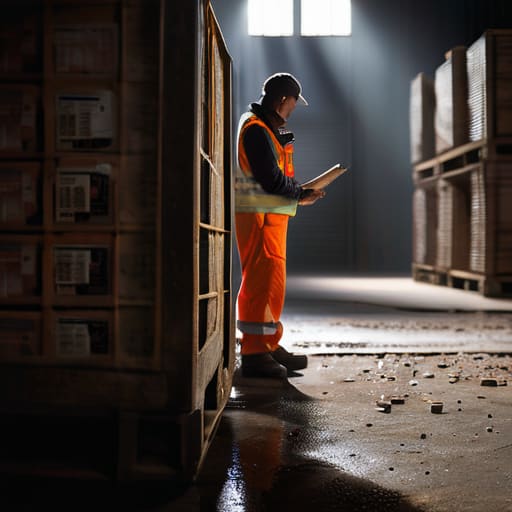
In the field, nobody cares about the high-level mission statement when a shipment of expired antibiotics is sitting in a humid warehouse in Goma. What they care about is the organisational structure of returns—the actual chain of command that decides who signs off on a rejected crate and who pays for the fuel to send it back. You can have the most sophisticated manual in the world, but if the person at the regional hub doesn’t have the authority to trigger a reverse shipment, that stock just becomes dead weight.
Effective managing return logistics isn’t about elegance; it’s about clear lines of accountability. I’ve seen too many operations stall because the return policy framework was written by someone in a climate-controlled office in Geneva who has never had to deal with a broken axle or a closed border crossing. You need a hierarchy where the decision-making is decentralized enough to handle real-world friction. If the field officer has to wait three days for a headquarters’ email just to authorize a return, the entire supply chain begins to rot. It comes down to having a rigid protocol for the paperwork, but enough operational flexibility to move the physical goods before they become a liability.
Building the Support Systems for Returns That Actually Work
You can draft the most elegant return policy framework in a climate-controlled office in Geneva, but it won’t mean a thing if the local warehouse manager doesn’t have the fuel or the staff to execute it. Building effective support systems for returns isn’t about the theory; it’s about the mechanical reality of the ground level. I’ve seen plenty of well-intentioned programs collapse because they focused on the “why” of a return while completely ignoring the “how.” If you haven’t accounted for the breakdown of a single axle or a sudden border closure, your system isn’t a system—it’s just a wish list.
Real stability comes from integrating managing return logistics into your daily operational rhythm, rather than treating it like a special project. This means ensuring your compliance and conditions are actually enforceable in the field, not just written in a manual that sits on a dusty shelf. You need a chain of command that understands that a return isn’t successful when the paperwork is filed; it is successful when the assets are secured and accounted for back at the point of origin. Everything else is just noise.
The reality of the reverse flow
You can spend all day auditing the theoretical efficiency of a return policy, but in the field, a return isn’t a line item on a spreadsheet; it’s a physical struggle against broken axles, washed-out roads, and the sheer weight of goods that nobody wants to claim but everyone is responsible for moving.
Yusuf Lindqvist
The Bottom Line
At the end of the day, organizing returns isn’t about perfecting a digital dashboard or drafting the most elegant SOPs in the headquarters’ library. It comes down to the physical reality of the chain: having the right personnel at the warehouse, the communication lines to track a diverted shipment, and the structural integrity to handle what comes back. If your organizational structure is too top-heavy or your support systems are built on assumptions rather than field realities, the whole process collapses the moment a driver hits a washed-out road. You can have the best software in the world, but if the paperwork doesn’t match the physical inventory, you aren’t managing a supply chain; you’re just managing a pile of expensive mistakes.
I’ve spent too many nights staring at cargo manifests in dimly lit depots to believe in miracles. Success in this field isn’t found in the lofty language of an annual report; it is found in the quiet, repetitive discipline of a well-run return loop. When we get the organization right, we stop losing resources to the void and start reclaiming them for the next mission. Forget the grand gestures and the high-level theory. Focus on the mechanics, tighten the feedback loops, and ensure that every item that leaves the yard has a clear, documented path back. Because in this business, the only metric that truly matters is accountability.