
I’ve sat through enough donor briefings in Geneva to know that most people treat gender like a checkbox on a spreadsheet. They talk about “mainstreaming” and “transformative frameworks” as if a well-worded paragraph in a proposal can magically bridge a gap. But I’ve seen what happens when the theory hits the dirt road: you can have the most sophisticated strategy in the world, but if you haven’t accounted for how a woman actually travels to a distribution point, your plan is just expensive paper. The reality of how gender is considered in programme design isn’t found in a glossy annual report; it’s found in the logistics of who can carry the weight and who is left standing at the roadside.
I’m not here to give you a lecture on social theory or help you polish your next grant application. I want to talk about the mechanics of it. I’m going to pull back the curtain on what actually happens when we try to move supplies and services through communities where power is unevenly distributed. We are going to look at the practical, often messy realities of how gender considerations actually affect the delivery of aid, stripped of the usual NGO jargon.
Table of Contents
Why Gender Mainstreaming in Development Fails the Roadside Test
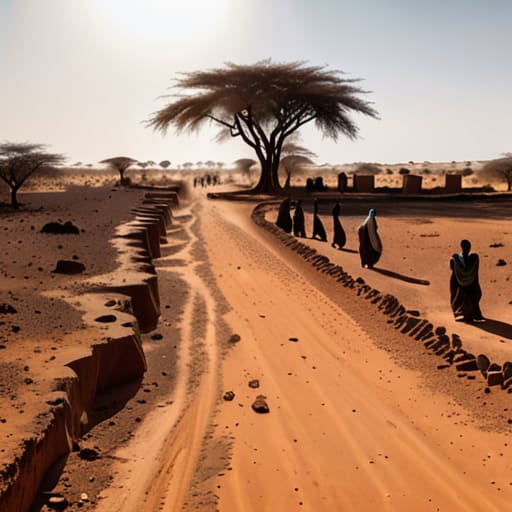
I’ve sat in enough dusty Land Cruisers to know that a well-drafted proposal is just paper. You can spend months in a climate-controlled office in Geneva perfecting your gender-sensitive indicators, but those metrics mean nothing when the distribution point is three kilometers from the nearest well and only the men are allowed to walk that path. Most of the time, gender mainstreaming in development fails because it treats “women” as a monolithic block on a spreadsheet rather than real people with specific, logistical constraints.
The breakdown usually happens at the transition from theory to the dirt. We talk about intersectionality in social programming during the design phase, but when the truck arrives, the nuance evaporates. If the project assumes a female head-of-household can attend a training session at noon, but she’s actually tied to a water source or a subsistence plot, the program hasn’t just failed—it’s wasted fuel. We focus so much on the intended impact that we forget to check if the actual delivery mechanism accounts for the daily, physical reality of the people we claim to serve.
The Myth of Progress Without Gender Sensitive Indicators

I’ve seen too many quarterly reports that look flawless on a spreadsheet but fall apart the moment a truck hits a dirt track. The problem is that we’ve become obsessed with high-level metrics that look good in a donor briefing. We track “number of beneficiaries reached” or “percentage of female participants,” but these are hollow numbers if they don’t tell us who actually accessed the service. If a clinic provides maternal health services but the local women can’t walk there because the path is unsafe after sunset, the metric says success while the reality is a total failure. We are measuring the wrong things.
To fix this, we need actual gender-sensitive indicators that reflect the friction of real life. It isn’t enough to just count heads; we need to know if the distribution timing interferes with domestic labor or if the location of a water point ignores the specific safety needs of girls. Without this, gender mainstreaming in development remains a box-ticking exercise for the head office. If the indicator doesn’t tell me whether the most vulnerable person in the camp actually got the kit, then it isn’t an indicator—it’s just noise.
The gap between the boardroom and the dirt road
You can spend six months in a climate-controlled office in Geneva drafting a “gender-inclusive framework” that looks perfect on a PowerPoint slide, but if your distribution plan doesn’t account for why a woman can’t walk two kilometers to a collection point after sundata, your framework is just expensive paper.
Yusuf Lindqvist
The Final Manifest

At the end of the day, we have to stop confusing a well-drafted gender policy with actual impact. I have seen countless proposals filled with the right terminology—”empowerment,” “equity,” “intersectionality”—only to watch the actual delivery fail because the designers forgot that a woman walking three kilometers further for water isn’t “empowered,” she’s just more exhausted. If our indicators don’t account for the physical reality of how people move, access resources, and manage their time, then we aren’t designing programs; we are just writing expensive fiction. We need to move past the buzzwords and start measuring whether the interventions actually reach the people they claim to serve, regardless of how many checkboxes we tick in the office.
If we want to do this right, we need to stop looking at gender as a secondary layer of “sensitivity” and start seeing it as a fundamental logistical requirement. It is as critical as fuel levels, road conditions, or security clearances. When we design with a real understanding of gendered constraints, we aren’t just being “inclusive”—we are ensuring the mission actually succeeds. The goal isn’t to produce a perfect report for the donors; the goal is to ensure that when the supplies arrive, they are in the right hands at the right time. That is the only metric that matters.