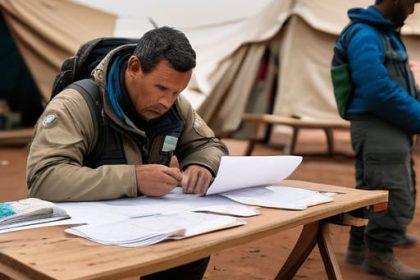
I remember sitting in a humid, windowless office in Goma, staring at a spreadsheet that claimed we had “secured significant multi-year commitments” for regional resilience. The numbers were massive, the font was bold, and the optimism was suffocating. But outside that window, the road to the northern camps was a wash of red clay that could swallow a Land Cruiser whole, and we didn’t have a single cent allocated for the heavy-duty winches we actually needed. People love to debate the high-level mechanics of how disaster risk reduction is funded, but they rarely talk about the gap between a signed grant in Geneva and the actual cost of movement on the ground.
I’m not here to lecture you on international fiscal policy or the nuances of multilateralism. I’ve spent too many years tracking cargo manifests to care about the theoretical. Instead, I’m going to pull back the curtain on the messy, unglamorous reality of where the money goes—and more importantly, where it fails to go. You’ll get the truth about the friction between donor intent and field reality, stripped of the humanitarian marketing fluff.
Table of Contents
Why Disaster Preparedness Budget Allocation Is a Moral Metric

People like to talk about “resilience” as if it’s a philosophical concept or a buzzword for a brochure. In my experience, resilience is a physical thing—it’s the integrity of a warehouse roof or the thickness of a bridge deck. When we discuss disaster preparedness budget allocation, we aren’t just moving decimals around a spreadsheet; we are deciding how much weight a community can carry before it breaks. If the money is sitting in a high-level fund in Geneva while the local supply routes are washing away, that budget isn’t a tool for safety—it’s just paper.
The moral weight of these decisions comes down to the timing of the spend. It is easy to find money for a crisis once the cameras arrive and the headlines scream. It is significantly harder to secure disaster risk financing mechanisms that actually function before the rain starts. I’ve seen too many projects where the funding is reactive, chasing the disaster instead of preempting it. To me, the ethics of the sector aren’t found in the sentiment of the appeals, but in the foresight of the investment. If the money isn’t positioned to reinforce the ground before the flood hits, we haven’t actually prepared anything at all.
The High Cost of Empty Pockets During a Flood

When the rains hit the Sudans or the coastal regions of Mozambique, the conversation in the headquarters usually shifts to “emergency response.” But by then, the money is already late. We spend billions reacting to the deluge, yet we starve the systems that could have mitigated the impact. This is the fundamental failure of current disaster risk financing mechanisms: we fund the funeral rather than the prevention. If the budget for pre-positioning supplies—sandbags, water purification kits, or even just fuel for the generators—isn’t sitting in a local account months in advance, the entire chain collapses.
I’ve seen it happen. You have the technical plans and the high-level memos, but when the river rises, the liquidity simply isn’t there. We talk about climate change adaptation finance in abstract terms during summits, but on the ground, that finance is the difference between a controlled evacuation and a chaotic scramble for survival. It isn’t just about the loss of life; it is about the resilience building economic impact that vanishes when a community’s entire infrastructure is wiped out because we chose to fund a reactive relief mission instead of a proactive defense. An empty pocket during a flood isn’t just a budget deficit; it is a logistical death sentence.
The Gap Between the Grant and the Ground
You can print all the glossy brochures you want about ‘proactive funding models’ and ‘resilience frameworks,’ but a million dollars in a contingency fund is just ink on paper until it’s converted into diesel, spare parts, and a driver who isn’t stuck in a ditch. Funding isn’t success; a delivered shipment is.
Yusuf Lindqvist
The Ledger and the Road

At the end of the day, we have to stop treating disaster risk reduction funding as an abstract exercise in macroeconomics. We’ve looked at how the allocation of these funds dictates whether a community survives a predictable flood or drowns in it, and we’ve seen how the lack of upfront investment creates a massive, expensive deficit when the crisis actually hits. It isn’t about the total sum pledged in a donor conference in Geneva; it is about the procurement chains, the pre-positioned stocks, and the fuel budgets that allow a response to function. If the money stays in a central bank account instead of moving into local procurement and infrastructure, then the funding hasn’t actually happened. The spreadsheet is a promise, but the logistics are the reality.
I have spent too many nights listening to the static on my shortwave radio, waiting for word from a field office that never arrived because a bridge had washed out and there was no budget for a detour. We need to shift our focus from the sentiment of the appeal to the integrity of the supply chain. If we want to change the outcome of the next disaster, we must fund the boring, unglamorous work of preparedness. We need to ensure that when the rain starts falling, the money has already turned into wheels on the ground. The goal isn’t to fund a tragedy; it is to fund the arrival of the truck.