
I spent a decade watching consultants in Nairobi draft fifty-page frameworks that looked beautiful on high-gloss paper, but they never accounted for the fact that the bridge they planned for didn’t actually have a road leading to it. Most people think the most important part of the process is the high-level theory, but they’re wrong about how a development project is designed. If your design doesn’t account for the broken axle, the washed-out track, or the local official who needs a signed paper before the gate opens, then your design is just expensive fiction.
I’m not here to talk to you about “synergistic stakeholder engagement” or other buzzwords that mean nothing when the rain starts falling. I’m going to tell you how things actually work when the ink is dry and the boots hit the mud. I will show you the practical, unvarnished reality of building a plan that survives contact with the real world. We are going to focus on the logistical backbone—the stuff that actually ensures the supplies reach the people who were promised they would.
Table of Contents
The Theory of Change in Development Is Not a Dream

In the NGO world, people treat the “theory of change in development” like it’s some piece of sacred poetry or a vision board for a non-profit. They sit in air-conditioned rooms in Geneva or Nairobi, drawing colorful arrows on whiteboards to show how a single dollar turns into a transformed community. To them, it’s an aspirational map. To me, it’s a stress test for reality. If your theory says that providing clean water will increase school attendance, but your plan doesn’t account for the fact that the local borehole pump requires a specific grade of rubber seal unavailable within a 200-kilometer radius, your theory isn’t a roadmap—it’s a fantasy.
A proper logical framework approach isn’t about proving how much you care; it’s about mapping the friction points. I’ve seen countless projects fail not because the intent was wrong, but because the causal links were too thin to survive contact with a muddy road or a closed border. You can have the most sophisticated impact assessment planning in the world, but if you haven’t accounted for the physical movement of goods and the breakdown of those links, you aren’t designing a project. You’re just writing a very expensive wish list.
Mapping the Project Design Components That Actually Matter

When people sit in air-conditioned offices in Geneva or Nairobi, they talk about the logical framework approach as if it’s a holy scripture. They draw these neat little boxes with arrows pointing toward “sustainability” and “empowerment.” But in my experience, a project design is only as good as its ability to survive a washed-out road or a closed border. You can have the most sophisticated stakeholder analysis methodology in the world, but if you haven’t accounted for the fact that the local warehouse has no reliable electricity, your entire plan is just expensive fiction.
I look for the friction points. Real design isn’t about the lofty goals; it’s about the granular mechanics of the supply chain. When I review the project design components, I’m not looking at the mission statement. I’m looking at the procurement lead times, the fuel contingencies, and the cold chain requirements. If the monitoring and evaluation framework only tracks “number of people reached” instead of “tonnage delivered per month,” then the design is flawed. You don’t build a project on intentions; you build it on verifiable movement.
The gap between the whiteboard and the road
You can spend six months in a climate-controlled boardroom in Geneva perfecting a logical framework, but if your design doesn’t account for the fact that the bridge on the main supply route washes out every April, your entire strategy is just expensive fiction.
Yusuf Lindqvist
The Reality Check
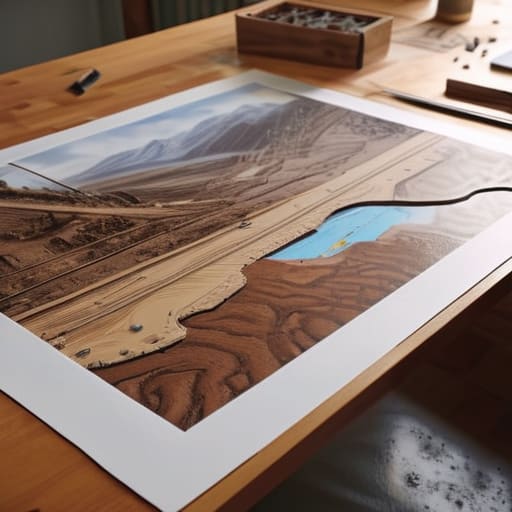
At the end of the day, a project design is just a stack of paper until it meets the dirt. We have talked about theory of change and mapping components, but none of that matters if the supply chain breaks at the border or the local procurement fails because the budget didn’t account for seasonal flooding. You can have the most sophisticated logical framework in the world, but if you haven’t accounted for the physical reality of the terrain, you aren’t designing a project; you’re writing fiction. A design succeeds when it moves past the abstract and becomes a functional roadmap for delivery.
I have spent too many nights staring at manifests, wondering why the math on the page didn’t match the cargo in the warehouse. My advice is simple: stop designing for the donors and start designing for the driver. If your plan doesn’t survive a breakdown on a mud track in the middle of the night, it isn’t a plan worth following. Build something that is resilient enough to fail and still get the job done. Because in this business, the only metric that truly carries weight is whether the goods actually reached the destination.