I remember sitting in a humid, makeshift office in South Sudan, staring at a spreadsheet that claimed we had successfully deployed three million dollars worth of grain. The numbers looked great on a donor’s glossy annual report, but my eyes were fixed on a single, empty line in my manifest: the convoy that was supposed to cross the river three days ago. People love to talk about the grand scale of humanitarianism, but they rarely discuss the gritty, unglamorous reality of how emergency food aid works when the bridge is washed out and the fuel depot is empty. The truth isn’t found in a fundraising gala; it’s found in the mechanical reality of moving weight from point A to point B.
I’m not here to give you a lecture on international policy or the lofty ideals of global solidarity. I’ve spent nine years in the dirt, and I know that sentiment doesn’t feed anyone—logistics does. In this series, I am going to strip away the jargon and show you the actual machinery behind the scenes. I will tell you exactly how the supply chain functions, from the moment a grain silo is filled to the second that truck finally pulls into the village. If you want to understand the real mechanics of survival, you’re in the right place.
Table of Contents
Beyond the Totals Managing the Humanitarian Relief Supply Chain
Beyond the Totals: Managing the Humanitarian Relief Supply Chain
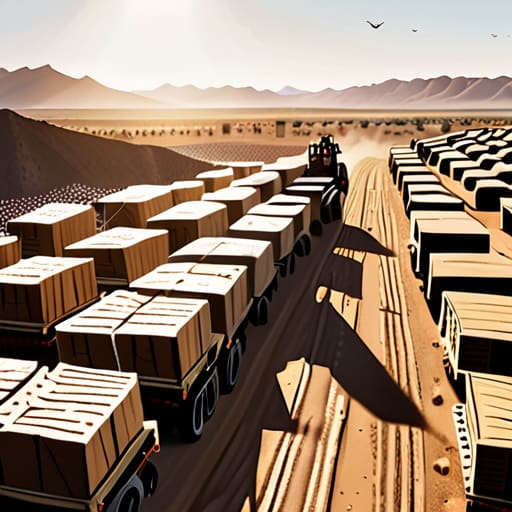
When I look at a spreadsheet for crisis resource allocation, I don’t see lives saved; I see lead times, fuel consumption, and warehouse capacity. People think the hard part is raising the money, but the money is just a placeholder. The actual work lives in the humanitarian relief supply chain, where a single broken axle on a mountain pass can turn a million-dollar procurement into a pile of rotting grain sitting in a port three hundred miles away. You can have all the funding in the world, but if you haven’t accounted for the seasonal mud in the South Sudan highlands, your numbers are purely theoretical.
Managing food aid logistics management requires a level of granular detail that most donor reports ignore. You aren’t just moving calories; you are managing a delicate sequence of cold chains, customs clearances, and local security protocols. I’ve seen perfectly good shipments sit in bonded warehouses for weeks because someone forgot to verify a specific transit permit. In this business, efficiency is the only metric that carries weight. If the grain doesn’t move through the international aid distribution networks and reach the actual distribution point, the entire operation has failed, regardless of what the balance sheet says.
The Brutal Math of Crisis Resource Allocation
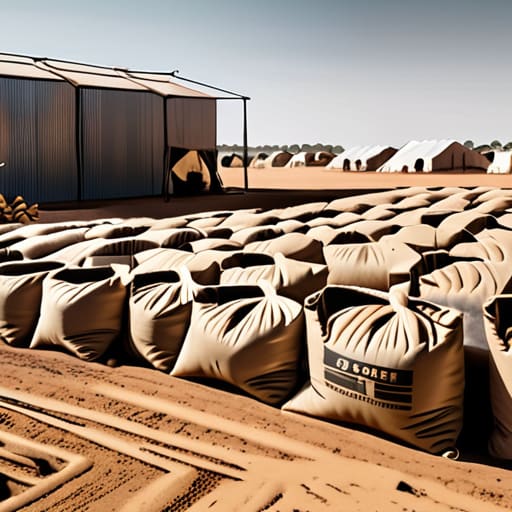
In the field, you don’t deal in abstractions. You deal in weight, volume, and shelf life. When I was coordinating movement through the Great Lakes region, the math wasn’t about how much money was sitting in a donor’s bank account; it was about the carrying capacity of a single Hilux versus the caloric needs of a displaced population. This is the reality of crisis resource allocation: you are constantly forced to make impossible trade-offs. If you send high-protein therapeutic paste, you might only be able to move ten tons because of the specialized packaging and handling requirements. If you send bulk maize, you can feed ten times as many people, but you risk a nutritional deficit that could trigger a secondary wave of malnutrition.
Every decision in the humanitarian relief supply chain is a zero-sum game. You look at a manifest and realize that choosing one route means abandoning another. A bridge washout in a rainy season isn’t just a delay; it’s a mathematical certainty that a certain percentage of your target population will go without. You learn quickly that optimizing for speed often means sacrificing cost-efficiency, and optimizing for volume often means sacrificing nutritional density. There is no “perfect” distribution—only the grim, calculated reality of what you can actually get through the gate.
The Metric That Matters
You can print all the glossy brochures you want about the millions of dollars raised in London or Geneva, but none of that money has any value until it crosses a border, survives a washed-out bridge, and is physically accounted for at the point of distribution. In this business, sentiment is a luxury; the only metric that keeps people alive is the weight of the cargo actually offloaded from the truck.
Yusuf Lindqvist
The Final Manifest

At the end of the day, the complexity of emergency food aid isn’t found in the high-level policy papers or the impressive fundraising totals broadcast on the news. It is found in the friction of reality: the broken axle on a mountain pass, the sudden closure of a border crossing, and the precise moment a shipment of grain clears customs. We have looked at the math of allocation and the sheer weight of the supply chain, but none of that matters if the final link fails. Success isn’t a line item on a spreadsheet; it is the physical presence of the cargo at the point of need.
I don’t look for grand gestures or emotional appeals when I evaluate a mission. I look at the manifests. I look for the proof that the system actually functioned when the pressure was highest. There is a quiet, unglamorous dignity in a well-run logistics operation. It isn’t flashy, and it rarely makes the front page, but it is the only thing that turns a promise into a meal. If we want to truly change the outcome of a crisis, we must stop obsessing over the scale of the problem and start perfecting the mechanics of the solution. Because in this business, the only metric that counts is the arrival.