
I remember sitting in a dusty compound outside Goma, listening to the crackle of a shortwave radio while a UN official read a press release about a “historic breakthrough” in peace talks. On the radio, it sounded like a triumph; on the ground, it sounded like nothing because the road to the warehouse was still blocked by a technical militia checkpoint. People get caught up in the diplomatic theater, but if you want to know what a ceasefire actually is, you have to stop looking at the podiums in Geneva and start looking at the uninterrupted movement of heavy goods.
I’m not here to discuss the nuances of international law or the political posturing of warring factions. My interest lies in the mechanics of survival. In this post, I am going to strip away the sentiment and explain the gap between a signed piece of paper and the moment a driver can actually shift into gear without fear of an ambush. We are going to talk about the cold, hard logistics of peace—specifically, whether the trucks can finally roll.
Table of Contents
The Fragile Gap Between Paper and Peace
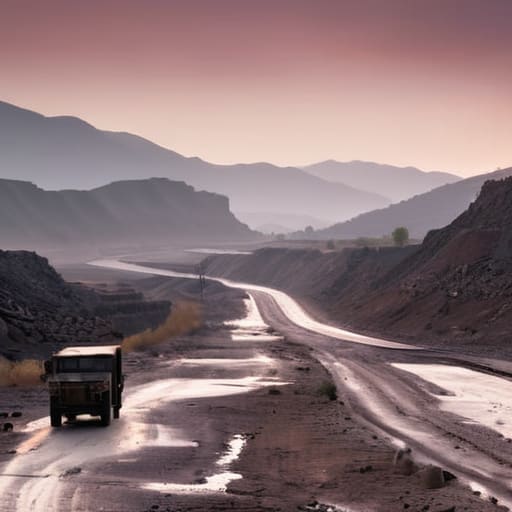
The problem with most high-level briefings is that they treat a cessation of hostilities as a binary state: it is either on or it is off. In my experience, it exists in a gray area of constant, grinding friction. When diplomats talk about the implementation of peace agreements, they are looking at signatures in Geneva. When I look at a map, I am looking at the unreliable silence of a specific corridor. A ceasefire isn’t a permanent state of being; it is a temporary, highly volatile suspension of kinetic energy. It is the moment where the guns stop, but the tension remains high enough to snap a supply line in seconds.
This is where the technicalities matter, even if the politicians ignore them. People often confuse the legal nuances, but there is a functional difference between a ceasefire and an armistice when you are sitting in a dusty compound waiting for a convoy. A ceasefire is a tactical breather—a chance to move medicine or food—whereas an armistice is something much more structural. If the rules of engagement aren’t crystal clear at the local checkpoint, that “peace” is nothing more than a brief lull in the violence that won’t last long enough to unload a single pallet of supplies.
The Humanitarian Pause Explained When the Trucks Move
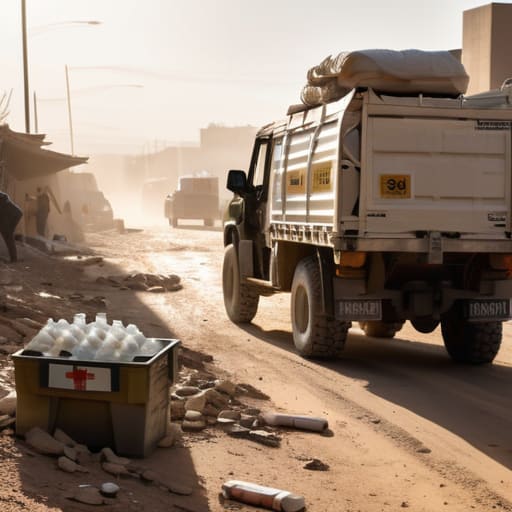
In my experience, a humanitarian pause is the only part of a conflict resolution mechanism that actually matters to the people on the ground. While diplomats argue over the legalities of a peace treaty vs ceasefire, the field teams are looking for a window of time—sometimes just six, sometimes forty-eight hours—where the shooting stops long enough to move medicine from a warehouse to a clinic. It isn’t a permanent peace; it is a tactical breathing space designed to prevent a total collapse of the local health infrastructure.
When we talk about a humanitarian pause explained in the context of logistics, we aren’t talking about grand gestures of reconciliation. We are talking about coordinated movement. It requires specific, granular agreements on which roads are open, which checkpoints are manned by whom, and exactly what time the convoy departs. If the implementation of peace agreements doesn’t include these specific logistical corridors, the pause is just a theoretical concept that exists only in briefing rooms in Geneva. For me, a pause is only real when the engine starts and the wheels turn without the sound of incoming fire.
## The Metric of Peace
“Diplomats talk about ceasefires in terms of political milestones and signed protocols, but in my line of work, a ceasefire is measured in kilometers and cubic meters. It isn’t a concept; it is the physical reality of a heavy vehicle clearing a checkpoint without being turned into scrap metal.”
Yusuf Lindqvist
The Metric That Matters
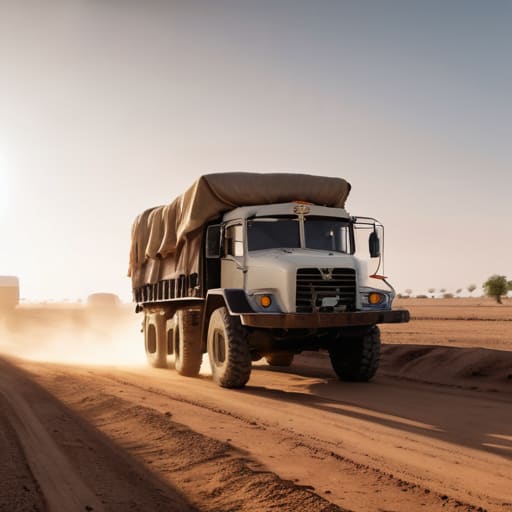
At the end of the day, a ceasefire is not a diplomatic milestone or a victory for a particular faction; it is a functional window of opportunity. We have seen how the distinction between a formal political agreement and a practical humanitarian pause can mean the difference between life and death. While the politicians in capital cities argue over the wording of a treaty, my focus remains on the logistical reality on the ground. If the signed papers don’t translate into cleared checkpoints and unmolested supply routes, then for the people waiting for medicine or grain, the ceasefire simply does not exist.
I don’t look for peace in the press releases or the soaring rhetoric of international summits. I look for it in the movement of heavy machinery and the steady arrival of scheduled convoys. True progress isn’t measured by the number of signatures on a document, but by the predictability of the supply chain in a zone of conflict. When the trucks finally roll through without being diverted or destroyed, that is when you know the paper has finally become reality. That is the only version of peace that actually delivers.