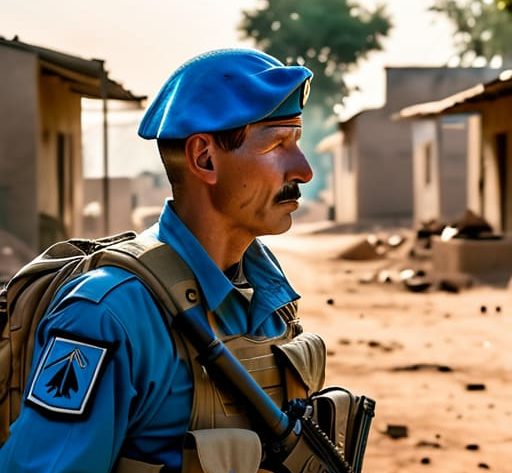
I remember sitting in a dusty compound outside Goma in 2012, listening to the crackle of my shortwave radio while a UN convoy sat idling three kilometers away. On the news back home, they were talking about “stabilization mandates” and “strategic peacekeeping frameworks,” but all I could see was a line of white Land Cruisers stuck behind a broken-down civilian truck, unable to clear a path for our medical supplies. People love to get lost in the high-level theory of what peacekeeping actually does, but if you’ve ever spent a night waiting for a convoy that never arrives, you know the truth is much more mechanical than that.
I’m not here to sell you on the grand visions or the multi-billion dollar mission statements found in glossy annual reports. My goal is to strip away the diplomatic jargon and tell you how these missions function on the ground—from the logistics of securing a supply route to the reality of a checkpoint. I’ll give you the unvarnished truth about what peacekeeping actually does when the cameras leave and it’s just a matter of whether the cargo gets through.
Table of Contents
Beyond the Blue Helmets Un Peacekeeping Operations Roles
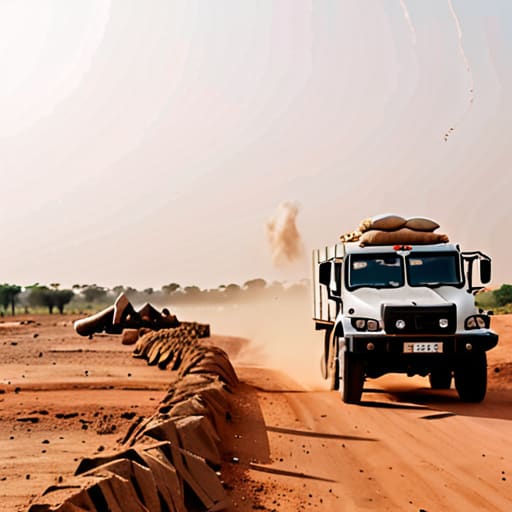
When people talk about UN peacekeeping operations roles, they tend to focus on the optics—the soldiers standing in a line or the patrols in armored vehicles. From where I sat, managing supply chains in South Sudan, the reality was much more granular. It wasn’t about grand gestures of diplomacy; it was about the security umbrella that allowed a single convoy of grain or medicine to move without being hijacked. You can have the most sophisticated conflict resolution strategies drafted in a New York boardroom, but they are useless if the local militia controls the only bridge leading to the distribution hub.
The mandate usually centers on civilian protection mandates, which sounds noble on paper. In practice, this means the blue helmets provide the physical space necessary for NGOs to actually function. Without that perimeter, my drivers wouldn’t have left the warehouse. We weren’t looking for political breakthroughs; we were looking for a predictable window of time where the roads were clear. The real measure of peacekeeping mission effectiveness isn’t found in a signed peace treaty, but in the fact that the cold chain for vaccines didn’t break because a truck was stuck at a checkpoint for three days.
Did the Village Stay Standing Civilian Protection Mandates

When you hear about civilian protection mandates, it sounds like a legal abstraction discussed in a glass building in New York. In the field, it’s much more visceral. It’s the difference between a village sleeping through the night or waking up to smoke on the horizon. My time in the bush taught me that a mandate is only as good as the fuel in the patrol vehicles and the proximity of the nearest outpost. If the peacekeepers are stationed fifty kilometers away because the roads are washed out, that mandate is just ink on a piece of paper.
The reality of peacekeeping mission effectiveness often hinges on these physical constraints. You can have the most sophisticated conflict resolution strategies in your briefing notes, but they don’t mean much if the troops lack the mobility to intercept a militia moving toward a settlement. I’ve seen missions struggle because the gap between the political intention and the tactical reality was too wide. It isn’t about the grand gestures of international security interventions; it’s about whether a patrol was actually on the ground when the shooting started. Protection is a logistical capability, not just a moral obligation.
The Logistics of Peace
You can read all the mandate documents you want about “stabilization” and “conflict mitigation,” but in the field, peacekeeping isn’t an abstract concept. It’s the difference between a supply convoy moving through a corridor without being hijacked, or a warehouse sitting empty because the security perimeter collapsed. If the peace doesn’t secure the road, the peace doesn’t exist.
Yusuf Lindqvist
The Bottom Line
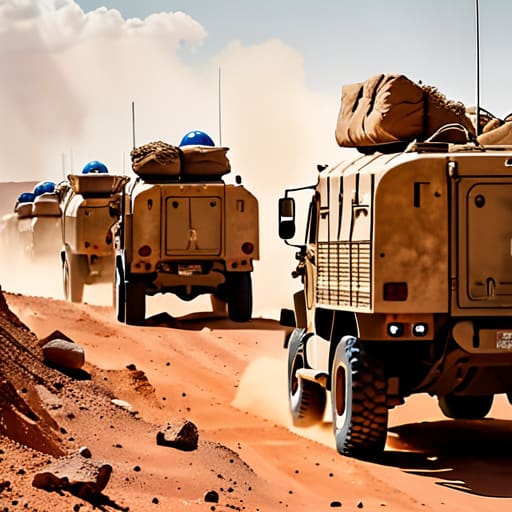
When you strip away the high-level diplomacy and the glossy annual reports, peacekeeping boils down to a series of brutal, practical calculations. It isn’t just about maintaining a ceasefire on paper; it is about the presence of a physical force that prevents a local skirmish from turning into a regional wildfire. We have seen how these missions manage the friction between warring factions, provide a buffer for civilian movements, and—most importantly—create the narrow, fragile window of security required for humanitarian logistics to function. If the blue helmets aren’t there to secure the perimeter or monitor the transit routes, the entire machinery of aid simply grinds to a halt.
Ultimately, we have to stop measuring success by the elegance of a UN resolution and start looking at the ground. A mission is successful if the roads stay open, if the markets remain functional, and if the supply chains of survival can actually reach the people who need them. Peacekeeping is often messy, underfunded, and frustratingly slow, but it remains the only heavy-duty tool we have to hold the line. It is not a perfect solution, but in a world of shifting borders and broken promises, it is the difference between a village that survives and a village that disappears.