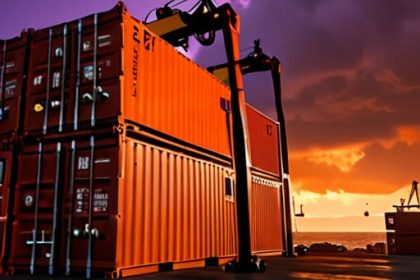
I spent a decade watching UN trucks kick up red dust in South Sudan, waiting for shipments that were always “on schedule” according to some glossy headquarters report, even when the crates were sitting in a warehouse three hundred miles away. People love to get lost in the high-level abstractions of global progress, but if you ask me what the human development index includes, I won’t start with a lecture on composite statistics. I’ll tell you that a number on a spreadsheet doesn’t mean a damn thing if the supply chain is broken. You can have a rising score on paper, but if the medicine isn’t on the shelf or the school has no roof, that index is just a collection of polite fictions.
I’m not here to give you a textbook definition or a recitation of UNDP white papers. Instead, I’m going to strip away the academic jargon and show you the actual mechanics behind the metrics. We are going to look at the three core pillars—health, education, and standard of living—and I will tell you exactly how they translate (or fail to translate) to the ground reality of development work. This isn’t about the theory; it’s about the data that actually matters.
Table of Contents
The Raw Mechanics of Undp Development Indicators
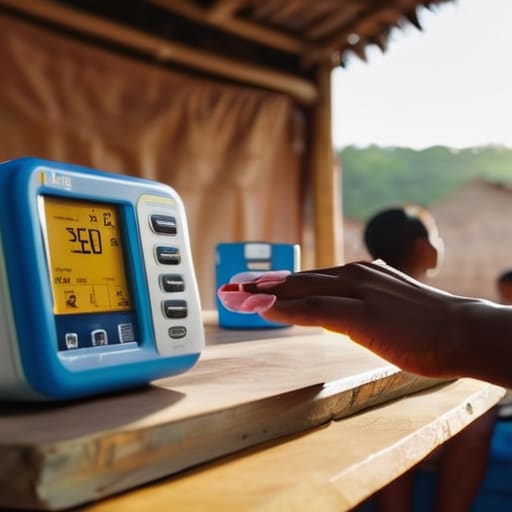
When I was managing supply chains in South Sudan, I didn’t care about abstract growth models; I cared about whether the cold chain held for the vaccines. However, to understand how the big players view the world, you have to look at the UNDP development indicators. They don’t just look at how much money is flowing through a country, but how that money translates into human reality. They break it down into three core dimensions of human development: health, knowledge, and standard of living. It’s a way of measuring social progress that moves past the simple GDP figures that most politicians use to pat themselves on the back.
The mechanics are actually quite rigid. They use life expectancy and education metrics to gauge how long people live and how much they actually know. Then there is the GNI per capita calculation, which tries to estimate the average economic output per person. It’s not perfect—it doesn’t account for the bribe paid at a checkpoint or the fuel stolen from a convoy—but it provides a baseline. For me, these global development statistics are just another form of a manifest. They tell you what is supposed to be in the crate, even if they can’t always tell you if the crate actually made it to the village.
Why Gni Per Capita Calculation Is Only Half the Story

The GNI per capita calculation is the metric most people default to because it’s easy to track. It’s a clean, mathematical line on a graph that looks good in a boardroom. But in my experience, a high national income tells you almost nothing about the actual movement of goods or the stability of a local economy. You can have a country with a soaring GNI driven by a single extractive industry, while the actual infrastructure—the roads, the clinics, the power grids—remains in total disrepair. I’ve seen regions where the macro-level statistics suggested growth, yet the last-mile delivery of basic necessities was still failing because that wealth never trickled down to the logistical reality.
To understand the true dimensions of human development, you have to look past the sheer volume of money. A rising GDP doesn’t mean a child is staying in school or that a mother is surviving childbirth. That is why we need to integrate life expectancy and education metrics into the equation. If the money is there but the people aren’t living long enough or learning enough to utilize it, then the economic growth is a ghost. We aren’t just measuring money; we are measuring the functional capacity of a society to sustain itself.
The Gap Between Data and Delivery
You can inflate a country’s score with clever statistical weighting and high-level GNI projections, but those numbers won’t help a clinic in a remote province if the supply chain is broken. The HDI captures the potential of a life, but it doesn’t account for the friction of the actual delivery.
Yusuf Lindqvist
The Metric vs. The Reality

At the end of the day, the Human Development Index is a useful tool for seeing past the narrow lens of pure economics. By weighing life expectancy and education alongside GNI, it forces us to acknowledge that a country’s wealth is meaningless if its people are dying too young or lack the literacy to navigate their own lives. We have looked at how these components—health, schooling, and income—interlock to create a composite score. But as someone who has spent years tracking shipments through mud and checkpoints, I know that a high index score on a spreadsheet doesn’t automatically translate to a functioning clinic in a rural province. The math is sound, but the delivery mechanism is where the real work happens.
We shouldn’t view these indicators as a final destination, but rather as a compass for where we need to push harder. If the numbers show a gap in education or a dip in health outcomes, that is a signal that the logistical and political infrastructure is failing the people it is meant to serve. The goal isn’t just to move a country up a ranking; it is to ensure that the progress reflected in these statistics actually reaches the ground. We measure the index so we know where the gaps are, but we work so that the actual resources finally arrive where they are needed most.