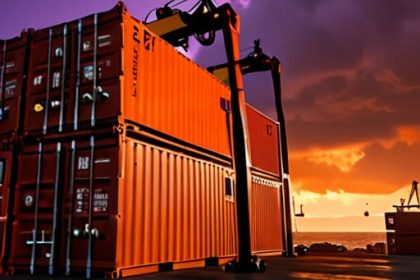
I spent a decade in South Sudan and eastern DRC watching people sit in air-conditioned conference rooms in Geneva debating “resilience frameworks.” They use words like systemic integration and multilateral synergy, but none of those terms matter when the rainy season turns a dirt track into a soup of red clay and your medical supplies are sitting ten kilometers away, rotting in a humid warehouse. To those bureaucrats, climate change is a data set; to a driver with a broken axle, what climate adaptation means in practice is simply whether or not the road still exists when the clouds break.
I’m not here to sell you on grand theories or five-year strategic visions that look good on a donor’s annual report. I’ve kept every cargo manifest from my time in the field, and they don’t list “synergy”—they list weight, destination, and arrival status. In this series, I am going to strip away the jargon and tell you how we actually keep things moving when the environment shifts. We are going to talk about hard infrastructure, local procurement, and redundant supply lines, because if the goods don’t reach the clinic, the plan has failed.
Table of Contents
The Vulnerability Assessment Is Just Paper Until the Ground Shifts

I’ve sat through enough workshops in Nairobi to know the drill. A consultant arrives with a glossy binder, conducts a formal climate change vulnerability assessment, and presents a series of colorful heat maps to the regional directors. They talk about long-term projections and theoretical risk modeling as if the world operates on a spreadsheet. But a binder of data doesn’t move through a mudslide. In my experience, these assessments are often just expensive paper exercises that fail to account for the unpredictability of the terrain.
The gap between a strategy and a reality is where the actual work happens. You can design the most sophisticated infrastructure adaptation techniques on a computer in Geneva, but if those designs don’t account for the specific way the silt builds up in a local drainage ditch after a flash flood, the road is gone by Tuesday. I have seen millions allocated for “resilience,” only to watch the entire supply line collapse because the plan assumed a stability that simply didn’t exist on the ground. The map is not the territory, and a vulnerability assessment is worthless if it doesn’t tell you exactly where the truck will get stuck.
Real Resilience Isnt a Plan Its the Bridge Staying Standing
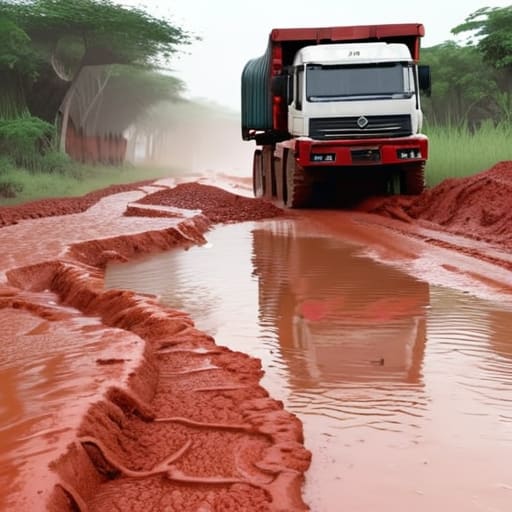
I spent three years in South Sudan watching engineers debate the merits of various infrastructure adaptation techniques while the seasonal rains turned the main supply route into a soup of red clay. You can have the most sophisticated climate resilience strategies tucked away in a binder in Geneva, but they don’t mean a damn thing when the culvert under the primary access road collapses under the weight of a ten-ton truck. Resilience isn’t a theoretical framework; it is the physical capacity of a structure to endure a load it wasn’t designed for. If the bridge goes, the entire humanitarian corridor goes with it.
I’ve seen too many projects focus on high-level community-led adaptation initiatives that look great in a donor report but lack the concrete reinforcement needed for actual survival. We talk about “building back better,” but in the field, that usually means making sure the gravel bed is deep enough that the next flash flood doesn’t simply erase the road from the map. If the physical link between the warehouse and the clinic is severed, the most well-intentioned aid package in the world is just expensive junk sitting in a depot. Success is measured in tonnage delivered, not in the elegance of the planning documents.
## The gap between the boardroom and the bush
You can spend millions on high-resolution satellite modeling and climate projections that look beautiful in a donor report, but none of that matters when the rainy season hits and the only road to the clinic is a river of red mud. Adaptation isn’t a slide deck; it’s the physical reality of whether a driver can actually move a pallet of vaccines from point A to point B without getting swallowed by the landscape.
Yusuf Lindqvist
The Bottom Line
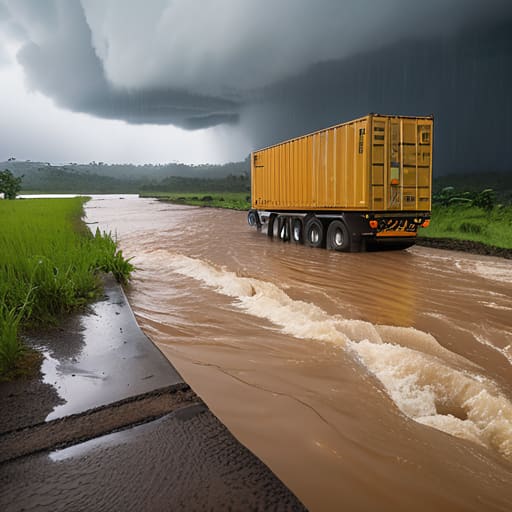
We can spend our budgets on high-level modeling and glossy strategy documents, but those things don’t move medicine or food. I have seen enough “resilience frameworks” gather dust in field offices to know that a plan is just a collection of assumptions until it meets a flooded river or a collapsed road. True adaptation isn’t found in a conference room in Geneva; it is found in the redundancy of the supply chain and the physical integrity of the infrastructure we build. If the data says the risk is increasing but the warehouse is still sitting in a flood zone, we haven’t adapted; we’ve just documented our own eventual failure.
At the end of the day, my job has never been about the rhetoric of “saving the world.” It is about the manifest. It is about the heavy, unglamorous work of ensuring that when the climate shifts, the logistical backbone remains intact. We need to stop measuring success by the sophistication of our forecasts and start measuring it by the reliability of the delivery. If the truck reaches the destination despite the storm, we have done something real. That is the only metric that actually matters when the weather turns.